Head-to-head test
EcoFlow DELTA Pro vs Goal Zero Yeti 200X
The decision isn't capacity: the Yeti 200X's 120W inverter turns away loads the DELTA Pro doesn't notice, so the only question that matters is whether anything you own draws more than a laptop charger.
Full profiles: EcoFlow DELTA Pro → · Goal Zero Yeti 200X →

Written by Ian SchneiderUpdated
Solar & Off-Grid Tester, Station Arena Test Desk
Spec deltas
Thirty times the continuous output separates these two: 3,600W on the DELTA Pro against 120W on the Yeti 200X. Capacity is the more dramatic gap, 3,600Wh against 187Wh, and it's the less important one. Six of the seven loads we model end with the Yeti 200X not finishing, and three of those end with its inverter refusing the load before the battery gets a say.
The Yeti 200X is not a small DELTA Pro. It's a 5 lb box for phones, lamps and camera batteries, and it clears exactly one of our seven rows: an afternoon of small gear, 100Wh, which it finishes at 63% used. That row is the whole case for buying it, and it's a real case.
Then the money, which runs the opposite way from the stickers. $1,899 against $220 (last listed price) makes one of these look like a rounding error. But 3,500 cycles of 3,600Wh against 500 cycles of 187Wh means the DELTA Pro will deliver roughly 134 times the energy across its rated life. Cheap to buy and cheap to own are separate questions, and here they have opposite answers.
What the Numbers Reveal
Each conclusion stated first — the numbers behind it on one line, the full analysis below.
continuous output
Set the surge ceilings side by side and the pattern covers the page: 200W against 7,200W means the question isn't how long the Yeti 200X runs your load, it's whether the load is allowed on at all. Motors and compressors briefly pull 2-3x their running watts, so a 150W fridge sits outside that inverter at both ends, while the DELTA Pro's 2x ratio leaves startup room to spare.
Yeti 200X: 120W continuous, 200W surgeDELTA Pro: 3,600W continuous, 7,200W surgeTailgate Party needs a 400W peak; 8-Hour Blackout and Van Life Daily each run a 150W peak
Why it mattersIf anything on your list has a motor, a compressor or a heating element, the capacity column is a distraction and the 200W unit is already out.
rated cycles
Divide the price by that and the sticker inverts: fifteen cents per lifetime kilowatt-hour on the DELTA Pro against $2.35 on the Yeti 200X, about fifteen times as much for every watt-hour it will ever deliver. The cheap box is the expensive energy.
DELTA Pro: 3,500 cycles at 3,600Wh, about 12,600 kWh over its rated lifeYeti 200X: 500 cycles at 187Wh, about 94 kWh, an NMC pack rated to 80% at 500 cyclesB1Prices: $1,899 against $220 (last listed price)
Why it mattersIf you'll cycle the unit regularly rather than twice a summer, the DELTA Pro is the cheaper of the two to own, whatever the checkout total says.
weight
Twenty times the weight only earns its keep when the load needs it. For phones, a lamp and a speaker the DELTA Pro's headroom is dead weight in the most literal sense, while a 5 lb unit you can hold in one hand rides in a daypack without being noticedB2.
Yeti 200X: 5 lbs, 7.9 x 5.1 x 5.1 inches, Goal Zero's lightestB2DELTA Pro: 99 lbsAfternoon Off-Grid: 100Wh across an afternoon, which both units cover, the Yeti 200X at 63% used and the DELTA Pro at 3%
Why it mattersA buyer whose heaviest draw is a laptop charger should stop comparing these two and take the small one.
solar input
1,600W of solar input puts 3,600Wh back in a bit over two hours of strong sun (3,600 divided by 1,600), and five sockets mean the fridge, the router and a lamp don't take turns. The Yeti 200X refills its 187Wh in about an hour and a half at 120W, which is fine, but with one AC outlet and no transfer figure on the sheet it is a device charger during a blackout, not backup for the house.
DELTA Pro: transfer rated no worse than 20ms, 5 AC outlets, a 30A RV outlet, 1,600W solar inputYeti 200X: no switchover figure on record, 1 AC outlet, 120W solar input8-Hour Blackout needs 1,645Wh; the DELTA Pro finishes it with 1,415Wh spare
Why it mattersAnyone buying for grid failure rather than for trips isn't choosing between these two units. They're choosing between one of them and nothing.
The specific dimensions that decide these two units — everything else is a tie.
Your Life, Your Pick
Selected because: The Yeti 200X finishes one of the seven loads we model, and the one it finishes needs 100Wh.
Six of the seven rows end with the Yeti 200X not finishing, and they split into two different kinds of no. Three times the 187Wh tank simply empties: a weekend of camping leaves it 1,941Wh short of the 2,100Wh needed, a remote workday 751Wh short, a CPAP night 161Wh short. Three times it never gets that far, because the inverter turns the load away first. All of these run against a flat 85% usable allowance applied to both units, not a per-unit measurement, which is where the 3,060Wh and 159Wh figures come from.
The row it wins is the row it was built for. An afternoon of phones and a speaker is 100Wh, and the Yeti 200X closes it out at 63% used while the DELTA Pro barely registers that anything was plugged in. Read the seven rows as a sizing exercise rather than a contest. They tell you which of these two you are actually shopping for, and only one of them is a backup unit.
Portability & Form Factor
Selected because: 99 lbs against 5 lbs is the one axis where the smaller unit wins outright.
weight
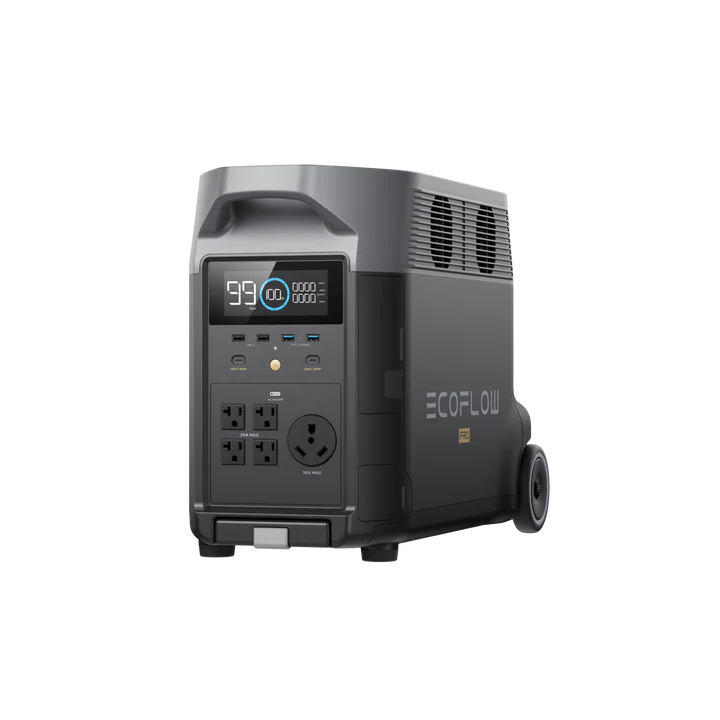
Ninety-nine pounds is a two-person lift, or one person and a regret. That is where the DELTA Pro lives: a garage shelf, a basement corner, the bed of a truck you load once and unload at the campsite. Our spec record doesn't track wheels or a handle, and at this weight those change the job completely, so look at the product photos before you plan on carrying it anywhere.
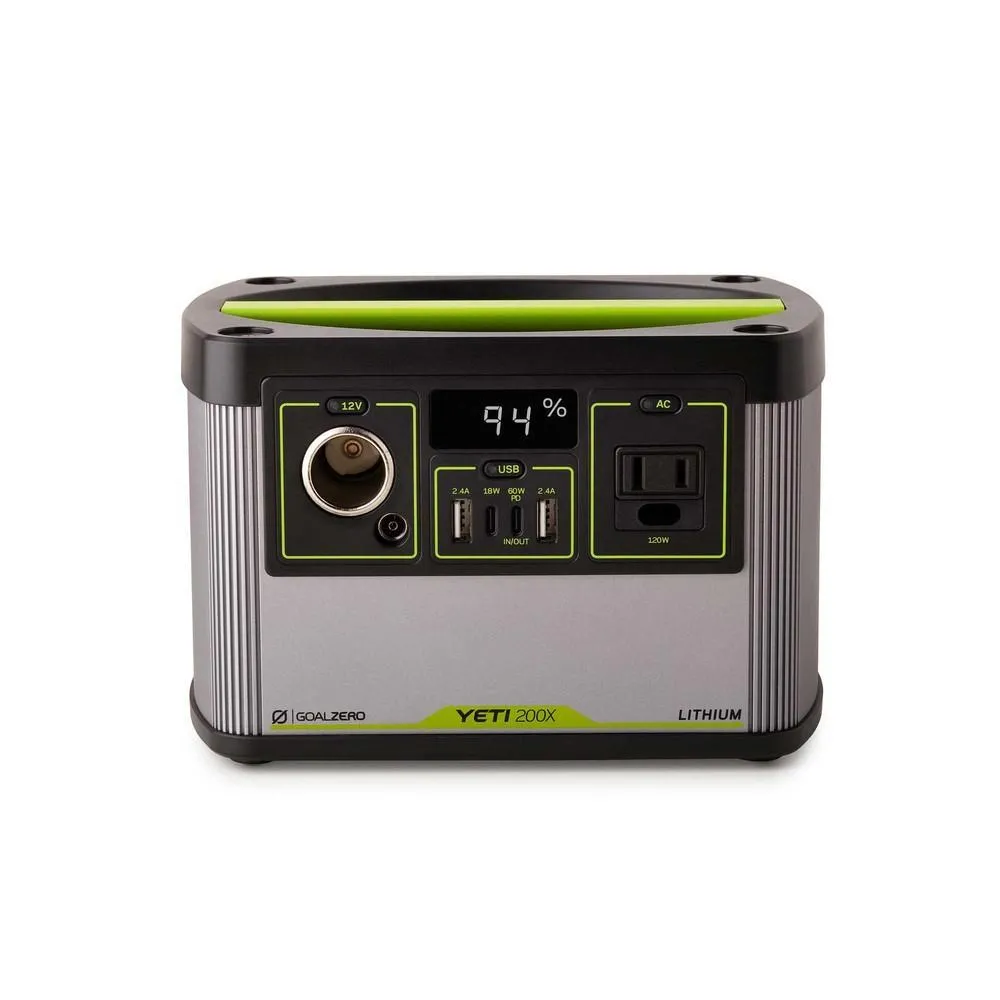
The Yeti 200X is a 5 lb, 7.9 x 5.1 x 5.1 inch box you move one-handed without thinking about it, Goal Zero's lightestB2, which is why it turns up in overlanding and car-camping kitsB3. Twenty times the weight is the toll the DELTA Pro charges for its capability. If the trip involves walking, that toll is the whole argument.
Lifetime Value
Selected because: 3,500 cycles of 3,600Wh against 500 cycles of 187Wh changes which of these is actually the expensive unit.
You're buying energy, not a box, and the two numbers point in opposite directions the moment you divide. Used daily, the DELTA Pro's 3,500 cycles work out to about 9.6 years and the Yeti 200X's 500 to about 1.4. The years understate the gap, because each DELTA Pro cycle moves 3,600Wh where the Yeti 200X moves 187Wh.
Neither pack dies at the cycle limit. Both settle to roughly 80% of the capacity they started with, which is a far kinder retirement on a unit that began at 3,600Wh than on one that began at 187Wh, where losing a fifth of a small tank is something you feel on the first night.
What the Specs Don't Tell You
Selected because: The cards that decide something here are the 200W surge ceiling, the missing noise figure, and 5 years of warranty against 2.
rated cycles
The card worth reading twice is the surge one, and not for its ratio. Both units clear the 2x rule of thumb on paper, so the ratio flatters the smaller one. What decides whether your fridge starts is the absolute ceiling, and 200W against 7,200W isn't a ratio problem.
Two honest catches, one on each side. The DELTA Pro publishes 60dB and the Yeti 200X publishes nothing, which is a difference in disclosure rather than evidence about which one you'd hear at 2 a.m. And the missing app on the Yeti 200X costs less than its card suggests: you can reach a 5 lb unit sitting on the table. The thing you genuinely want a phone app for is the 99 lb box you parked in the basement.
Brand Trust
Selected because: Goal Zero's previous-generation X series is out of stock across its own store, so buying a 200X new means finding retailer stock.
Start with whether you can buy it. Goal Zero lists the previous-generation X series as out of stock across its own store, so a Yeti 200X bought new today generally comes from a retailer's remaining stock rather than from Goal Zero. That's not a knock on the unit, but it is a reason to check who is selling it and what cover comes with it, because the term behind it is 2 years against the DELTA Pro's 5.
The two ecosystems are different shapes. EcoFlow runs the largest line in portable power, with expansion batteries and panels built around it and the largest community in the space. Goal Zero invented this category and now keeps a focused current line with coolers, panels and vehicle kits around it, and it recently shut its official forums. One caveat that cuts against our pick: EcoFlow offers no parts or service once the warranty expires, which makes those 5 years the whole of the cover rather than the start of it.
Strengths & trade-offs
EcoFlow DELTA Pro
Strengths
- +Larger battery capacity
- +Higher AC output
- +Longer warranty
- +Faster solar charging
- +Rated for 3,500 charge cycles — much longer battery lifespan
Trade-offs
- –Significantly heavier (+94 lbs), making it harder to move.
- –Very heavy unit that may be difficult for one person to lift.
- –Can receive complaints about fan noise under heavy load.
Goal Zero Yeti 200X
Strengths
- +Lighter by 94 lb
Trade-offs
- –Weaker inverter (-3,480W) limits appliance compatibility.
- –Lacks smartphone app control for remote monitoring.
- –Sealed capacity — the DELTA Pro can add batteries to grow past 187Wh; this one can't.
- –Shorter-lived battery — rated for 500 charge cycles vs the DELTA Pro's 3,500, so it wears out sooner.
Will It Power Your Gear?
Scenario math and per-appliance runtimes, modeled from the spec record.
Scenario verdicts
We ran the math on seven real-world scenarios. Here's which unit survives your actual life.
SCN-01 · 2 nights · needs 2,100Wh
Weekend Camping
Two nights off-grid with essential comfort
DELTA Pro
The Yeti 200X doesn't finish — 159Wh usable against the 2,100Wh this needs leaves it 1,941Wh short, about 8% of the scenario covered. The DELTA Pro covers it with 960Wh to spare.
Battery budget usedlower = more headroom
LOAD Phone Charger 15W×6h · LED Lights 40W×8h · Box Fan 75W×14h · CPAP Machine 40W×16h
SCN-02 · 8 hours · needs 1,645Wh
8-Hour Blackout
Keep the essentials running through a night without power
DELTA Pro
The Yeti 200X can start the 150W peak but not hold it — 200W of surge gets it going, then the 120W continuous rating takes over. The DELTA Pro handles this scenario with 1,415Wh to spare.
Battery budget usedlower = more headroom
LOAD Fridge 150W×8h · Router + Modem 20W×8h · LED Lights (4 bulbs) 40W×6h · Phone Charger 15W×3h
SCN-03 · 8 hours · needs 320Wh
CPAP Overnight
Sleep therapy without interruption — the #1 medical use case
DELTA Pro
The Yeti 200X gets you about halfway: 159Wh usable against the 320Wh this row needs, 161Wh short, which means it quits in the small hours rather than at breakfast. The DELTA Pro finishes the night having spent a tenth of its charge. One caveat in the same breath: the only published noise figure on this page belongs to the DELTA Pro, and it's a spec-sheet number rather than a bench reading, so if this one is spending the night beside your bed, hear it before you buy.
Battery budget usedlower = more headroom
LOAD CPAP Machine 40W×8h
SCN-04 · 8 hours · needs 910Wh
Remote Workday
Full work day off-grid without power anxiety
DELTA Pro
The Yeti 200X doesn't finish — 159Wh usable against the 910Wh this needs leaves it 751Wh short, about 17% of the scenario covered. The DELTA Pro covers it with 2,150Wh to spare.
Battery budget usedlower = more headroom
LOAD Laptop 60W×8h · External Monitor 30W×8h · Router + Modem 20W×8h · Phone Charger 15W×2h
SCN-05 · 4 hours · needs 670Wh
Tailgate Party
Game day power for the crew
DELTA Pro
Two hundred watts is the whole story here. The Yeti 200X won't pass this row's 400W peak even momentarily, so the 400W item never starts, and its 670Wh of energy never becomes relevant. The DELTA Pro runs the afternoon and packs up with 2,390Wh still in reserve.
Battery budget usedlower = more headroom
LOAD Blender 400W×0.5h · LED TV (55") 80W×4h · Bluetooth Speaker 15W×4h · Phone Charger (×3) 45W×2h
SCN-06 · 24 hours · needs 4,685Wh
Van Life Daily
A full day of mobile living — the ultimate endurance test
Neither unit
Neither one covers this, and that's worth saying plainly rather than picking a loser. The day needs 4,685Wh; the DELTA Pro has 3,060Wh usable and finishes 1,625Wh short, while the Yeti 200X can't hold the 150W this row runs at, so its capacity never enters the arithmetic. If this is your load, you're shopping a size up: a platform with expansion bought at the same time, or a fixed system.
Battery budget usedlower = more headroom
LOAD Mini-Fridge 150W×24h · Laptop 60W×4h · Phone Charger 15W×3h · LED Lights 40W×5h · Fan 75W×8h
SCN-07 · an afternoon · needs 100Wh
Afternoon Off-Grid
Phones and a speaker at the park, beach, or campsite — the small-unit job description
Either unit
Both finish this one, and it's the Yeti 200X's home turf. A 100Wh afternoon leaves it at 63% used while the DELTA Pro doesn't notice the load at all. With capability off the table the tiebreak is what you carry, and 5 lbs against 99 settles that without a discussion.
Battery budget usedlower = more headroom
LOAD Phone Charger (×2) 30W×2h · Bluetooth Speaker 10W×4h
The Load Test
RUNTIME = (Wh × 0.85) ÷ LOAD
None of the scenarios above exactly yours? Build it. Toggle what you'd plug in; both units are tested against the combined draw.
Essentials
Comfort & Convenience
High-Draw Appliances
Test duration
8h
Continuous draw
205W
Projected runtime
Only the DELTA Pro can start this 205W load.
$1,899 list · direct from EcoFlow
Planning for more than this? Describe your whole setup and get it sized →
Modeled from the spec record — same math as the tables below. Methodology
Runtime by appliance
Real-world runtime estimates for common appliances, modeled at 85% inverter efficiency.¹
Essentials
The basics you need runningscale 0–204hComfort & Convenience
Makes off-grid life actually enjoyablescale 0–40.8hHigh-Draw Appliances
These reveal the real limitsscale 0–3.1h¹ Runtime = (capacity × 0.85) ÷ appliance watts. Within each group, all bars share one time scale (the group's longest runtime), so lengths are comparable across appliances; identical runtimes collapse into a single blue/orange bar. Actual runtime varies with battery age, temperature, and simultaneous loads — see methodology.
Conclusion
September 19, 2026
Verdict: the DELTA Pro, on Power Score margin
Take the DELTA Pro unless your biggest load is a laptop charger. Thirty times the continuous output (3,600W against 120W) is what settles it: the Yeti 200X covers one of the seven loads we model, and on three of the six it misses, the inverter turns the load away before capacity is even consulted. The DELTA Pro is also the cheaper of the two to own per unit of energy, because 3,500 cycles of 3,600Wh is a different order of lifetime than 500 cycles of 187Wh. The confidence stops short of 10 for one honest reason: if everything you plug in is a phone, a lamp or a small speaker, the 5 lb Yeti 200X does that job and the DELTA Pro's 99 lbs is a cost you pay for headroom you never touch.
Today the DELTA Pro is $1,799, $100 under its typical $1,899. The verdict weighs typical prices, not today's. Prices checked 28 days ago.
Editor-assigned confidence, based on cited owner research and spec analysis.
List prices as of September 19, 2026. The links below open EcoFlow's current price.
$1,799.00 · direct from EcoFlow
down from $1,899 · 5% below usual
Last checked 28 days ago. Prices move — check before you buy.
Written by Ian Schneider, Solar & Off-Grid Tester · Station Arena Test Desk · Updated September 19, 2026
Black Friday · 26 days out
Price to beat:DELTA Pro $1,599
The lowest we have recorded. A Black Friday price above it is a sale this unit has already had.
Measured Data
Benchmark scores and the full spec record, side by side.
Benchmark scores
Not rated for both units (minimum threshold unmet): UPS, RV Living, Home Backup, Solar Generator, Food Truck, Apartment Balcony.
Full specifications
ᵈ Derived: price ÷ rated capacity. See the data behind our comparisons →
Comparison ToolAdd more power stations, side by sideOpen Tool →How these numbers are produced
Numeric verification
Every figure on this page traces to our spec database or arithmetic on it — no estimated numbers.
Owner claims
Statements about owner experience are cited to published reviews — see Sources & Research Notes below.
Runtime model
Runtime = (rated capacity × 0.85 inverter efficiency) ÷ device wattage. Solar recharge estimates assume panels deliver 70% of rated output. Cold weather, battery age, and stacked loads reduce real-world results.
Power Score
Computed from 14 published spec dimensions, weighted per use-case bench. Higher is better; a unit must meet a bench's minimum threshold to be rated.
See the full weight table and data sourcing on our methodology page →Class ranking (the star rating)
Each unit's star score is a category ranking, not customer reviews — no buyer opinions feed it. We score every station on size-independent quality (value, output, portability, endurance, ports, warranty, and more), then percentile-rank it against the other units in its capacity class, so a class-leading compact unit and a class-leading whole-home unit can both earn 5★. Here, DELTA Pro rates 3.7/5 (26th percentile of 20 Home Backup-class units), and Yeti 200X rates 3.5/5 (13th percentile of 25 Personal-class units).
How the class ranking is computed →Test Notes & Caveats
Hidden gotchas and advantages we spotted that you won't find on the product page.
99 lbs: Decide Where It Lives Before You Buy It
Ninety-nine pounds is a two-person lift and a bad idea on stairs, so plan the DELTA Pro's home before it arrives: a garage shelf, a basement corner, the bed of a truck you load once. Our spec record doesn't track wheels or a telescoping handle, and at this weight those change the job completely, so check the product photos rather than assuming either way. The Yeti 200X, by contrast, is a 5 lb one-hander you'll move without thinking.
DELTA Pro: 60dB Published
60dB is about as loud as a normal conversation. It is EcoFlow's own rating rather than a reading on a shared bench — makers differ on whether they quote a best case or a figure under load, so treat it as a starting point rather than what you would hear at a bedside. For most people, fan noise around 45dB and up is where sleep starts to suffer.
Yeti 200X: No App Control
Without app control, you have to physically walk to the Yeti 200X to check battery level, adjust settings, or monitor power draw. The DELTA Pro lets you do all that from your phone, including getting low-battery alerts.
Fixed at 187Wh, Which Is Rather the Point
The Yeti 200X being sealed isn't so much a flaw as the shape of the product: it's a 5 lb box for small gear, and 187Wh is what it is. Size it for what you'll actually plug in, because nothing gets added later. The same card cuts the other way too, against our pick: the DELTA Pro's expansion path is not the reason to buy it. Its 3,600Wh base is. Expansion only matters to the buyer who would outgrow that as well.
Surge Power: Inverter Quality Indicator
The DELTA Pro has a 2× surge-to-continuous ratio vs the Yeti 200X's 1.7×, and the higher absolute ceiling with it — 7,200W against 200W. At 2× it clears the 2× rule of thumb for absorbing motor startups — fridges, AC compressors and power tools briefly draw 2-3× their rated wattage. What decides whether a given motor starts is the ceiling, not the ratio: the Yeti 200X still surges to 200W, so check the startup draw of the heaviest thing you plan to run against that figure rather than assuming it trips.
Only One of These Lists a Transfer Time
The DELTA Pro is specified to hand your gear over to battery in no worse than 20ms when the grid drops. That's a published ceiling rather than a measured result, fine for a router or a desktop, though the fussiest PC power supplies sit right at that line. The Yeti 200X's record carries no switchover figure at all, which is an absence rather than a slow number: don't assume it bridges anything, and don't plug the desktop into it expecting the session to survive.
Warranty: 5 Years vs 2
The DELTA Pro is covered for 5 years against the Yeti 200X's 2 years. An underrated factor if you're keeping this unit for years.
Battery Lifespan in Real Years
The DELTA Pro is rated for 3,500 cycles vs 500. In real life: at daily use, that's 9.6 vs 1.4 years. At weekend use (twice a week), it's 34 vs 5 years. One caution reading years across different sizes: a cycle is 3,600Wh on the DELTA Pro and 187Wh on the Yeti 200X, so count lifetime energy — roughly 12,600 kWh against 94 kWh over the rated life. After hitting the cycle limit, the battery doesn't die — it drops to ~80% of original capacity, which is still very usable.
One Published Figure, and Neither Was Measured
The DELTA Pro publishes 60dB and the Yeti 200X publishes nothing, which tells you about disclosure rather than about which one you'd hear. Makers differ on whether they quote a best case or a figure under load, so even the number you have isn't a bench reading you can compare against anything. If either of these is going in a bedroom, treat both as unknown until you've stood next to one.
Full record above — the Test Desk pick is the DELTA Pro.
Check DELTA Pro price →Ownership Analysis
What happens after you buy — true cost of ownership, brand trust, and growth potential.
Lifetime value
Service lifeyears at one full cycle per day
Lifetime energy delivered
Cost per delivered kWh
│ warranty ends · Reaching the cycle rating means ~80% capacity remains — degraded, not dead.
Analyst note
The Yeti 200X is no longer sold, so there is no price to work its cost per kWh from, and this comparison doesn't quote one. On what you can actually buy today, the DELTA Pro works out at $0.15/kWh over its rated life. If you already own the Yeti 200X, the hardware comparison still holds: over its rated life the DELTA Pro delivers about 12,600 kWh and the Yeti 200X about 94 kWh.
Brand trust
EcoFlow
Ecosystem
Largest in portable power — 12-15 models across DELTA Pro, DELTA 3, and RIVER 3 series, plus solar panels and smart home panels
Support
US-based phone/email/chat support (1-800-368-8604). Experiences are polarized — many report hassle-free prepaid-label replacements, but others report long waits and refurbished units sent for new claims. Pro tip: buying from Costco or Amazon gives you a stronger return safety net.
Community
Largest community in the space — Reddit r/Ecoflow_community (~31K members), multiple Facebook groups, and an official community forum
App experience
Rated 4.6/5 iOS (~8,400 ratings) · 4.2/5 Android (~17,000 ratings)
Unique strength
Fastest-charging technology (X-Stream), deepest product ecosystem, and most active innovation cadence. At the top of the range sit two whole-home paths: the TITAN line, one 5 kWh unit that grows to 30 kWh, and the DELTA Pro Ultra platform, which stacks batteries and inverters further — flagship paths, not line-wide features.
Worth knowing
EcoFlow's 5-year term is the whole of the cover: the company offers no parts or service once it expires. It also trialled subscription paywalls for advanced app features in early 2025 and paused the plan after community pushback, which is worth knowing if the app is part of why you're buying.
Goal Zero
Ecosystem
A focused line: the current 6th-gen Yeti and Yeti Pro units, Sherpa power banks below the 100Wh tier, Alta coolers, Nomad and Ranger solar panels and vehicle integration kits. The previous-generation X series that the 200X belongs to is out of stock across Goal Zero's own store, so buying one new today generally means finding a retailer that still has stock on the shelf.
Support
US-based company (Salt Lake City, owned by NRG Energy). Historically considered premium support, but 2025-2026 reports describe long wait times, unresponsive email communication, and tickets going unaddressed for weeks. The "premium support justifies premium pricing" argument is weakening.
Community
Small but loyal — strong following in overlanding and preparedness communities. Official community forums were recently shuttered, frustrating long-time users.
App experience
Rated 4.4/5 iOS (~1,200 ratings) but recent reviews skew negative — recurring connectivity issues, crashes, and stability problems.
Unique strength
Pioneer of the portable power market — strongest brand heritage. US-based company with ruggedized, weather-resistant designs (IP ratings vary by model). Integrated "Yeti-Ready" ecosystem with coolers, lights, and vehicle kits.
Worth knowing
Goal Zero sits at the premium end per watt-hour, and the 200X is the older NMC generation in a market that has largely moved to LFP, which is what its 500-cycle rating reflects. Its official community forums have been shut, and the company's attention is on the current line.
Analyst note
The brand question on this page isn't prestige, it's availability and what happens in year 3. One of these is the largest and fastest-moving line in portable power, with 5 years of cover behind this unit and expansion hardware built around it. The other is the company that invented the category, with 2 years behind a model from its previous generation that its own store no longer stocks.
Growth path
DELTA Pro
EXPANDABLESupports EcoFlow expansion batteries, so you can add capacity later without replacing the base unit — useful if your needs may climb past 3,600Wh.
Accepts up to 1,600W of solar. Enough for a serious multi-panel array.
Generous port selection supports complex multi-device setups.
Expansion batteries are EcoFlow-specific. You're investing in the EcoFlow ecosystem.
Yeti 200X
FIXED CAPACITYFixed at 187Wh, with no expansion — so size it for your needs up front rather than planning to add capacity later.
Accepts up to 120W of solar. Limited to a single portable panel.
Limited ports. You'll likely need a power strip or splitter.
Realistic full solar rechargeat 70% of rated panel output — see methodology
Analyst note
Growth only counts if you can still buy in, and the Yeti 200X is no longer sold (Goal Zero points owners to the Yeti 300). That leaves the DELTA Pro: it starts at 3,600Wh and takes EcoFlow expansion batteries, so the ceiling moves if your needs do. The Yeti 200X's fixed 187Wh still matters if you already own one, but it isn't a reason to pick it over the DELTA Pro.
What Owners Report
Patterns from published owner reports and long-term reviews — every claim cited to its source below.
EcoFlow DELTA Pro
The field record for this unit comes with a caveat we should state before quoting any of it: available coverage heavily mixed the original DELTA Pro with the newer, heavier DELTA Pro 3, so the line's character carries over but its measured figures don'tA0. What carries is a home-backup platform people have run as primary backup through repeated overnight outages across months, fridge and lights and all, and the reputation for high-draw appliances and full-scale expansion that came with itA1A3.
Two more observations are worth having with their asterisk attached. Reviews of the line describe wheeled portability that works on flat, smooth ground and wants a cart on rough groundA2, and a high-pitched fan whine once draws climb past 2,000W that's distracting in a quiet roomA4. Neither source could be pinned to this exact model, so treat both as family character rather than measurements of the unit on this page.
“Long regarded as a gold standard for home backup — designed for high-draw appliances and full-scale battery expansion, running home essentials like a fridge, lighting, and a space heater through outages.”
Sources
backuppowerhub.com · us.ecoflow.co · outdoorgearlab.com · bobvila.com · powerstationadvisor.com · robbsutton.com
Goal Zero Yeti 200X
What exists for the Yeti 200X is reviewer and retail-listing material rather than long-term owner reports, so read it as a first-impressions recordB1B3B4. It is consistent about what the unit is: 187Wh of Li-ion NMC rated for 500 cycles to 80%, behind a 120W inverterB1, Goal Zero's lightest at 5 lbs and 7.9 x 5.1 x 5.1 inchesB2, with a port set reviewers liked for overlanding and car camping, USB-A, 60W USB-C PD, AC and 12V keeping lights and phones going for days at that scaleB3.
One entry names the thing to keep in mind six months in: this is an older NMC design in a market that has moved to LFP, with a 24-month warranty behind itB4. That's the trade you're making for 5 lbs, and it's a defensible one as long as the loads stay small.
“A 187Wh Li-ion NMC battery rated for 500 lifecycles to 80%, with a 120W AC inverter.”
Sources
walmart.com · pcworld.com · forbes.com · the-gadgeteer.com · geardiary.com · bhphotovideo.com · bestbuy.com
Sources & Research Notes
Every owner claim in this report is traceable to a published source. The bracketed references above resolve here.
Recurring owner themes
- Established home-backup platform with wheeled portability and massive expandability; the consistent knock is fan noise under heavy load. [DELTA Pro · 3 entries]
- Ultra-light (5 lb) and well-connected for small gear, but tiny NMC capacity (187Wh) with 500-cycle chemistry. [Yeti 200X · 3 entries]
- A1
“Long regarded as a gold standard for home backup — designed for high-draw appliances and full-scale battery expansion, running home essentials like a fridge, lighting, and a space heater through outages.”
backuppowerhub.com / us.ecoflow.com — EcoFlow DELTA Pro review · 2025-2026 · [positive]
- A2
“Heavy but wheeled — integrated wheels and a telescoping handle help move its considerable weight, though they work best on flat, smooth surfaces; a cart is needed for uneven ground.”
outdoorgearlab.com / bobvila.com — DELTA Pro-line review · 2025-2026 · [mixed]
- A3
“Reliable through extended outage use — served as primary backup across multiple overnight outages over months, powering essentials simultaneously; LFP battery rated for thousands of cycles and 10+ years of daily use.”
powerstationadvisor.com / robbsutton.com — DELTA Pro-line review · 2025-2026 · [positive]
- A4
“Not silent under heavy load — under 2000W-plus draws the fans emit a noticeable high-pitched whine that's distracting in a quiet room, though it runs quietly enough at lighter loads.”
outdoorgearlab.com — DELTA Pro-line noise testing · 2025-2026 · [negative]
- B1
“A 187Wh Li-ion NMC battery rated for 500 lifecycles to 80%, with a 120W AC inverter.”
walmart.com / pcworld.com — Yeti 200X review · 2026 · [mixed]
- B2
“Weighs just 5 pounds — Goal Zero's lightest power station — measuring only 7.9 x 5.1 x 5.1 inches.”
forbes.com / the-gadgeteer.com — Yeti 200X review · 2026 · [positive]
- B3
“Perfect for overlanding or car camping, with a good port selection (USB-A, USB-C, 60W USB-C PD, AC, 12V) and rapid charge times, keeping critical gear like lights and phones running for days.”
geardiary.com / bhphotovideo.com — Yeti 200X review · 2026 · [positive]
- B4
“Priced at $299.95 with a 24-month warranty; an older NMC design in a market shifting to LFP.”
bestbuy.com — Yeti 200X · 2026 · [mixed]
Research compiled September 19, 2026.
Who Should Buy Which
Buy the DELTA Pro if you…
- →You're keeping a fridge, a couple of lamps and the router alive through a two-day outage. 3,600Wh, 3,600W continuous and a transfer rated no worse than 20ms is the unit that does that job; the other one isn't in the conversation.
- →Your list has a corded tool, a microwave or a coffee maker on it. 7,200W of surge headroom exists for exactly those startup spikes.
- →You have a 30A RV inlet. Only one of these two carries a 30A outlet to plug into it, and five AC sockets means the rest of the rig doesn't take turns.
- →You expect to still own this in year 3 and want it covered. That's 5 years of warranty against 2.
Buy the Yeti 200X if you…
- →Your entire kit is phones, a headlamp, camera batteries and a small speaker. 187Wh covers an afternoon of that with room left, and 5 lbs means it's in the bag instead of left in the garageB2.
- →You want the thing that lives in the truck for overlanding, topped up at its 120W solar input between stopsB3.
- →You already own something big and want a second, tiny unit for the tent, where a 99 lb box was never going anyway.
If neither fits
Skip both if your day looks like van life or your load list includes a well pump or a dryer. At 4,685Wh a day the DELTA Pro comes up 1,625Wh short before the Yeti 200X is even in the room, and neither unit has a 240V outlet, so the heavy appliances are off the table for both. That reader wants an expandable platform sized correctly up front, or a fixed home system, not either box on this page. And if a CPAP is the reason you're shopping, note that the Yeti 200X finishes about half a night: 159Wh usable against the 320Wh that row needs.
The Bottom Line
Take the DELTA Pro. Six of the seven loads we model end with the Yeti 200X not finishing, and in three of them its 120W inverter refuses the job before the battery is ever consulted, which is why the 3,600Wh against 187Wh headline is the less interesting of the two gaps. Add that the bigger unit is also the cheaper one per watt-hour it will ever deliver, and the only thing left to argue about is what you're carrying.
Which is the exception, and it's worth saying out loud: if everything you plug in is a phone, a lamp or a small speaker, the DELTA Pro is 99 lbs delivering 100Wh and the 5 lb Yeti 200X is the unit you'll actually bring. Anything past that and you're back to the one box on this page that finishes the job.
Frequently Asked Questions
Answers drawn from the spec record and cited owner research.
Can the Goal Zero Yeti 200X run a refrigerator?
No. Its inverter is rated 120W continuous with a 200W peak, and a fridge compressor briefly pulls 2-3x its running wattage at startup, so most full-size fridges won't even spin up on it. The DELTA Pro, at 3,600W continuous and 7,200W of surge, is the side of this page that runs a fridge. If a compressor is on your list, this comparison is over before capacity is discussed.
Is the DELTA Pro overkill for camping?
For an afternoon of phones and a speaker, yes. That load is 100Wh, roughly 3% of the DELTA Pro, and you'd be hauling 99 lbs to deliver it. For a full weekend at 2,100Wh it's the only one of the two that finishes, with the Yeti 200X 1,941Wh short of the trip. Size it to the weekend you actually take.
Which one is cheaper to own over time?
The DELTA Pro, by a wide margin, once you count energy instead of dollars at checkout. Its 3,500 cycles of 3,600Wh come to roughly 12,600 kWh over the rated life, against about 94 kWh from the Yeti 200X's 500 cycles of 187Wh. The stickers say the opposite, $1,899 against $220 (last listed price), and both things are true at once: one is far cheaper to buy, the other far cheaper per watt-hour delivered.
Does the Yeti 200X have a UPS or battery backup mode?
Our spec record carries no switchover figure for it at all, which is an absence rather than a slow number, so don't count on it to bridge an outage. Treat anything plugged into it as riding a blackout only as far as your reaction time. The DELTA Pro lists a transfer rated no worse than 20ms, a published ceiling rather than a stopwatch reading, which is enough for a router or a desktop, though the fussiest PC power supplies sit right at that line.
Can you still buy a Yeti 200X new?
It's harder than it used to be. Goal Zero lists its previous-generation X series as out of stock across its own store, so a new 200X today usually means finding a retailer that still has one on the shelf. That's worth knowing before you commit, both for the 2-year warranty and for what support looks like afterwards. If you're shopping this tier fresh, price the current line next to it.
Where to buy
EcoFlow DELTA ProPick
$1,799.00
$1,799.00 · direct from EcoFlow
down from $1,899 · 5% below usual
Last checked 28 days ago. Prices move — check before you buy.
Goal Zero Yeti 200X
No longer sold
Prices may vary by retailer and are subject to change.