Head-to-head test
Anker SOLIX C1000 Gen 2 vs Jackery Explorer 600 Plus
The Anker costs $101 more today and is the cheaper unit to own, so the Explorer 600 Plus only wins the buyer who wants the 8.8 lb it saves more than the power it gives up.
Full profiles: Anker SOLIX C1000 Gen 2 → · Jackery Explorer 600 Plus →

Written by Ian SchneiderUpdated
Solar & Off-Grid Tester, Station Arena Test Desk
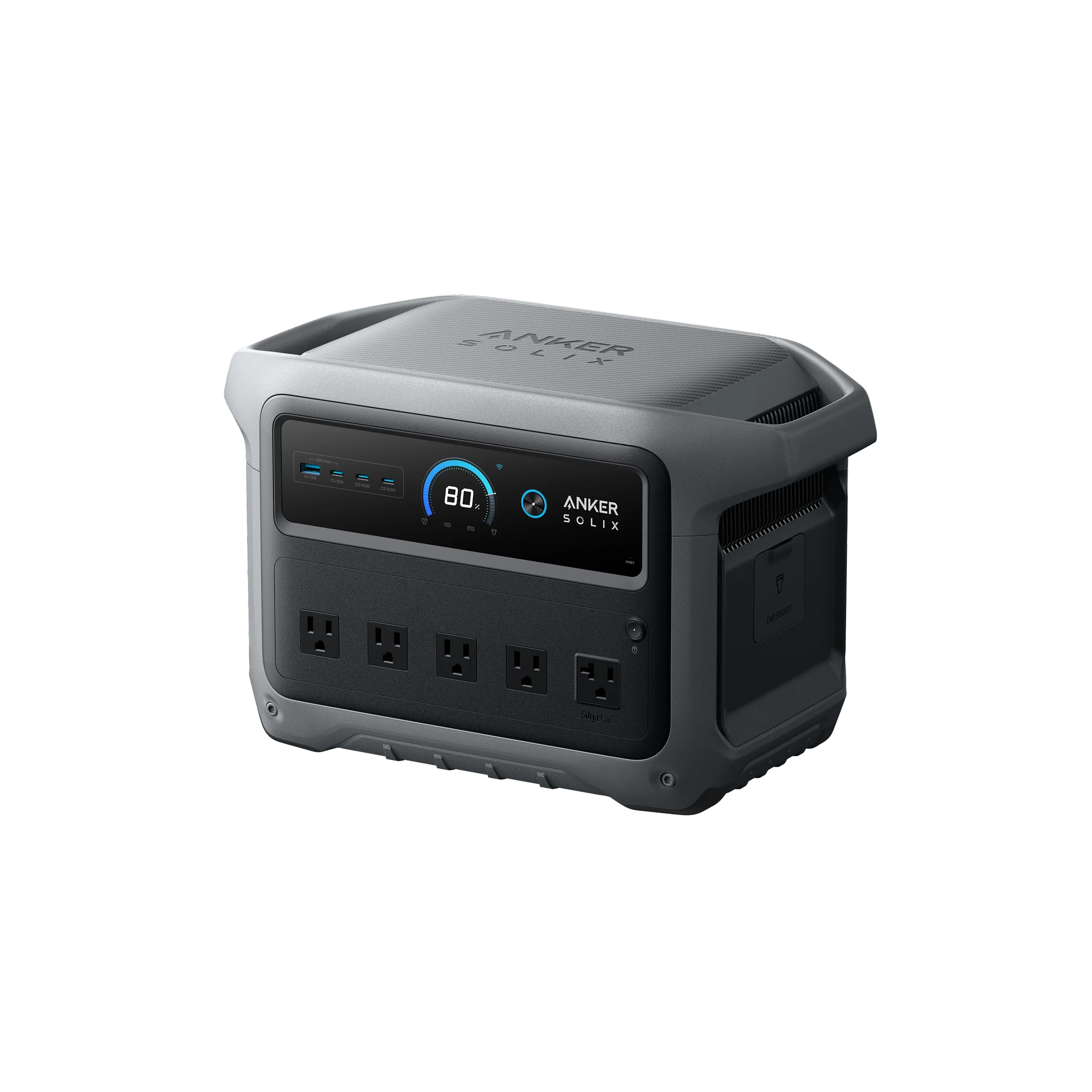
$529.99 · direct from Anker
Last checked 1 day ago. Prices move — check before you buy.

$429.00 · direct from Jackery
Last checked 14 days ago. Prices move — check before you buy.
Spec deltas
The Anker SOLIX C1000 Gen 2 costs $101 more than the Jackery Explorer 600 Plus and is the cheaper unit to own, at 13 cents per lifetime kilowatt-hour against 23. It also carries 62% more capacity, 1,024Wh to the Explorer's 632, and more than doubles the continuous output, 2,000W against 800W. On the merits this isn't close. The only real question is whether you need what the bigger box does.
The Explorer earns its place on two counts, and both are legitimate. It costs $101 less today, and at 16.1 lb it's 8.8 lb lighter than the 24.9-lb Anker. That is the difference between a one-hand grab off the shelf and a two-hand lift, and if your loads genuinely stay under 600Wh, the lightness is worth real money.
For everyone whose list runs bigger than that, the C1000 is more unit for less over its life, and the advantage only grows the more you cycle it. The rest of this page is about which of those two buyers you are.
What the Numbers Reveal
Each conclusion stated first — the numbers behind it on one line, the full analysis below.
cost / lifetime kWh
Across their rated lives the C1000 delivers 4,096 kWh and the Explorer 1,896, more than double, for a sticker just $101 higher. Divide price by lifetime energy and it lands at 13 cents a kilowatt-hour against 23. The Explorer's lower checkout price is real, but it's spent back over the energy the C1000 keeps handing you.
C1000 Gen 2: $530, 1,024Wh, rated 4,000 cyclesExplorer 600 Plus: $429, 632Wh, rated 3,000 cycleslifetime energy 4,096 kWh vs 1,896 kWhcost per lifetime kWh $0.13 vs $0.23
Why it mattersAnyone who'll own and cycle the unit for years is spending less by buying the bigger Anker, not more.
continuous output
The output gap settles eligibility before capacity or price enters the room. The C1000 runs a standard 1,500W space heater with headroom to spareA3; the Explorer tops out near half that load. A single high-wattage appliance on your list decides this matchup by itself.
C1000: 2,000W continuous / 3,000W surgeExplorer 600 Plus: 800W continuous / 1,600W surgeruns a standard 1,500W space heaterA3
Why it mattersIf you mean to run a heater, kettle, microwave, or hair dryer, take the C1000 and skip the rest of the comparison.
weight
A CPAP, phones, a laptop, and camp lights all sit well under 632Wh, and both units clear a 320Wh CPAP night with hundreds of watt-hours left. When the job is that small, the Anker's advantages go inert, and the only difference left standing is that the Explorer weighs 8.8 lb less and costs $101 less.
Explorer 600 Plus: 16.1 lb, 632WhC1000 Gen 2: 24.9 lb, 1,024WhCPAP night about 320Wh (40W for 8 hours), both cover with reserve
Why it mattersThe small-loads, weight-first buyer should take the Explorer and count it a smart buy, not a compromise.
The specific dimensions that decide these two units — everything else is a tie.
Lifetime Value
Selected because: Over their rated lives the C1000 delivers 4,096 kWh to the Explorer's 1,896, and the bigger unit still costs less per kilowatt-hour.
cost / lifetime kWh
One of these delivers more than twice the other's lifetime energy for $101 more at checkout. The C1000 is rated to produce 4,096 kilowatt-hours across its life; the Explorer, 1,896. That comes from pairing a bigger tank, 1,024Wh, with a longer-rated pack, 4,000 cycles against 3,000. Divide each price by the energy it will ever make and the Anker is the cheaper unit per kilowatt-hour, which is the opposite of how more capacity usually prices.
The Explorer does win cost per warranty year, $86 against $110, and it's worth seeing why that's hollow. Both carry the same 5-year term, so that number is only the $101 price gap divided by five, not a gap in coverage or value. Measured against the energy each will actually deliver, the C1000 is the better buy and it isn't close.
Runtime: Will It Power Your Gear?
Selected because: 2,000W of output against 800W sets what each can run at all; 1,024Wh against 632Wh sets how long.
continuous output
Output is where these two stop being the same kind of product. The C1000 runs 2,000W continuous; the Explorer, 800W. That's the line between powering the kitchen counter and powering the desk. A standard 1,500W space heater, a microwave, and a hair dryer all sit above the Explorer's ceiling and comfortably inside the Anker's. On capacity, 1,024Wh against 632Wh means the C1000 also runs whatever both can handle roughly 60% longer.
Surge headroom splits in a way that rewards a careful read. The Explorer holds the higher ratio over its own rating, 2x against the C1000's 1.5x, but the C1000 holds the higher absolute ceiling, 3,000W against 1,600W. A fridge or pump draws a fixed number of watts when its motor kicks on, not a multiple of your inverter's rating, so the ceiling is the number that actually swallows a startup spike. That number belongs to the Anker.
Portability & Form Factor
Selected because: At 16.1 lb the Explorer is 8.8 lb lighter than the 24.9-lb C1000, the one contest it wins outright.
weight
Here is the Explorer's win, and it's not a small one: 16.1 lb against the C1000's 24.9. That 8.8-lb gap is the difference between a bag you lift off the shelf with one hand and a two-hand, mind-your-back carry. Move the unit to a campsite most weekends and your shoulders will keep score.
But weight only counts against capacity you would have used. If your loads fit inside 632Wh, the Explorer's lightness costs you nothing. If they don't, the C1000's extra 8.8 lb is simply the price of 392 more watt-hours and the output to spend them. Lighter wins only when you weren't going to need the rest, which for small, mobile setups is often exactly the case.
Your Life, Your Pick
Selected because: Neither covers a full blackout or a camping weekend; where they split, the tailgate goes to the C1000 and a CPAP night to the lighter Explorer.
Run these two through actual days and one fact frames everything: neither is a big-load machine. An 8-hour blackout wants 1,645Wh, a camping weekend 2,100Wh, a van-life day 4,685Wh, and both units come up short on all three. The C1000 covers more of each than the Explorer, but 'more of a shortfall than the other guy' is not the same as finishing. If those are your days, this is the wrong pair and you should size up.
The split happens down at the small loads. The 670Wh tailgate goes to the C1000, which clears it with 200Wh to spare while the Explorer finishes 133Wh short. The CPAP night goes to the Explorer, and not on capacity, since both cover a 320Wh night with hundreds of watt-hours left over. It goes to the Explorer because when a load is that trivial, the right unit is the one that's lighter and cheaper to carry to the nightstand.
Strengths & trade-offs
Anker SOLIX C1000 Gen 2
Strengths
- +Larger battery capacity
- +Higher AC output
- +Faster solar charging
- +Rated for 4,000 charge cycles — much longer battery lifespan
Trade-offs
- –No major technical downsides compared to rival.
Jackery Explorer 600 Plus
Strengths
- +Costs $101 less
- +Lighter by 8.8 lb
Trade-offs
- –Weaker inverter (-1,200W) limits appliance compatibility.
- –Sealed capacity — the SOLIX C1000 Gen 2 can add batteries to grow past 632Wh; this one can't.
- –Shorter-lived battery — rated for 3,000 charge cycles vs the SOLIX C1000 Gen 2's 4,000, so it wears out sooner.
Will It Power Your Gear?
Scenario math and per-appliance runtimes, modeled from the spec record.
Scenario verdicts
We ran the math on six real-world scenarios. Here's which unit survives your actual life.
SCN-01 · 2 nights · needs 2,100Wh
Weekend Camping
Two nights off-grid with essential comfort
Neither unit
Neither unit covers this scenario's 2,100Wh: the SOLIX C1000 Gen 2 comes up 1,230Wh short (about 41% covered), the Explorer 600 Plus 1,563Wh (26%). Treat this as partial cover — enough for the essentials in it, not the whole list.
Battery budget usedlower = more headroom
LOAD Phone Charger 15W×6h · LED Lights 40W×8h · Box Fan 75W×14h · CPAP Machine 40W×16h
SCN-02 · 8 hours · needs 1,645Wh
8-Hour Blackout
Keep the essentials running through a night without power
Neither unit
Neither of these is a whole-house blackout box. Against 1,645Wh of fridge, lights, and phones, the C1000 covers a little over half and the Explorer about a third. The Anker buys you meaningfully more hours, but plan to run essentials only either way, and if true blackout coverage is the goal, look at something larger.
Battery budget usedlower = more headroom
LOAD Fridge 150W×8h · Router + Modem 20W×8h · LED Lights (4 bulbs) 40W×6h · Phone Charger 15W×3h
SCN-03 · 8 hours · needs 320Wh
CPAP Overnight
Sleep therapy without interruption — the #1 medical use case
Explorer 600 Plus
A CPAP pulls about 40W, so a full eight-hour night is roughly 320Wh, and both of these swallow that many times over. The C1000 keeps around 550Wh in reserve, the Explorer around 217Wh. When capacity is this far from the limit, the decision falls to what you carry and what you pay, and the Explorer is 8.8 lb lighter and $101 cheaper for a job neither one will strain against.
Battery budget usedlower = more headroom
LOAD CPAP Machine 40W×8h
SCN-04 · 8 hours · needs 910Wh
Remote Workday
Full work day off-grid without power anxiety
Neither unit
This scenario needs 910Wh and neither unit quite finishes it. The SOLIX C1000 Gen 2 lands within 5% of it — close enough that trimming one appliance, or accepting a shorter evening, gets you there on the day.
Battery budget usedlower = more headroom
LOAD Laptop 60W×8h · External Monitor 30W×8h · Router + Modem 20W×8h · Phone Charger 15W×2h
SCN-05 · 4 hours · needs 670Wh
Tailgate Party
Game day power for the crew
SOLIX C1000 Gen 2
670Wh of tailgate, speakers and a blender and a griddle, and the Explorer runs out 133Wh short, about 80% of the way there. The C1000 finishes with 200Wh in reserve, and its 2,000W output won't blink when two appliances kick on at once. This one goes to the Anker on both endurance and muscle.
Battery budget usedlower = more headroom
LOAD Blender 400W×0.5h · LED TV (55") 80W×4h · Bluetooth Speaker 15W×4h · Phone Charger (×3) 45W×2h
SCN-06 · 24 hours · needs 4,685Wh
Van Life Daily
A full day of mobile living — the ultimate endurance test
Neither unit
Neither unit covers this scenario's 4,685Wh: the SOLIX C1000 Gen 2 comes up 3,815Wh short (about 19% covered), the Explorer 600 Plus 4,148Wh (11%). This is well outside what either unit is for; the right answer here is a larger station, not a choice between these two.
Battery budget usedlower = more headroom
LOAD Mini-Fridge 150W×24h · Laptop 60W×4h · Phone Charger 15W×3h · LED Lights 40W×5h · Fan 75W×8h
The Load Test
RUNTIME = (Wh × 0.85) ÷ LOAD
None of the scenarios above exactly yours? Build it. Toggle what you'd plug in; both units are tested against the combined draw.
Essentials
Comfort & Convenience
High-Draw Appliances
Test duration
8h
Continuous draw
205W
Projected runtime
For this load: SOLIX C1000 Gen 2 runs 4.2h vs 2.6h.
$529.99 list · direct from Anker
Modeled from the spec record — same math as the tables below. Methodology
Runtime by appliance
Real-world runtime estimates for common appliances, modeled at 85% inverter efficiency.¹
Essentials
The basics you need runningscale 0–58hComfort & Convenience
Makes off-grid life actually enjoyablescale 0–11.6hHigh-Draw Appliances
These reveal the real limitsscale 0–0.9h¹ Runtime = (capacity × 0.85) ÷ appliance watts. Within each group, all bars share one time scale (the group's longest runtime), so lengths are comparable across appliances; identical runtimes collapse into a single blue/orange bar. Actual runtime varies with battery age, temperature, and simultaneous loads — see methodology.
Conclusion
August 30, 2026
Verdict: the SOLIX C1000 Gen 2, on Power Score margin
Take the Anker SOLIX C1000 Gen 2 unless you're buying specifically for lighter weight or the lowest sticker price. For $101 more it gives you 62% more capacity, two and a half times the continuous output (2,000W vs 800W), three times the solar input (600W vs 200W), a pack rated for 1,000 more charge cycles, and the lower cost per lifetime kilowatt-hour of the two. The Explorer 600 Plus earns its keep only for a buyer whose loads stay under 600Wh and who'd rather pocket 8.8 lb and $101 than have any of that.
Editor-assigned confidence, based on cited owner research and spec analysis.
List prices as of August 30, 2026. The links below open Anker's and Jackery's current prices.
$529.99 · direct from Anker
Last checked 1 day ago. Prices move — check before you buy.
or check the Explorer 600 Plus price$429.00 list
Written by Ian Schneider, Solar & Off-Grid Tester · Station Arena Test Desk · Updated August 30, 2026
Measured Data
Benchmark scores and the full spec record, side by side.
Benchmark scores
Not rated for both units (minimum threshold unmet): RV Living, Home Backup, Food Truck.
Full specifications
ᵈ Derived: price ÷ rated capacity. See the data behind our comparisons →
Comparison ToolAdd more power stations, side by sideOpen Tool →How these numbers are produced
Numeric verification
Every figure on this page traces to our spec database or arithmetic on it — no estimated numbers.
Owner claims
Statements about owner experience are cited to published reviews — see Sources & Research Notes below.
Runtime model
Runtime = (rated capacity × 0.85 inverter efficiency) ÷ device wattage. Solar recharge estimates assume panels deliver 70% of rated output. Cold weather, battery age, and stacked loads reduce real-world results.
Power Score
Computed from 14 published spec dimensions, weighted per use-case bench. Higher is better; a unit must meet a bench's minimum threshold to be rated.
See the full weight table and data sourcing on our methodology page →Class ranking (the star rating)
Each unit's star score is a category ranking, not customer reviews — no buyer opinions feed it. We score every station on size-independent quality (value, output, portability, endurance, ports, warranty, and more), then percentile-rank it against the other units in its capacity class, so a class-leading compact unit and a class-leading whole-home unit can both earn 5★. Here, SOLIX C1000 Gen 2 rates 4.9/5 (96th percentile of 27 Everyday-class units), and Explorer 600 Plus rates 4.0/5 (42nd percentile of 20 Compact-class units).
How the class ranking is computed →Test Notes & Caveats
Hidden gotchas and advantages we spotted that you won't find on the product page.
Expandable, but know what it buys
The C1000 takes Anker expansion batteries and the Explorer is sealed at 632Wh, a point in the Anker's favor with a caveat worth stating against our own pick. At the 1kWh size, adding a battery buys longer runtimes on the same loads, not a jump to whole-home backup. Buy the C1000 for what it does at 1,024Wh, not for an expansion path that adds hours rather than a house.
Surge: the ceiling beats the ratio
The Explorer keeps the higher surge-to-continuous ratio, 2x its 800W rating against the C1000's 1.5x over 2,000W, but read that carefully. A fridge or pump draws a fixed number of watts at startup, not a multiple of your inverter's rating. What clears that spike is the absolute ceiling, and there the C1000's 3,000W towers over the Explorer's 1,600W. On raw starting muscle the Anker is the stronger unit; the Explorer is just the one running further below its own limit at cruise.
UPS: 10ms vs 20ms, on paper
Both offer a UPS mode, rated at different speeds: the C1000 at 10ms or better, the Explorer at 20ms or better. These are ratings, not stopwatch results. For a router or most electronics either is fine. The wrinkle is a desktop PC, whose power supply can sit right at the 20ms line, so if a computer with unsaved work is what you're protecting, the C1000's tighter rated class is the safer bet.
Warranty: No Difference
Both units carry the same 5-year warranty, so coverage isn't a tiebreaker here. The Explorer 600 Plus's figure is a maximum rather than a guarantee — it depends on registering the unit with Jackery, which is what extends the base term to the full period.
Battery Lifespan in Real Years
The SOLIX C1000 Gen 2 is rated for 4,000 cycles vs 3,000. In real life: at daily use, that's 11 vs 8.2 years. At weekend use (twice a week), it's 38 vs 29 years. One caution reading years across different sizes: a cycle is 1,024Wh on the SOLIX C1000 Gen 2 and 632Wh on the Explorer 600 Plus, so count lifetime energy — roughly 4,096 kWh against 1,896 kWh over the rated life. After hitting the cycle limit, the battery doesn't die — it drops to ~80% of original capacity, which is still very usable.
Full record above — the Test Desk pick is the SOLIX C1000 Gen 2.
Check SOLIX C1000 Gen 2 price →or check the Explorer 600 Plus priceOwnership Analysis
What happens after you buy — true cost of ownership, brand trust, and growth potential.
Lifetime value
Service lifeyears at one full cycle per day
Lifetime energy delivered
Cost per delivered kWh
│ warranty ends · Reaching the cycle rating means ~80% capacity remains — degraded, not dead.
Analyst note
The Explorer 600 Plus is cheaper to buy, but the SOLIX C1000 Gen 2 is cheaper to own. At $0.13/kWh over its lifetime vs $0.23/kWh, the SOLIX C1000 Gen 2's higher cycle life and capacity make each dollar go further over the years.
Delivers each lifetime kWh for $0.10 less — check the SOLIX C1000 Gen 2 price →
Brand trust
Anker
Ecosystem
7-8 SOLIX portable power stations across C-series (compact) and F-series (flagship), plus the X1 home energy system
Support
US-based, and historically famous for no-hassle replacements. The honest update: SOLIX-specific support quality is trending down, with reports of AI-driven agents giving generic answers.
Community
Moderate — active Reddit (r/Anker, r/AnkerSOLIXCommunity) and growing. Benefits from Anker's massive consumer electronics brand awareness.
App experience
Rated 4.5/5 iOS (~1,100 ratings) · 4.3/5 Android
Unique strength
Anker's per-watt-hour value is the draw: the C1000 is one of the better dollar-per-watt-hour buys in the catalog, and the app is genuinely good, 4.5/5 on iOS across roughly 1,100 ratings, the stronger software of the two brands here.
Worth knowing
Firmware updates have occasionally removed features without warning, and the expansion ecosystem is smaller than EcoFlow's. Neither is likely to bite a single-unit C1000 owner, but they're the marks against an otherwise strong package.
Jackery
Ecosystem
12-15+ models across Explorer (portable) and HomePower (home backup) series, plus SolarSaga panel ecosystem and innovative form factors
Support
US-based but the weak spot. Warranty service draws criticism for scripted responses and strict receipt requirements, which is exactly why buying from a retailer with its own return policy is the smart move.
Community
Smallest community of the major brands — Reddit r/Jackery has ~2,000 members. YouTube presence is solid due to brand recognition.
App experience
Rated 2.3-3.3/5 iOS and Android — the weakest app experience of the major brands. Multiple confusing apps (Jackery app vs Jackery Home) and mandatory login even offline.
Unique strength
Distribution is Jackery's real moat: stocked at Costco, Home Depot, Best Buy, and Amazon, it's the one you can buy in person and return to a desk. The 'Toyota' of power stations, proven, everywhere, and easy to live with.
Worth knowing
The app is the weakest of the major brands (2.3 to 3.3 out of 5), with multiple confusing apps and a mandatory login even offline. Owners of this specific unit rate its app better than that store-wide average, so it reads more as the software line than this particular box.
Analyst note
Two different pitches. Anker sells the better software and the cheaper energy; Jackery sells the return desk down the road. If app polish and lifetime value lead your list, that's Anker. If you'd trade the app for the ability to walk a faulty unit back into Costco, Jackery's distribution is a legitimate reason to pay a little more per watt-hour.
Growth path
SOLIX C1000 Gen 2
EXPANDABLESupports Anker expansion batteries, so you can add capacity later without replacing the base unit — useful if your needs may climb past 1,024Wh.
Accepts up to 600W of solar. Suitable for a 1-2 panel setup.
Generous port selection supports complex multi-device setups.
Expansion batteries are Anker-specific. You're investing in the Anker ecosystem.
Explorer 600 Plus
FIXED CAPACITYFixed at 632Wh, with no expansion — so size it for your needs up front rather than planning to add capacity later.
Accepts up to 200W of solar. Limited to a single portable panel.
Limited ports. You'll likely need a power strip or splitter.
Realistic full solar rechargeat 70% of rated panel output — see methodology
Analyst note
The Explorer 600 Plus is sealed at 632Wh, which is fine if that covers you. The SOLIX C1000 Gen 2 starts at 1,024Wh and can grow beyond it with Anker expansion batteries — though at this size expansion means longer runtimes on the same loads, not a path to home backup. More hours, not more house.
What Owners Report
Patterns from published owner reports and long-term reviews — every claim cited to its source below.
Anker SOLIX C1000 Gen 2
Reviewers put the C1000 Gen 2 at the front of the mid-size class for 2026, calling it a refined, fast-charging update to Anker's 1kWh platformA4. HyperFlash charging refills it from empty in about 49 minutes on wall power, well ahead of the original's 58-to-80A1, and the bumped output clears a bar the first model couldn't: it runs a standard 1,500W space heater with headroom to spareA3.
The one recurring complaint is noise. It's near-silent at low load, around 35dB under 200W, but the fans climb to roughly 55dB when it's fast-charging or pushing past 1,000WA2. Review coverage of this unit is strong and currentA0, so that trade is well documented rather than a surprise.
“Fast HyperFlash charging — a full recharge in roughly 49 minutes, noticeably quicker than the original C1000's ~58-80 minutes.”
Sources
thepowerpick.com · macrumors.com · outdoorgearlab.com · technerdo.com · mensjournal.com · powerstationadvisor.com
Jackery Explorer 600 Plus
Owners describe the Explorer 600 Plus as a versatile, well-built camping companion whose 800W pure sine inverter does more than its 632Wh size suggests, comfortable with fridges, CPAPs, and most electronicsB0B1. One owner ran a four-hour DJ set on it, two speakers, a wireless mic, a laptop, and a controller, and finished the night at 65%B3. It's among the lighter, better-made units in its class, with a foldable handle and LiFePO4 cells rated past 3,000 cyclesB4.
On software, owners of this specific unit rate its app well, which is notable because Jackery's store-wide app scores are the lowest of the major brands. Read that as a vote for this box rather than the software line as a wholeB2.
“Its 800W pure sine wave inverter can handle small appliances, portable fridges, CPAP machines, and most electronics with ease.”
Sources
bestgeneratorsolar.com · jackery.com · bestbuy.com · homedepot.com · solarwaypoint.com
Sources & Research Notes
Every owner claim in this report is traceable to a published source. The bracketed references above resolve here.
Recurring owner themes
- Fast charging and higher output over the original are the standout gains; fan noise under load or fast charging is the top complaint. [SOLIX C1000 Gen 2 · 3 entries]
- Strong 800W output for the class, fast charging, a well-received app among owners of this unit, and compact well-made build are the consistent praise. [Explorer 600 Plus · 3 entries]
- A1
“Fast HyperFlash charging — a full recharge in roughly 49 minutes, noticeably quicker than the original C1000's ~58-80 minutes.”
thepowerpick.com / macrumors.com — Anker SOLIX C1000 Gen 2 review · 2026 · [positive]
- A2
“Fan noise is the single most common complaint — nearly silent at low load (about 35 dB under 200W), but the fans ramp up audibly during fast charging or heavy output, reaching around 55 dB at 1,000W-plus.”
outdoorgearlab.com / technerdo.com — C1000 Gen 2 review · 2026 · [negative]
- A3
“The higher continuous output crosses a useful threshold over the original — enough to run a standard 1,500W space heater with headroom to spare.”
thepowerpick.com / mensjournal.com — C1000 Gen 2 review · 2026 · [positive]
- A4
“Reviewers describe it as a refined, powerful, fast-charging update to a popular 1kWh platform, widely rated the mid-size unit to beat in 2026.”
thepowerpick.com / powerstationadvisor.com — C1000 Gen 2 review · 2026 · [positive]
- B1
“Its 800W pure sine wave inverter can handle small appliances, portable fridges, CPAP machines, and most electronics with ease.”
bestgeneratorsolar.com / jackery.com — Explorer 600 Plus buyer's guide · 2026 · [positive]
- B2
“Owners report it charges fast, and rate the app well in retail reviews of this unit — against a line-wide store average that is the lowest of the major brands, so read this as sentiment about the Explorer 600 Plus rather than about Jackery software generally. A reliable, convenient camping companion with a compact, lightweight design that feels durable and well-made.”
bestbuy.com / homedepot.com owner reviews — Explorer 600 Plus · 2026 · [positive]
- B3
“One owner ran it for a 4-hour DJ gig with two speakers, a wireless microphone, a laptop, and a controller and ended with 65% charge.”
bestbuy.com owner review — Explorer 600 Plus · 2026 · [positive]
- B4
“LiFePO4 chemistry rated for 3,000+ life cycles, lasting roughly 5-10 years depending on use; among the smaller, lighter units in its class with a foldable handle.”
bestgeneratorsolar.com / solarwaypoint.com — Explorer 600 Plus review · 2026 · [positive]
Research compiled August 30, 2026.
Who Should Buy Which
Buy the SOLIX C1000 Gen 2 if you…
- →The buyer with one appliance over 800W on the list. A 1,500W space heater, a microwave, a hair dryer: the Explorer can't start them, and the C1000's 2,000W runs them with room to spare.
- →The outage planner who wants the most hours per dollar. 1,024Wh, a pack rated for 4,000 cycles, and a UPS mode rated at 10ms or better that a desktop PC should ride through without a reboot.
- →The solar camper topping up off-grid. 600W of solar input refills the C1000 in a good morning of sun, three times the Explorer's 200W ceiling, which matters more than price when the wall outlet is miles away.
Buy the Explorer 600 Plus if you…
- →The weight-first buyer with small loads. A CPAP, phones, a laptop, and camp lights all fit inside 632Wh, and at 16.1 lb the Explorer saves 8.8 lb every time you carry it.
- →The shopper who'd rather buy at Costco, Home Depot, or Amazon and keep an easy return in reach. Jackery is the most widely stocked of these brands, and that retail reach is a genuine advantage over ordering a heavier box online.
If neither fits
If your real need is a full 8-hour blackout at 1,645Wh, a 4,685Wh van-life day, or a family camping weekend (2,100Wh on its own), neither of these finishes the job. Both fall short on the large scenarios by design. The right move there is a single larger station in the 2,000Wh-plus class, not a choice between these two.
The Bottom Line
The C1000 Gen 2 is the bigger battery and the cheaper one to own. Over its rated life it hands you 4,096 kilowatt-hours to the Explorer's 1,896, more than double, and it does it at a lower cost per kilowatt-hour despite the higher sticker. The unit with more capacity, more than twice the output, and the longer-rated pack is also the better value per unit of energy. The $101 you save at checkout is the Explorer's one financial win, and it fades over years of use.
Buy the Explorer 600 Plus if you want the lighter box for small loads, or the Costco return desk in your back pocket. For any other way of using these two, the Anker is more machine for less money the longer you keep it. Get the C1000.
Frequently Asked Questions
Answers drawn from the spec record and cited owner research.
Is the Anker SOLIX C1000 Gen 2 worth $101 more than the Jackery Explorer 600 Plus?
For most needs, yes. The extra $101 buys 62% more capacity (1,024Wh vs 632Wh), two and a half times the continuous output (2,000W vs 800W), and a lower cost per lifetime kilowatt-hour, so the bigger unit is also the cheaper one to own. The exception is a buyer who wants the lightest possible box for small loads, where the Explorer's 8.8-lb weight saving wins.
Which is better for running a CPAP overnight?
Either handles a CPAP with ease. A typical machine draws about 40W, roughly 320Wh over eight hours, and both units cover that several times over. Because capacity is a formality at that load, the lighter, cheaper Explorer 600 Plus is the sensible CPAP-only pick. Choose the C1000 only if you also want daytime capacity for bigger loads.
Can the Jackery Explorer 600 Plus run a space heater or microwave?
No. Its 800W inverter sits below a standard 1,500W space heater and below most microwaves, so it can't start them. The Anker C1000's 2,000W output runs both. If anything on your list draws more than 800W, the Explorer is off the table.
Which power station lasts longer, the Anker or the Jackery?
The C1000 Gen 2 is rated for 4,000 charge cycles against the Explorer's 3,000, which works out to roughly 11 years versus 8 at daily use. At the end of that rating the pack drops to about 80% of its original capacity rather than dying, so both keep working past it. Counting total energy, the Anker delivers 4,096 kWh over its rated life to the Jackery's 1,896.
How much heavier is the Anker C1000 than the Jackery Explorer 600 Plus?
It's 24.9 lb against 16.1 lb, about 8.8 lb more. That's the Explorer's clearest win: a one-hand carry versus a two-hand lift for many people. If you move the unit often and your loads are modest, the weight difference is a real reason to size down.
Where to buy
Anker SOLIX C1000 Gen 2Pick
$529.99
$529.99 · direct from Anker
Last checked 1 day ago. Prices move — check before you buy.
Jackery Explorer 600 Plus
$429.00
$429.00 · direct from Jackery
Last checked 14 days ago. Prices move — check before you buy.
Prices may vary by retailer and are subject to change.