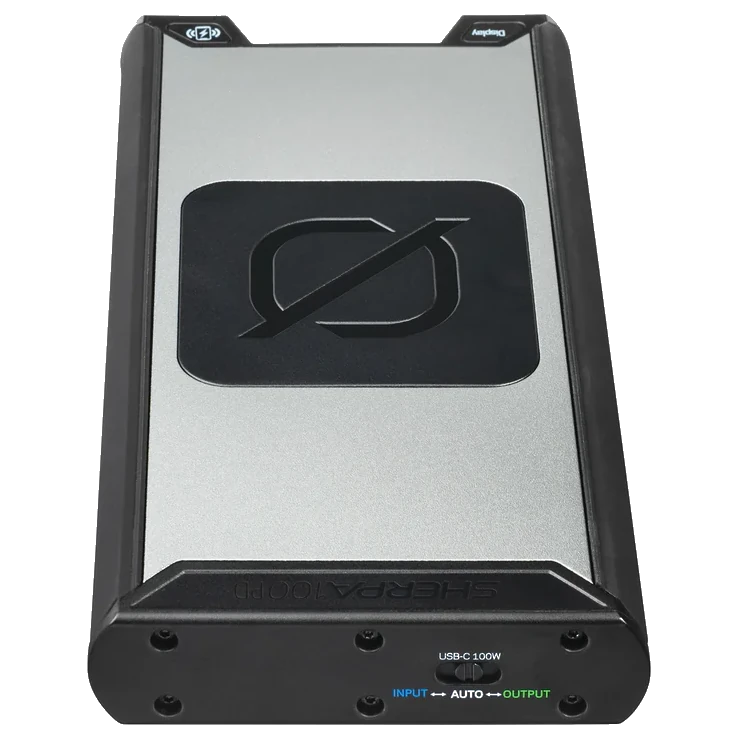
Goal Zero
Sherpa 100PD
$200 listed · 2 lb
Capacity
95 Wh
Output
100 W
Surge
—
Goal Zero’s USB-only carry-on unit: 94.7 Wh and 1.5 lb with a 100 W USB-C port, on older NMC cells rated 500 cycles. On sale now in the US.
Jackery · Explorer series · Power Station Arena coverage · Jackery’s Canadian launch release
Jackery Explorer 100D Portable Power Station
Yes, with 4 Wh spare. At 96 Wh it sits under the 100 Wh line most airlines draw for carry-on batteries, and it weighs 1.9 lb. It’s a USB battery with a screen, and there’s no AC outlet. On sale in Canada since October 28. The US price is the number we’re waiting on.
Reporting and analysis by Wenny ZhengAnnounced Oct 28, 2026Updated Oct 29, 2026
Reporting and analysis by Wenny ZhengAnnounced Oct 28, 2026Updated Oct 29, 2026
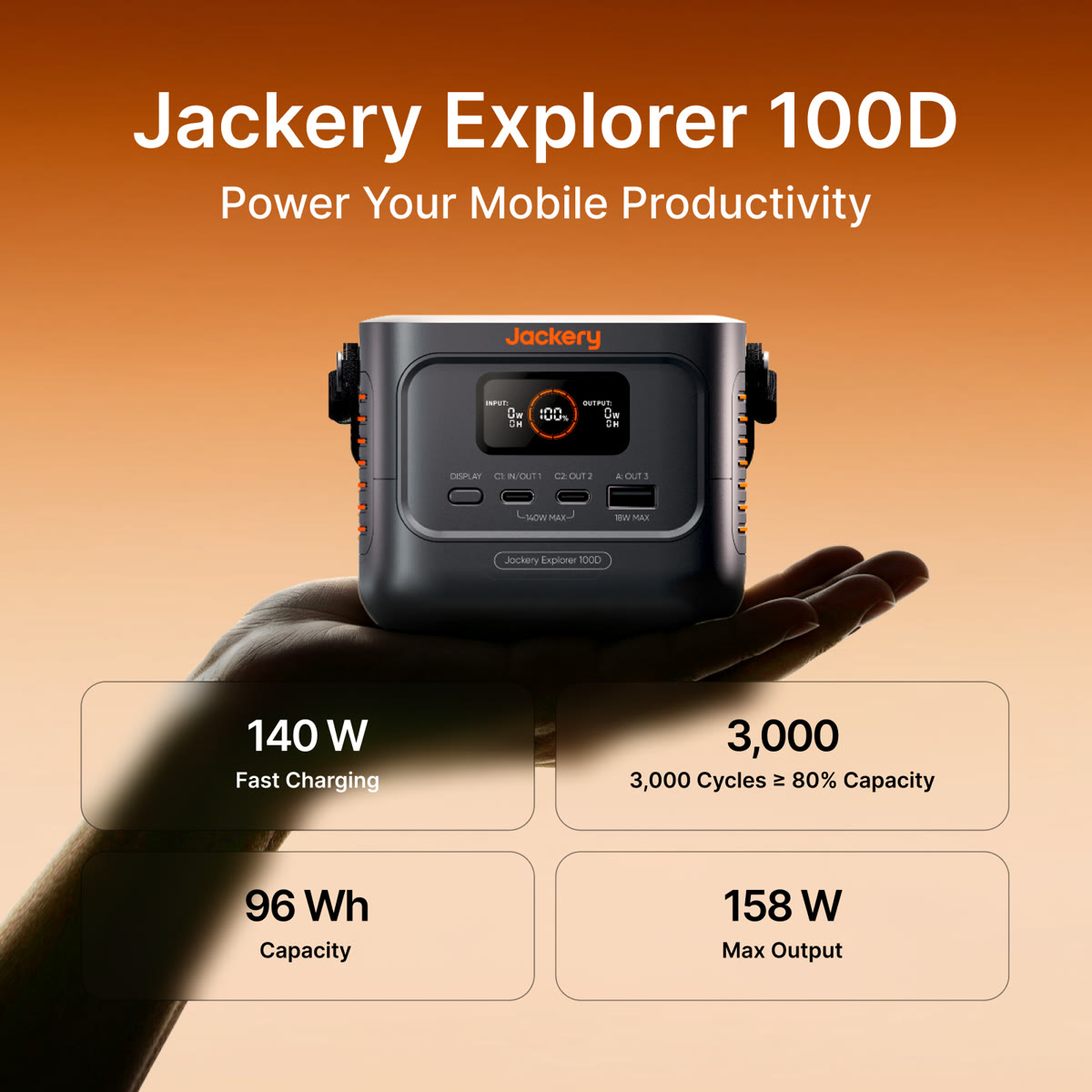
Photo: Jackery · Explorer 100D listing, Jackery Canada
The short answer
We’d buy one for travel the day it lands in the US, if your laptop charges over USB-C. If you need a wall socket for anything, keep walking: the 100D has none.
2 of the 20 specs below are still blank — price and app control among them. Our read on the product is below, and so are the units you can buy today.
Get one email when the price or ship date lands
And one when our test results are in. Nothing else.
By subscribing, you agree to our Privacy Policy. Unsubscribe anytime.
01 · What was announced
Announced October 28, 2026 in Jackery’s Canadian launch release, dated Toronto. The framing below is ours; every figure in it is graded in the ledger that follows.
This is a power bank that went to finishing school. No AC outlet, no 12 V socket, three USB ports and a screen. What lifts it above the power banks in a drugstore is the battery chemistry and the honesty of the display.
Jackery’s pitch is the travelling laptop: a 140 W USB-C port for the laptop, phones and a camera on the rest, all inside the battery size an airline lets you carry on without asking. For that job we think it is pitched exactly right.
In Jackery’s pictures
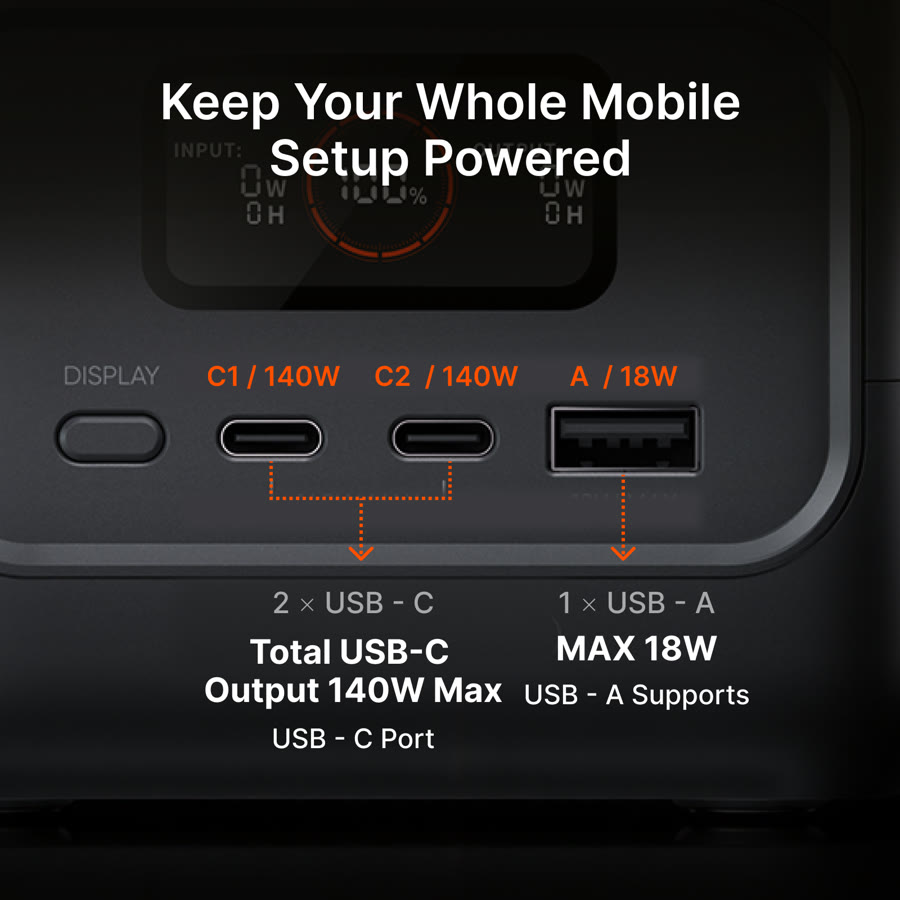
The front panel. Read the small print: the two USB-C ports share 140 W between them. You only reach 158 W with the USB-A port in use.
Photo: Jackery · Explorer 100D listing, Jackery Canada
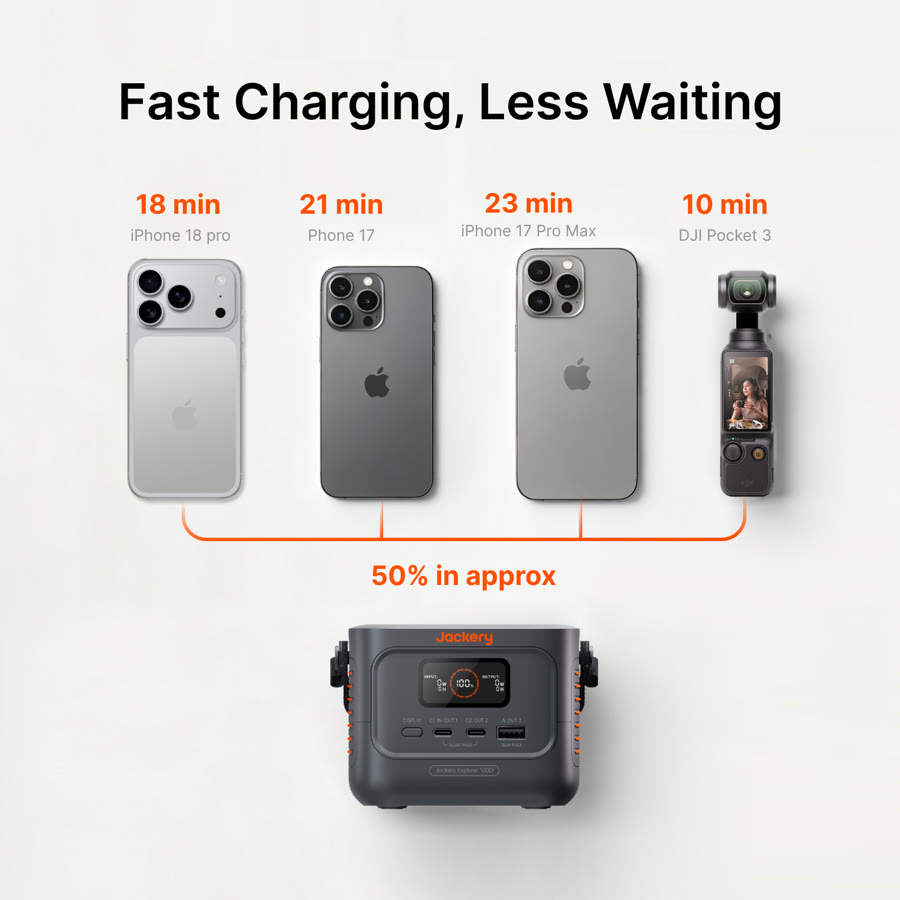
Jackery’s phone claims: about 50% in 18 to 23 minutes for three iPhones, and 10 minutes for a DJI Osmo Pocket 3.
Photo: Jackery · Explorer 100D listing, Jackery Canada
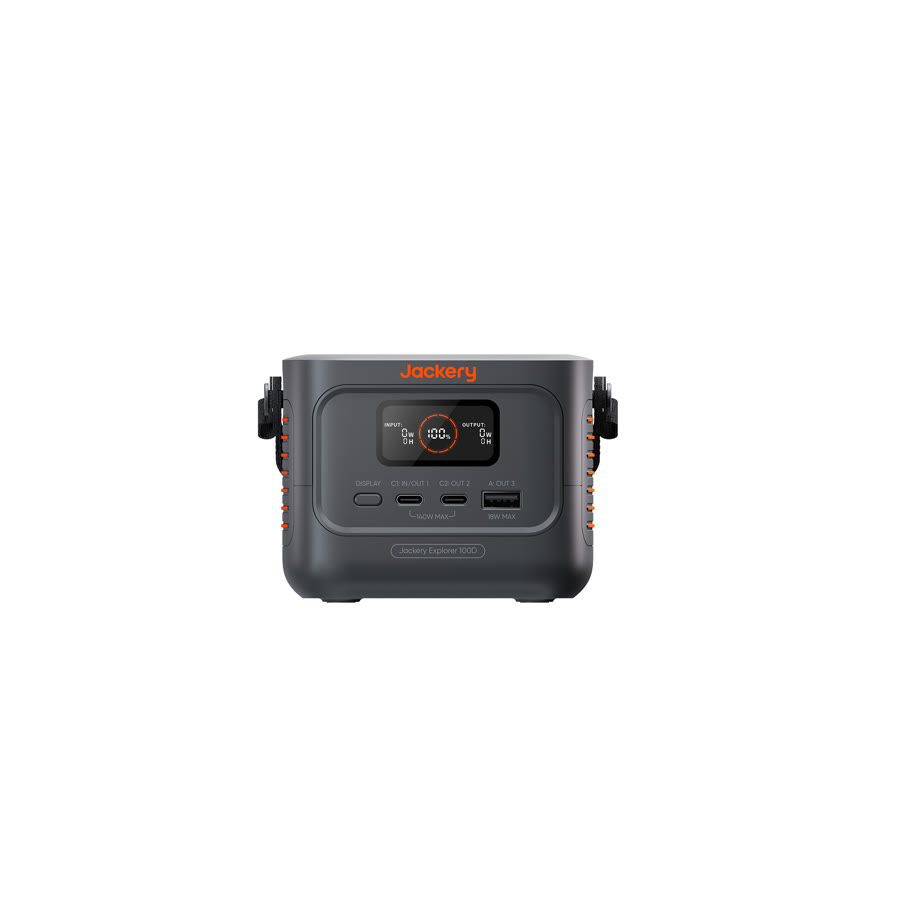
Front on. The lugs either side take the optional shoulder strap.
Photo: Jackery · Explorer 100D listing, Jackery Canada
02 · Specs
Everything known so far, line by line, so you can tell which numbers are firm enough to plan around. Each figure is marked Jackery-published or published by Power Station Arena, and blanks are blank on purpose: if you came for the price, you should see that we looked rather than find a guess.
How we knowEstablished by Power Station Arena’s own check of Jackery’s US store catalog on October 29, 2026.
By Jackery’s port diagram, the two USB-C ports share 140 W between them and the USB-A port adds 18 W.
Charging and powering devices at once caps both at 100 W. The box holds the unit, a 60 cm USB-C cable and a manual; no charger.
Jackery names its 40 W and 100 W panels for it.
Jackery’s European page says 850 g, and 12% lighter than the Explorer 100 Plus.
US terms not published yet.
03 · Our arithmetic
Jackery has published no runtimes and no charging-circuit requirement. These are estimates from Jackery’s figures, and they are labelled Power Station Arena analysis everywhere they appear.
| Load | Base pack · 96 Wh |
|---|---|
| 10 W — A phone charging | 8.2 h |
| 60 W — A laptop | 1.4 h |
| 150 W — Laptop, router and lights | 33 min |
| 158 W — The full continuous rating | 31 min |
Assumes 85% of rated capacity reaches the load — the same planning constant our comparison engine uses for every station. Real runtime at 158 W will also depend on how the pack derates in heat, which nobody has measured yet.
Power Station Arena analysisWhat the charging claims imply
Jackery quotes 0 to 80% in about 1.6 hours on a 100 W USB-C charger and 1.7 hours on 100 W of solar. It does not say how fast a 140 W charger gets there.
Good to knowEvery estimate above updates automatically if Jackery revises a published figure; nothing here is typed in by hand.
04 · Our take
Analysis by the Test Desk — not a summary of Jackery’s release or anyone else’s coverage. Every comparison figure below comes from the named maker’s own page.
The number that matters is 96, and Jackery picked it on purpose. Most airlines let you carry a battery under 100 Wh without asking anyone, and the FAA draws the same line. Between 100 and 160 Wh you need the airline’s permission; above 160 Wh it stays home. So the 100D’s nearest rivals in our catalog sort themselves at the gate: the 128 Wh BLUETTI Elite 10 Mini needs a yes from the airline, and the 192 Wh SOLIX C200 DC and the 288 Wh Explorer 300D cannot fly on a passenger plane at all. If you fly, that leaves Goal Zero’s two Sherpa 100 units and this one.
Read the port diagram, not the headline. Jackery advertises two 140 W USB-C ports and 158 W of output. Its own diagram says the two USB-C ports share 140 W between them, and the 158 W only appears when the 18 W USB-A port joins in. So a 140 W laptop and a phone on USB-C at the same time will split the 140 W. A laptop on USB-C and a phone on USB-A is the combination that gets the full 158 W.
The charging times give the real input away. 80% of 96 Wh is 76.8 Wh. Jackery says a 100 W charger gets there in about 1.6 hours, which is an average of 48 W; 100 W of solar takes 1.7 hours, about 45 W. That is normal for a small battery that slows as it fills, and it is still a fast recharge. Just plan on about 50 W going in, and treat 140 W as the ceiling rather than the speed. Jackery has not said how much faster a 140 W charger is, and the box has no charger in it, so budget for one.
The cycle rating is the real upgrade. 3,000 cycles to 80% is 8.2 years at a full cycle every day, which is where Jackery’s “up to 8 years” comes from. The Explorer 100 Plus was rated 2,000, so the 50% longer life in Jackery’s release checks out. Against Goal Zero’s Sherpa 100PD, one of the two other carry-on units in our catalog, it is six times the rated cycles, on LFP cells instead of NMC. A screen that reports battery health is a small thing we’d like on every unit: it tells you when the battery is wearing out before a trip finds out for you.
The US is the open question. The 100D is not on Jackery’s US store yet, and the Explorer 100 Plus listing there reads sold out at $149. Our read, and it is only a read: a successor that is on sale in Canada and Europe with a predecessor sold out in the US usually means the US listing is coming. We will not guess the price from the Canadian one; exchange rates and US pricing rarely line up. We will add it the day Jackery publishes it.
05 · Buy today
Same capacity band, shipping now, with published outlet lists and prices we read twice a day. Bars share one scale with the announced unit at the top; each card links to a head-to-head we have adjudicated.
Reference · not on sale
1.9 lb (855 g) (Jackery-published) · Not announced for the US
Goal Zero
$200 listed · 2 lb
Goal Zero’s USB-only carry-on unit: 94.7 Wh and 1.5 lb with a 100 W USB-C port, on older NMC cells rated 500 cycles. On sale now in the US.
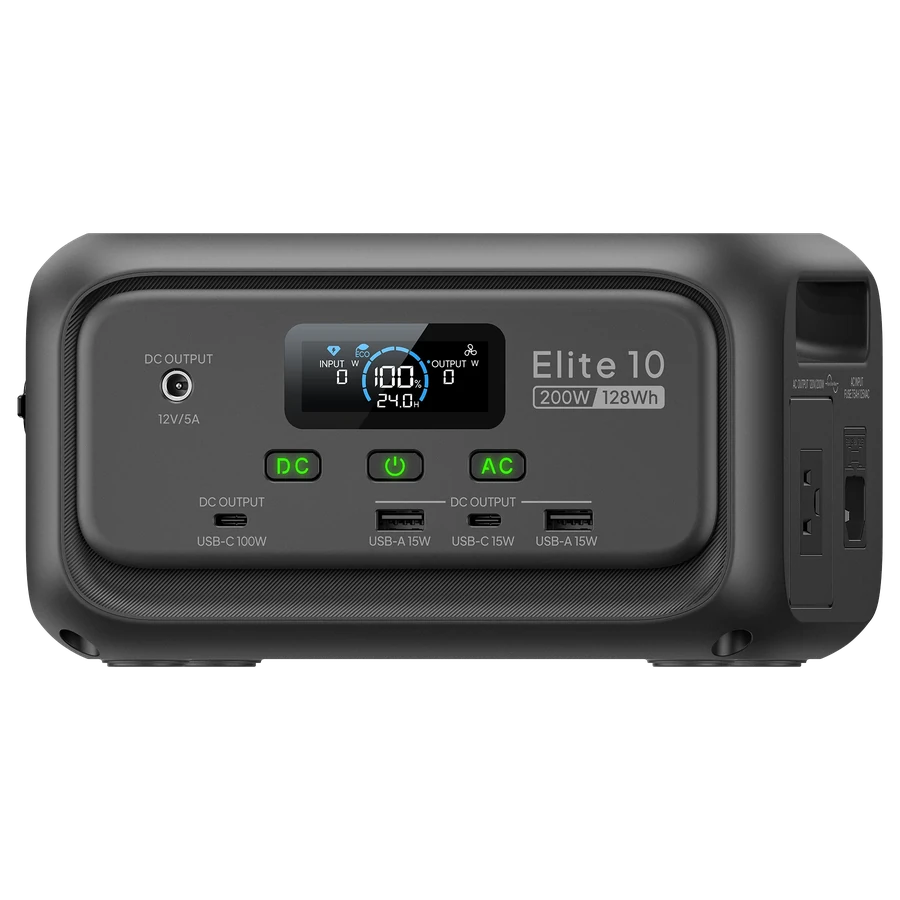
BLUETTI
$119 listed · 4 lb
If you need one AC outlet as well as USB-C, this is 128 Wh with a socket, at about 4 lb. Over 100 Wh, so ask your airline before you fly with it.
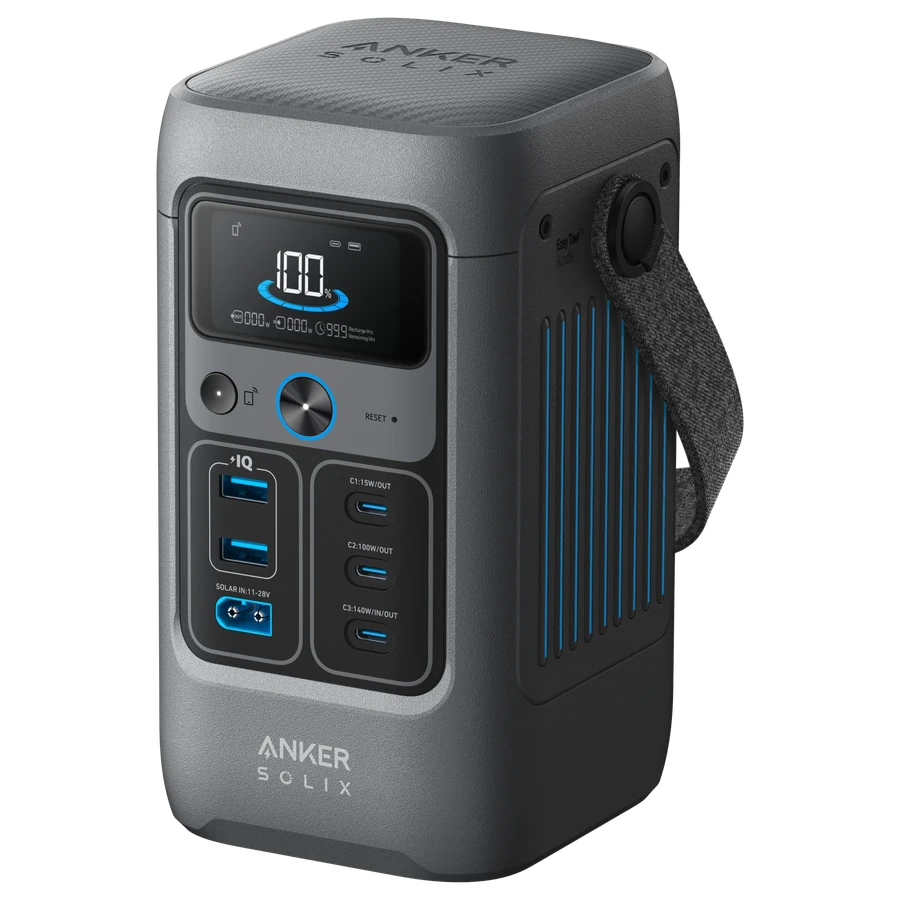
Anker
On Amazon · 4 lb
Anker’s USB-only unit at twice the battery: 192 Wh, a 140 W USB-C port, 4.2 lb. Too big for a plane, fine for a desk or a tent.
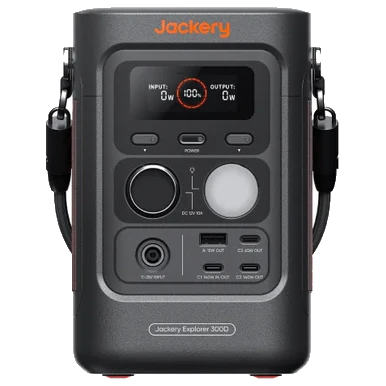
Jackery
$209 listed · 6 lb
Jackery’s next size up, on sale in the US: the same USB-only idea at 288 Wh with three USB-C ports, at 5.5 lb.
06 · The line
Jackery’s smallest units in our catalog start at 288 Wh: the USB-only Explorer 300D and the Explorer 300 v2 with AC outlets. The 100D sits well below both, where the Explorer 100 Plus used to be.
288 Wh · 300 W
The 288 Wh USB-only Explorer: the 100D’s bigger sibling in spirit.
$209 listedCompare →
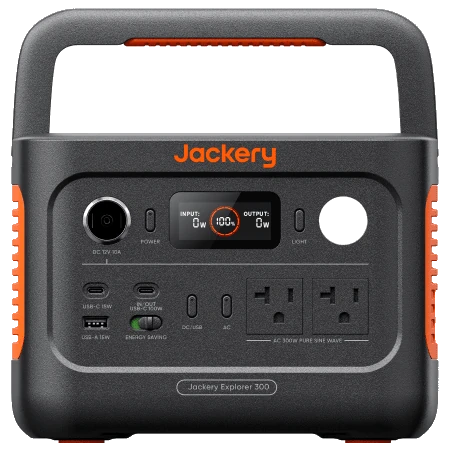
288 Wh · 300 W
The smallest Explorer with AC outlets: 288 Wh, 300 W, 8.1 lb.
$279 listedCompare →
For the whole Jackery range as it stands today, see our Jackery guide; for the two current units closest to this one in role, the Explorer 300D and SOLIX C200 DC side by side.
07 · Fit
Read from what Jackery chose to announce and what it chose to leave out.
08 · Questions
Short answers, each with its own link.
Jackery has not said. It went on sale in Canada on October 28, 2026 and is listed on Jackery’s European store, but it was not on Jackery’s US store when we checked on October 29. We update this page and email the alert list when the US listing appears.
In Canada, CA$179 list and CA$159 at launch for a limited time. In Europe, €129 list and €99 on Jackery’s store on October 29. There is no US price yet; we will add it the day Jackery publishes one.
At 96 Wh it is under the 100 Wh limit most airlines set for carry-on batteries, which Jackery designed it for. Carry it in the cabin, not checked baggage, and check your airline’s rules before you fly, as Jackery itself advises.
No. It has two USB-C ports and one USB-A port, with no inverter. Anything with a wall plug needs a different unit, such as the BLUETTI Elite 10 Mini.
By Jackery’s figures the 100D is 14% smaller and 12% lighter, rated 3,000 cycles instead of 2,000, and its USB-C ports go to 140 W instead of 100 W. It also charges from 24 V supplies and has a screen that shows battery health and temperature. Capacity drops slightly, from 99 Wh to 96 Wh.
From Jackery: 96 Wh of LFP cells rated 3,000 cycles to 80%, 158 W total output, two USB-C ports up to 140 W (sharing 140 W between them) and one 18 W USB-A, up to 140 W charging over USB-C, up to 100 W of solar through an adapter, 12 V and 24 V vehicle charging, 1.9 lb, 4.67 × 3.25 × 3.37 in, −4°F to 113°F, and a 2-year warranty in Canada.