DJI
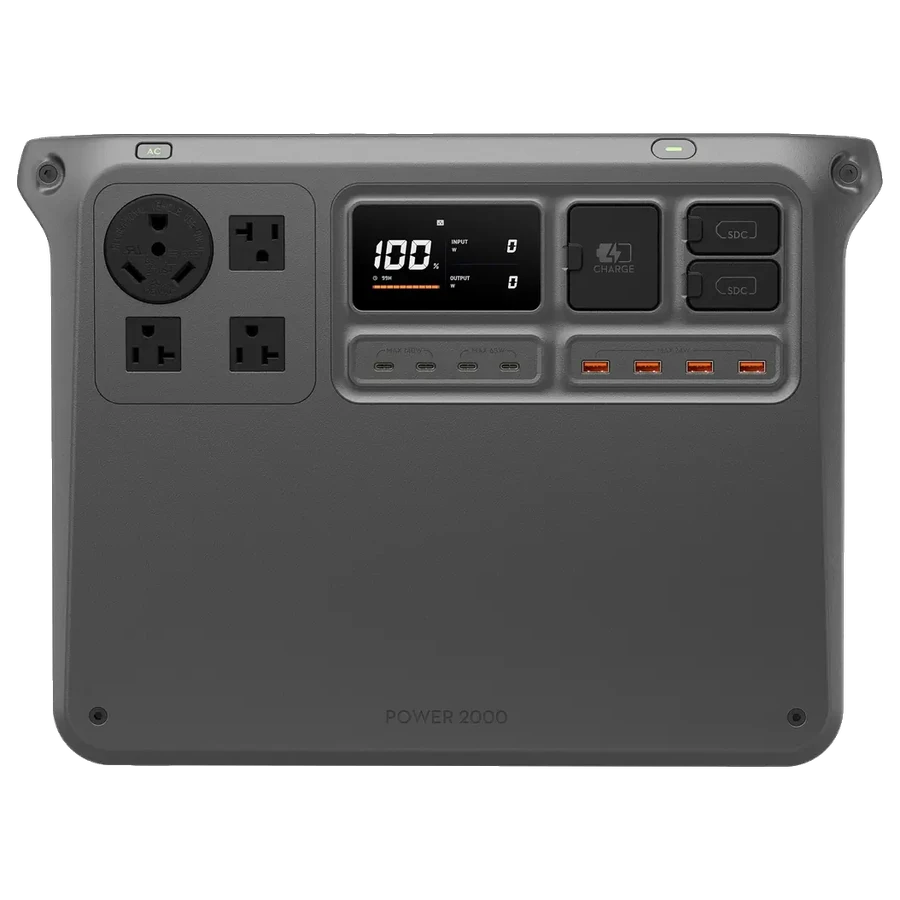
Power 2000
$1,299 listed · 49 lb
Capacity
2,048 Wh
Output
3,000 W
Surge
—
The big sibling, on sale in the US: 2,048 Wh, 3,000 W and 1,800 W of solar. It’s 6.6 lb heavier than the Auro, and fast car charging takes DJI’s separate charger.
DJI · Power series · Power Station Arena coverage · DJI’s press release
DJI Power Auro 2000 Elite Portable Power Station
Americans, for now. The Power Auro 2000 Elite packs 2,016 Wh and a 600 W car charger into a body 24% smaller than the Power 2000, and Europe has been able to buy it since October 28 at €1,099. We went looking for the US version and found a very interesting manual.
Reporting and analysis by Gunner GustafsonAnnounced Oct 28, 2026Updated Oct 30, 2026
Reporting and analysis by Gunner GustafsonAnnounced Oct 28, 2026Updated Oct 30, 2026
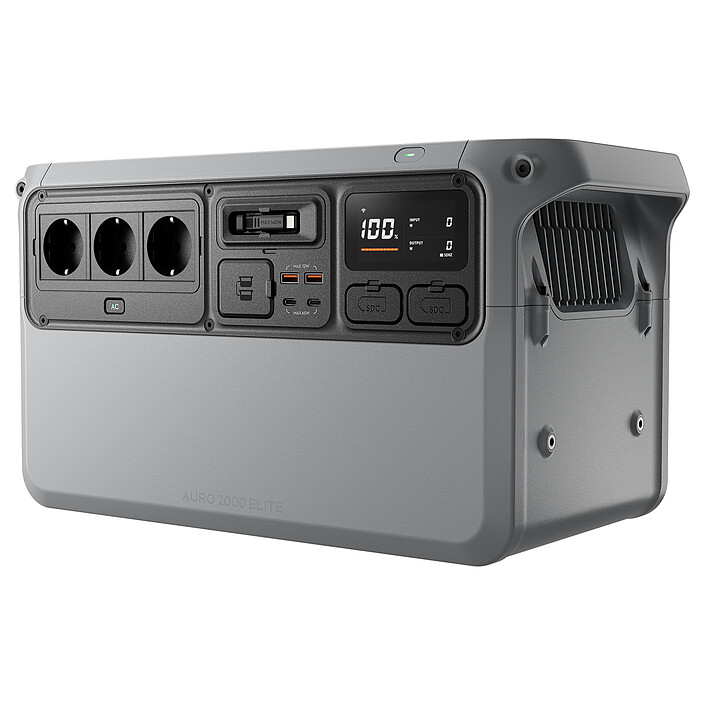
Photo: DJI · Product image, via LDLC
The short answer
If you live in the US, DJI won’t sell you this one today, and we wouldn’t import it. If the car charger is what you want, join the list and wait. If you just want 2 kWh, three lighter units ship now.
1 of the 32 specs below are still blank — price among them. Our read on the product is below, and so are the units you can buy today.
Get one email when the price or ship date lands
And one when our test results are in. Nothing else.
By subscribing, you agree to our Privacy Policy. Unsubscribe anytime.
01 · What was announced
Announced October 28, 2026 in DJI’s press release, dated Shenzhen. The framing below is ours; every figure in it is graded in the ledger that follows.
One line in the press release made us sit up: a car charger, built in. Lots of brands can shrink a box. Running a single cable from a car battery and pulling up to 600 W, with no separate charger to buy and bolt down, is the part we’d show a friend. You do still buy the cable.
This isn’t the Power 2000’s replacement, and we’re glad. The older unit stays on sale beside it, at the same €1,099 in Germany. DJI has given you a real choice between a bigger engine and a smaller, more travel-minded box.
In DJI’s pictures
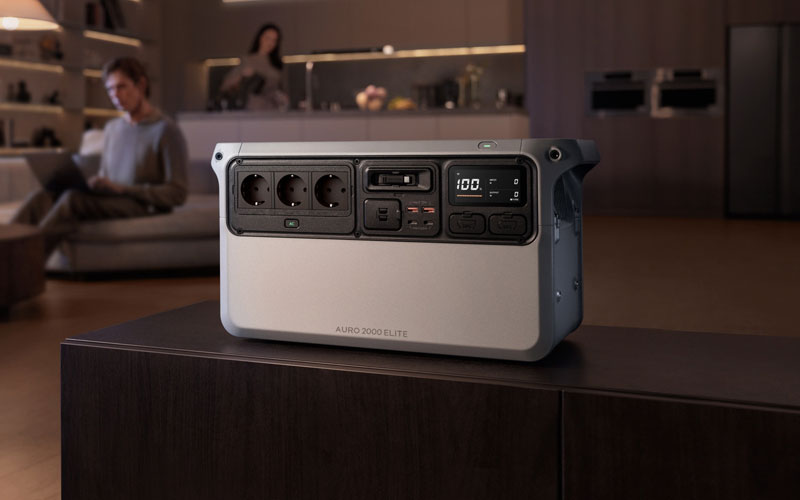
DJI’s living room, where a 42 lb battery lives on the sideboard and nobody asks why.
Photo: DJI · Launch image, via LDLC
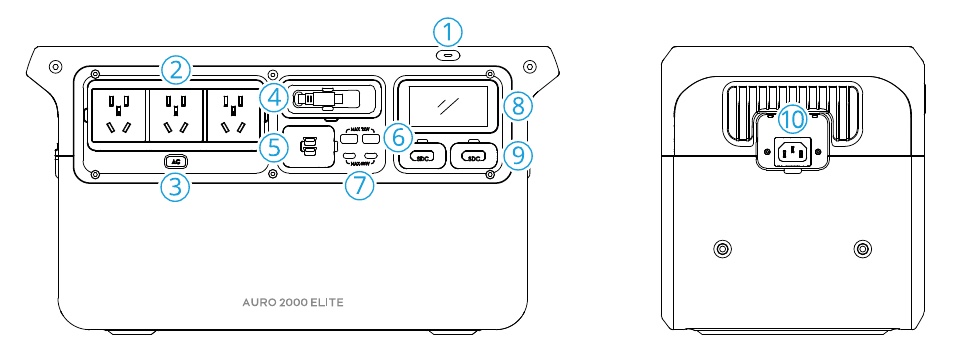
From DJI’s manual. Everything you plug in sits on one face (2 is AC, 4 the retractable cable, 5 the expansion port, 9 the SDC ports). The wall cord goes in the end, at 10.
Photo: DJI · Power Auro 2000 Elite user manual
02 · Specs
Everything known so far, line by line, so you can tell which numbers are firm enough to plan around. Each figure is marked DJI-published, published by Power Station Arena or rumored, and blanks are blank on purpose: if you came for the price, you should see that we looked rather than find a guess.
DJI’s German price for the Power 2000 read the same €1,099 on October 30.
How we knowEstablished by Power Station Arena’s own read of DJI’s prices for Japan on October 30, 2026.
Where it comes fromNotebookcheck reported the Chinese price and bttr.reviews the Australian one. We have not confirmed either on DJI’s own pages.
How we knowEstablished by Power Station Arena’s own check of DJI’s US store and its prices by country on October 30, 2026.
Where it comes frompv magazine’s report. DJI’s release doesn’t mention the US at all.
DJI’s release rounds it to 2 kWh.
DJI publishes no surge rating. Its manual warns that motors and compressors can draw 2 to 3 times their rated power at startup.
Where it comes fromASCII’s report from Japan, not a figure in DJI’s release or manual.
DJI’s limit is 60 V and 30 A per port, and going over can damage the unit. Cables are sold separately.
DJI says to start the engine first and raise the charge rate gradually. Cables are sold separately.
The port takes 15–21.6 V, with 2,000 W out and 2,350 W in. No name, price or date for the battery yet.
DJI’s manual says not to use it with gear that needs a 0 ms switch, such as medical equipment. Unavailable in some regions.
14% lighter than the Power 2000, by DJI.
24% smaller than the Power 2000 by volume, by DJI.
The 4,000 is from the manual, tested at 25°C discharging at 1,000 W. The 6,000 is from the release.
Those cover Europe, China and Japan. We read the Polish edition of the manual.
US terms not published.
03 · Our arithmetic
DJI has published no runtimes and no charging-circuit requirement. These are estimates from DJI’s figures, and they are labelled Power Station Arena analysis everywhere they appear.
| Load | Base pack · 2.02 kWh | Expanded · 12 kWh |
|---|---|---|
| 150 W — Laptop, router and lights | 11 h | 68 h |
| 500 W — Lighting, chargers and a radio | 3.4 h | 20 h |
| 800 W — A domestic fridge cycling | 2.1 h | 13 h |
| 1,500 W — One 15 A corded tool at full draw | 1.1 h | 6.8 h |
| 2,000 W — The full continuous rating | 51 min | 5.1 h |
Assumes 85% of rated capacity reaches the load — the same planning constant our comparison engine uses for every station. Real runtime at 2.0 kW will also depend on how the pack derates in heat, which nobody has measured yet.
Power Station Arena analysisWhat the charging claims imply
0→80% of a 2.02 kWh pack is 1,613 Wh in an hour: an average of about 1.6 kW of AC input, which is comfortably inside an ordinary 230 V / 16 A outlet.
That’s the 230 V figure. The 100–127 V version tops out at 1,440 W, and ASCII reports about 85 minutes to 80% for Japan.
Power Station Arena analysis Expansion arithmetic
Growing from 2.02 to 12 kWh means adding about 10 kWh across the five expansion batteries DJI says it will launch later, so roughly 2 kWh apiece.
Good to knowEvery estimate above updates automatically if DJI revises a published figure; nothing here is typed in by hand.
04 · Our take
Analysis by the Test Desk — not a summary of DJI’s release or anyone else’s coverage. Every comparison figure below comes from the named maker’s own page.
We’d take the Auro for a van and the Power 2000 for a house. The Auro is about 6.6 lb lighter (41.9 lb against 48.5), 24% smaller, and carries its car charger inside. The Power 2000 in our catalog answers with 3,000 W of output to the Auro’s 2,000, and 1,800 W of solar to its 1,200. It can even charge faster from a car, at up to 1,000 W, once you buy DJI’s separate 1 kW charger and find somewhere to mount it. At the same German price, that’s a clean trade. Someone who wants one tidy box between campsites wins with the Auro. Someone running a kitchen through an outage wants the extra kilowatt.
That 600 W car charger is the first thing we’d want to test. 600 W from a 12 V system is about 50 A, a serious ask of any vehicle’s wiring. DJI’s “as little as 4 hours” works out to about 500 W for the whole charge. The manual sounds a little nervous itself: start the engine first, begin at a low setting, then work up. We’d try it on a stock pickup at idle, then on a Sprinter with a second alternator, and we’d keep a hand near the hood. The fallback, a car socket at 120 W, would take about 17 hours. Bring snacks.
The manual is where this got interesting. It lists two models. DYM2000MH is the 220–240 V unit Europe is buying. DYM2000ML runs on 100–127 V, keeps the full 2,000 W and charges at 1,440 W, about what a normal US circuit can hold all day. The outlet table even gives four AC outlets to markets on US or Japanese standards. Before anyone gets excited, Japan runs on 100 V and has this unit priced at ¥147,400, so Japan alone could explain every word of that.
Then we reached the radio table, and our hopes sagged. The manual lists the Wi-Fi and Bluetooth approvals as CE, SRRC and MIC. Those are Europe, China and Japan. The FCC isn’t there. We read the Polish edition, so a US edition could say something else, if one exists. It does fit everything else we found: DJI’s US store has a dead page where this unit would be, DJI’s prices show Germany and Japan with nothing for the US, and pv magazine reports DJI can’t offer it here.
Our read is that this is about paperwork, and DJI hasn’t confirmed that. The FCC put DJI on its Covered List in December 2025, which blocks new radio approvals for its products. The Power 2000 was approved before that, DroneXL points out, which is why you can still buy one. A new model with Wi-Fi inside needs its own approval. So “for now” may turn out to be a long time, and we’d plan around that.
We wouldn’t import one. The European version wants 220–240 V at the wall and has sockets your plugs won’t fit. A Japanese unit would match on voltage, but we’d hate to find out on a warranty call whether DJI honors it from Ohio. It’s a lot of money for a box you can’t easily get fixed.
The sting fades once you shop. “Most compact” is DJI measuring against DJI. Jackery’s Explorer 2000 v2 weighs 39.5 lb, the HomePower 2000 Plus v2 41.45 lb and Anker’s SOLIX C2000 Gen 2 41.7 lb. All three carry about the same battery as the Auro, and all three weigh less. What you’d really miss is the charging: those three stop at 400 to 800 W of solar, and Jackery quotes 24 hours on a car adapter for the Explorer. If your battery charges at the wall, you’re missing very little.
05 · Buy today
Same capacity band, shipping now, with published outlet lists and prices we read twice a day. Bars share one scale with the announced unit at the top; each card links to a head-to-head we have adjudicated.
Reference · not on sale
About 41.9 lb (19 kg), with 15.29 kg of that in the battery (DJI-published) · Not announced for the US
DJI
$1,299 listed · 49 lb
The big sibling, on sale in the US: 2,048 Wh, 3,000 W and 1,800 W of solar. It’s 6.6 lb heavier than the Auro, and fast car charging takes DJI’s separate charger.
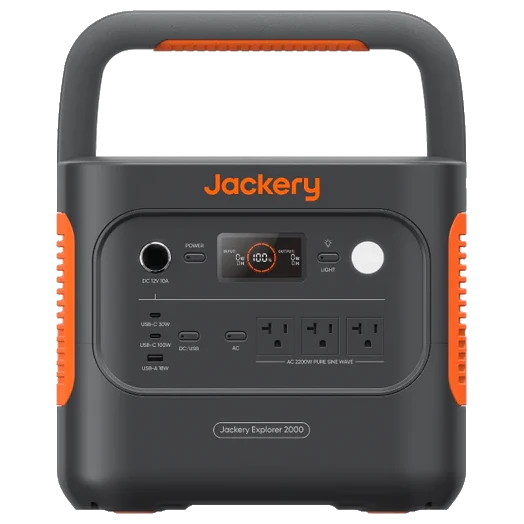
Jackery
$999 listed · 40 lb
The lightest of this group at 39.5 lb, with 2,042 Wh and 2,200 W. Solar stops at 400 W, so this one suits wall charging.
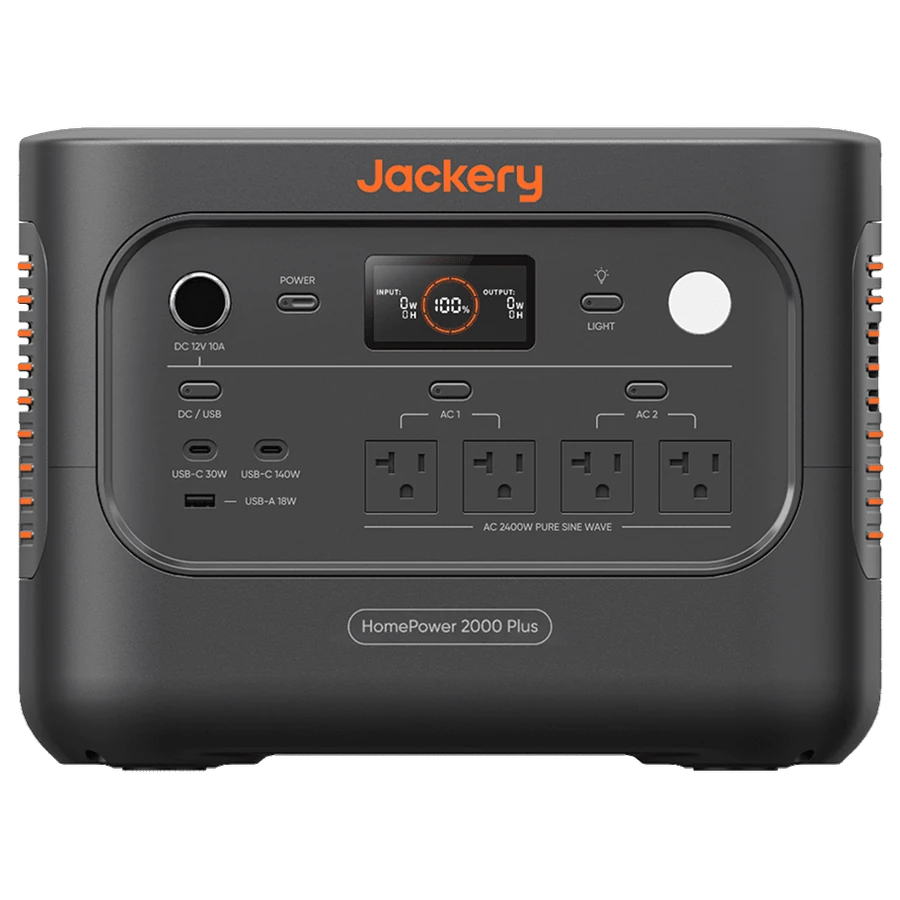
Jackery
$1,199 listed · 41 lb
About the Auro’s weight at 41.45 lb, with 2,048 Wh, 2,400 W, 800 W of solar and a higher cycle rating of 6,000.
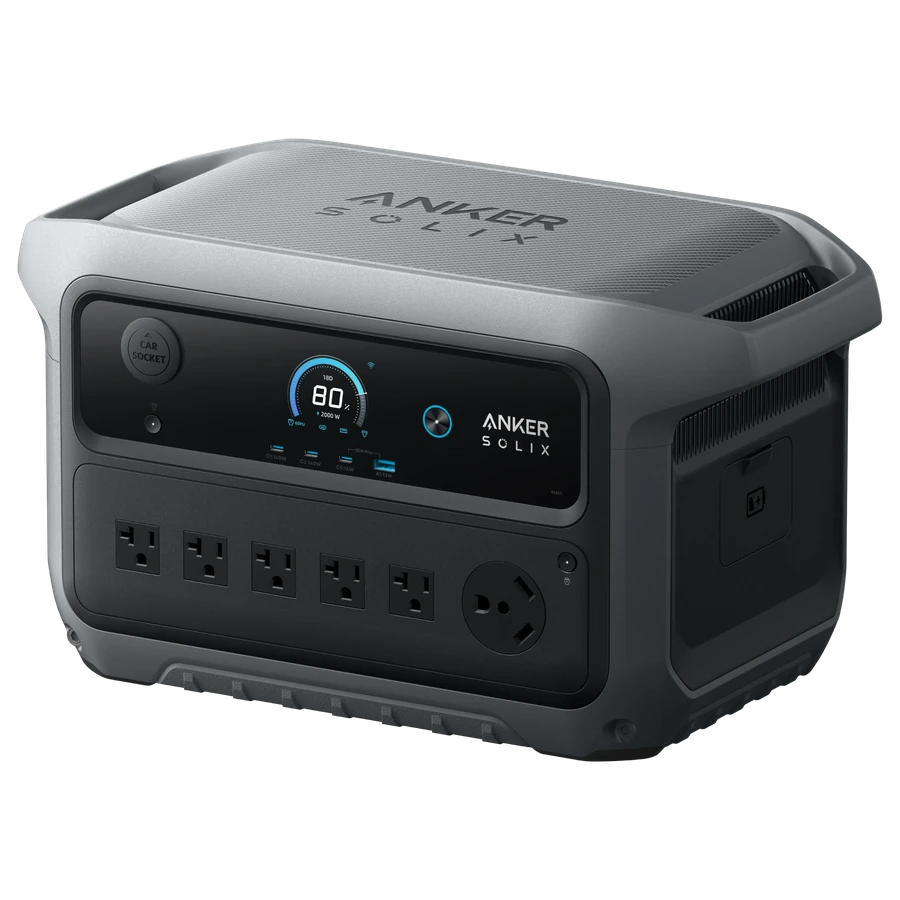
Anker
On Amazon · 42 lb
Also just under the Auro at 41.7 lb, with 2,048 Wh, 2,400 W, 800 W of solar and five AC outlets.
06 · The line
DJI’s US lineup has no Auro in it. These are the DJI units you can buy here that sit closest to it.
2,048 Wh · 3,000 W
The Auro’s closest relative: slightly more battery, much more output and solar, 48.5 lb.
$1,299 listedCompare →
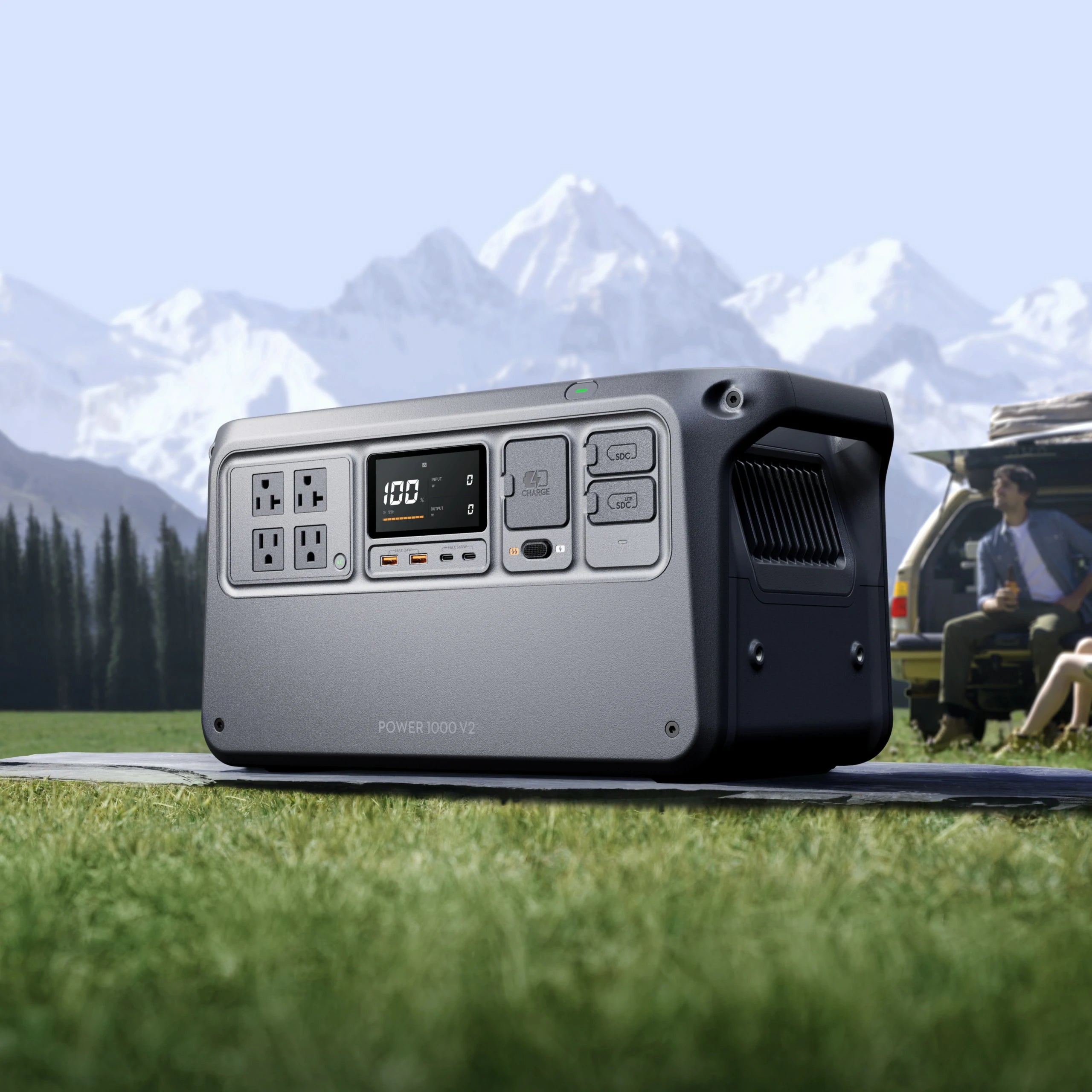
1,024 Wh · 2,600 W
DJI’s 1 kWh unit with 2,600 W of output, at 31.3 lb.
$699 listedCompare →
For the whole DJI range as it stands today, see our DJI guide; for the two current units closest to this one in role, the Power 2000 and Explorer 2000 v2 side by side.
07 · Fit
Read from what DJI chose to announce and what it chose to leave out.
08 · Questions
Short answers, each with its own link.
Not as of October 30, 2026. It went on sale in Europe on October 28 at €1,099, and DJI lists a price for Japan. DJI’s US store has no listing for it, and pv magazine reports DJI cannot offer it in the US. DJI has announced no US date. We update this page and email the alert list if that changes.
€1,099 in Europe and ¥147,400 in Japan, from DJI. Press reports give ¥4,799 in China and from A$1,999 in Australia. There is no US price.
The Auro holds 2,016 Wh against 2,048 Wh, weighs about 41.9 lb against 48.5 lb and is 24% smaller, with a built-in car charger up to 600 W. The DJI Power 2000 has more output (3,000 W against 2,000 W) and more solar input (1,800 W against 1,200 W). Both read €1,099 in Germany on October 30. Only the DJI Power 2000 is sold in the US, at $1,299.
Yes. DJI rates it up to 600 W on a cable to the car battery, with a full charge in as little as 4 hours, and up to 120 W from a car socket. The cables are sold separately. DJI says to start the engine before charging and to raise the rate gradually.
DJI has not given a reason in its release. The likely one is the FCC’s Covered List, which DJI joined in December 2025 and which blocks new radio approvals for its products. The manual we read lists European, Chinese and Japanese radio approvals. Treat this as our reading, not a DJI statement.
From DJI: 2,016 Wh of LFP cells, over 80% capacity after 4,000 cycles, 2,000 W AC output, up to 2,000 W wall charging on 220–240 V or 1,440 W on 100–127 V, up to 1,200 W of solar, up to 600 W of car charging, a retractable 140 W USB-C cable, two 65 W USB-C ports, two USB-A ports, two SDC ports, a 10 ms UPS mode, about 19 kg (41.9 lb) and 456 × 225 × 245 mm. Expansion to 12 kWh is planned.