Head-to-head test
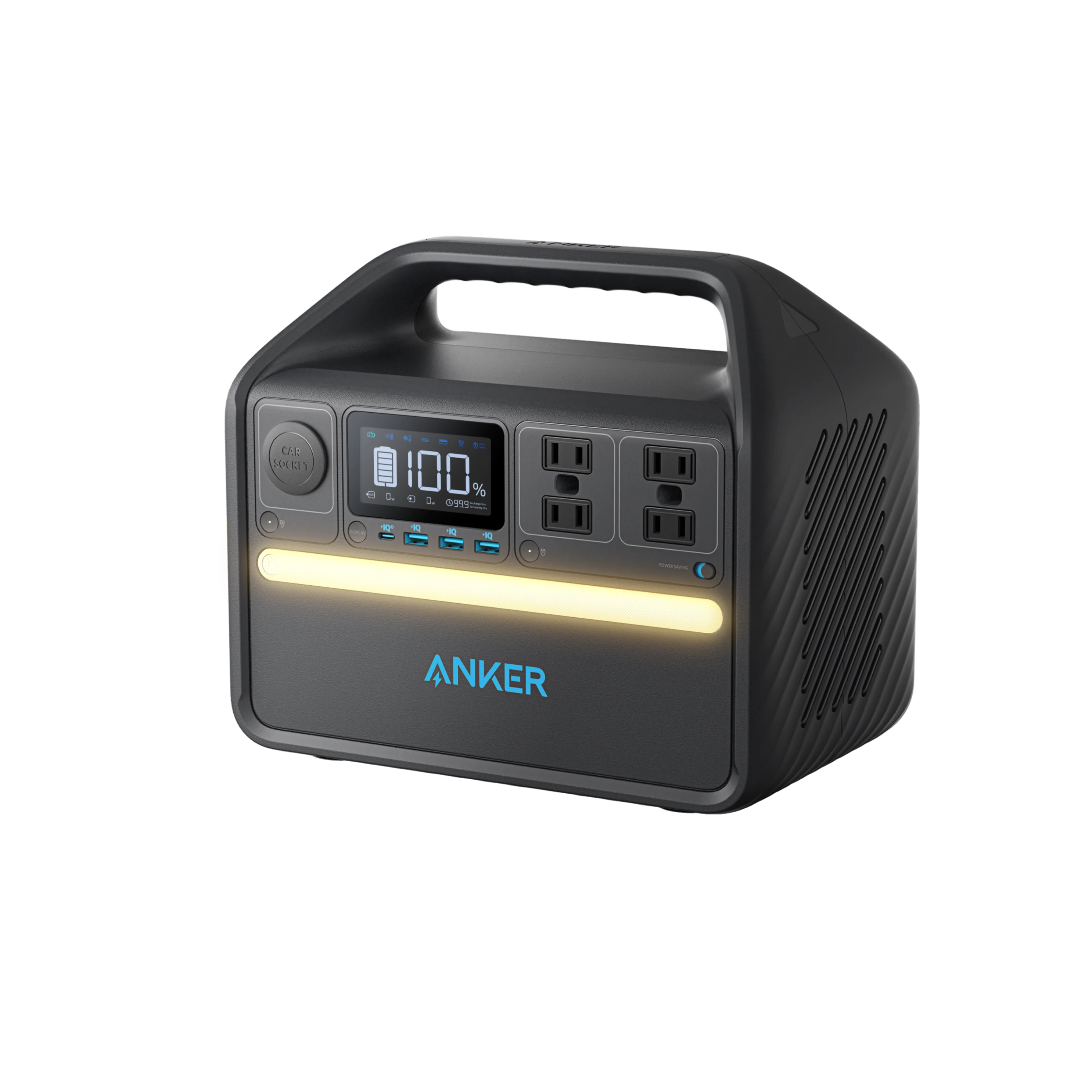
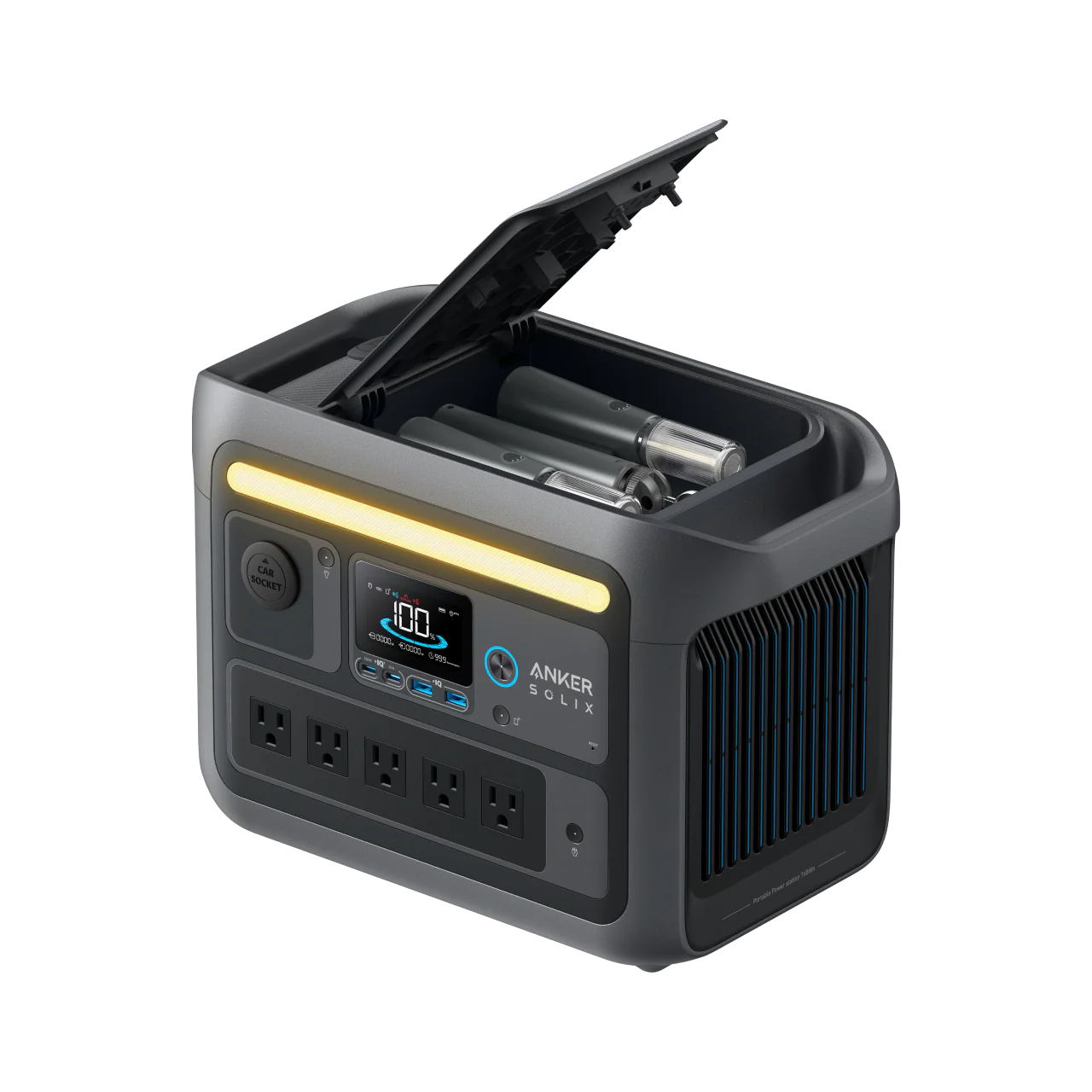
Anker 535 PowerHouse vs Anker SOLIX C800
The SOLIX C800 isn't a bigger 535 PowerHouse. It's the same LFP chemistry wearing a 20-millisecond transfer switch and a phone app the 535 never got, and that upgrade costs nearly 2x the price.
Full profiles: Anker 535 PowerHouse → · Anker SOLIX C800 →

Written by Wenny ZhengUpdated
Portable Power Tester, Station Arena Test Desk
$299.99 · direct from Anker
Last checked 1 day ago. Prices move — check before you buy.
No longer sold
Anker has replaced the C800 line with the C800X — at $449.99 it currently ships with a 100W solar panel included, so the newer unit costs less than the C800 did.
SOLIX C800X · $449.99Spec deltas
Anker sells these two side by side for a reason. The 535 PowerHouse is the company's older, cheaper LFP box; the SOLIX C800 replaced it at the top of the same weight class. Same battery chemistry, same 5-year warranty, same 3,000-cycle rating — but a 20-millisecond transfer switch, phone-app control, and a solar input more than double the 535's, bolted on top.
That upgrade isn't free. The SOLIX runs $599 against the 535's $300, close enough to exactly double that the math is easy, and it stays the pricier unit to own too: $0.26 per lifetime kilowatt-hour against the 535's $0.20.
Neither box is actually big enough for a full camping weekend, an extended blackout, or a work-from-anywhere day alone. Both fall well short on paper, so don't buy either one expecting to run a cabin. Where they do split is lighter overnight duty: for a CPAP, the SOLIX is the tighter fit, with a disclosed 45dB noise rating for the one scenario where fan volume by the pillow actually matters. Buy the 535 if your loads are light and the price gap bothers you. Buy the SOLIX if you want the transfer switch and the bigger ceiling and can stomach nearly double the price.
What the Numbers Reveal
Each conclusion stated first — the numbers behind it on one line, the full analysis below.
Both units carry the identical 5-year warranty, so the SOLIX's price premium isn't buying extra coverage. It's buying that specific transfer-switch behavior and the app that reports on it.
SOLIX C800 has a 20ms transfer switch (switchoverMs: 20)535 PowerHouse has no transfer-switch spec at allBoth carry the identical 5-year warranty
Why it mattersAnyone protecting always-on gear through momentary outages needs the SOLIX specifically; anyone just filling coolers and phones for a weekend is paying for a spec they'll never trigger.
solar input
That 6.1-hour estimate for the 535 is closer to a best case than a guarantee: reviewers report its real-world solar intake runs under the 120W nameplate figure in the fieldA4, so the actual refill window likely runs longer.
535 PowerHouse solar input caps at 120W, about 6.1h to refill from empty at that rateSOLIX C800 accepts up to 300W of solar input, 2.5x the 535's ceilingReviewers note the 535's real-world solar intake runs under its 120W nameplate ratingA4
Why it mattersFor a multi-day stretch where solar is the only recharge option, the SOLIX's bigger input window matters more than its bigger battery. With wall power available as backup, the gap barely matters.
cost / lifetime kWh
Feed the rest of the spec sheet into the site's composite score and the SOLIX comes out 432 points higher. The extra per-kWh cost is buying a measurably more capable unit, not just a bigger number on the box.
SOLIX C800 costs $599 against the 535 PowerHouse's $300, nearly 2xSOLIX's lifetime cost is $0.26 per kWh against the 535's $0.20, about 1.3xSOLIX scores 2,245 on the site's composite PowerScore against the 535's 1,813, 432 points higher
Why it mattersBuyers anchored on the sticker price should check cost-per-kWh instead. The real premium here is smaller than the price tag suggests, and it's attached to a higher-scoring unit, not a markup.
The specific dimensions that decide these two units — everything else is a tie.
What the Specs Don't Tell You
Selected because: Six gotchas fire and they ARE the generational story — UPS, app control, and solar-input speed outweigh the capacity difference.
The real generational upgrade here isn't capacity, it's control. The SOLIX C800 adds a 20-millisecond transfer switch and phone-app monitoring, neither of which the 535 PowerHouse has at any level. The 535 charges and discharges; the SOLIX can also sit inline as backup for something sensitive, and report on itself while it does.
Both units carry the same 5-year warranty and 3,000-cycle rating, so that added capability is what the extra money actually buys, not extra coverage. The one honest catch cuts against the older unit: Anker never published a dB figure for the 535, while the SOLIX carries a measured 45dB rating under load. That's not proof the 535 runs loud, just one less number buyers get to check before they choose it.
Your Life, Your Pick
Selected because: Five of six scenarios resolve to neither; only CPAP Overnight picks a winner (p2) — needs to be shown honestly, not forced.
Five of six household scenarios here land on neither unit, and that's the most useful thing this comparison can say. A full camping weekend, an extended blackout, a remote workday, a tailgate spread, and daily van-life draw all ask for more than either the 535 or the SOLIX carries alone — pairing either one with solar or a second battery is the honest fix, not switching between these two.
CPAP Overnight is the exception, and it goes to the SOLIX. Not because the 535 can't do the job — it uses a comfortable share of its usable capacity either way. The SOLIX simply has more headroom left over and a disclosed 45dB noise rating for the one job on this list where fan volume next to a pillow actually matters.
Lifetime Value
Selected because: cheaperToOwn favors p1 by a real margin even though p2 is nearly 2x the sticker price — the core value tension the verdict has to address.
cost / lifetime kWh
The dollar math is the cleanest number on this page: $0.20 per lifetime kilowatt-hour for the 535 against $0.26 for the SOLIX. The cheaper unit up front stays the cheaper unit to own, across the same 3,000 cycles and 5-year warranty both carry — $60 a warrantied year against $120.
But that per-kWh gap is only about 1.3x, while the sticker price gap is nearly 2x. The SOLIX holds more energy per cycle, so it doesn't cost twice as much to run, only to buy. Judge it on ownership cost and the premium looks a lot more reasonable than the price tag alone suggests.
PowerScore Breakdown
Selected because: Composite score (2245 vs 1813) quantifies the capability gap price is buying, closing the loop the other sections open.
overall power score
Roll every section above into the site's composite score and the SOLIX comes out ahead, 2,245 to 1,813 — 432 points that track the sum of its parts: more output, faster solar, the transfer switch, the app. It's not one dominant spec doing the work, it's all of them stacked.
A higher score measures ceiling, not fit. A buyer whose real load is a phone, a fan, and a CPAP overnight will never reach the SOLIX's extra headroom, and for that buyer the 535's lower score already covers everything that gets asked of it, at a materially lower price.
Strengths & trade-offs
Anker 535 PowerHouse
Strengths
- +Costs $299 less
- +Lighter by 7.1 lb
Trade-offs
- –Weaker inverter (-700W) limits appliance compatibility.
- –Lacks smartphone app control for remote monitoring.
Anker SOLIX C800
Strengths
- +Larger battery capacity
- +Higher AC output
- +Faster solar charging
Trade-offs
- –Substantially more expensive (+$299) than the 535 PowerHouse.
Will It Power Your Gear?
Scenario math and per-appliance runtimes, modeled from the spec record.
Scenario verdicts
We ran the math on six real-world scenarios. Here's which unit survives your actual life.
SCN-01 · 2 nights · needs 2,100Wh
Weekend Camping
Two nights off-grid with essential comfort
Neither unit
A full camping weekend needs roughly 5x the 535's usable capacity and just over 3x the SOLIX's. Both fall well short alone. This is a job for added solar or a second battery, not either unit solo.
Battery budget usedlower = more headroom
LOAD Phone Charger 15W×6h · LED Lights 40W×8h · Box Fan 75W×14h · CPAP Machine 40W×16h
SCN-02 · 8 hours · needs 1,645Wh
8-Hour Blackout
Keep the essentials running through a night without power
Neither unit
An 8-hour blackout covering the essentials needs roughly 4x the 535's usable capacity and about 2.5x the SOLIX's. Both fall short solo. Plan on load-shedding or a second unit for a real multi-hour outage.
Battery budget usedlower = more headroom
LOAD Fridge 150W×8h · Router + Modem 20W×8h · LED Lights (4 bulbs) 40W×6h · Phone Charger 15W×3h
SCN-03 · 8 hours · needs 320Wh
CPAP Overnight
Sleep therapy without interruption — the #1 medical use case
Either unit
A CPAP alone is a light overnight load, well within reach of both units solo. It uses about three-quarters of the 535's usable capacity against under half of the SOLIX's. The SOLIX takes this one on headroom, plus a disclosed 45dB-under-load noise rating for the one scenario where fan volume matters most.
Battery budget usedlower = more headroom
LOAD CPAP Machine 40W×8h
SCN-04 · 8 hours · needs 910Wh
Remote Workday
Full work day off-grid without power anxiety
Neither unit
A full remote workday of laptop, monitor, router, and coffee needs roughly 2x the 535's usable capacity and close to 1.5x the SOLIX's. Both fall short alone. Treat either as a top-up, not a full day off-grid.
Battery budget usedlower = more headroom
LOAD Laptop 60W×8h · External Monitor 30W×8h · Router + Modem 20W×8h · Phone Charger 15W×2h
SCN-05 · 4 hours · needs 670Wh
Tailgate Party
Game day power for the crew
Neither unit
The SOLIX lands right at its usable ceiling for a tailgate spread, close enough to call it borderline-sufficient on its own. The 535 needs about 1.5x what it holds, so it falls further short of the same spread.
Battery budget usedlower = more headroom
LOAD Blender 400W×0.5h · LED TV (55") 80W×4h · Bluetooth Speaker 15W×4h · Phone Charger (×3) 45W×2h
SCN-06 · 24 hours · needs 4,685Wh
Van Life Daily
A full day of mobile living — the ultimate endurance test
Neither unit
Daily van-life draw is a different order of demand. It needs north of 10x the 535's usable capacity and better than 7x the SOLIX's. Neither is the van-life unit; that's a dedicated house-battery system's job.
Battery budget usedlower = more headroom
LOAD Mini-Fridge 150W×24h · Laptop 60W×4h · Phone Charger 15W×3h · LED Lights 40W×5h · Fan 75W×8h
The Load Test
RUNTIME = (Wh × 0.85) ÷ LOAD
None of the scenarios above exactly yours? Build it. Toggle what you'd plug in; both units are tested against the combined draw.
Essentials
Comfort & Convenience
High-Draw Appliances
Test duration
8h
Continuous draw
205W
Projected runtime
For this load: SOLIX C800 runs 3.2h vs 2.1h.
Modeled from the spec record — same math as the tables below. Methodology
Runtime by appliance
Real-world runtime estimates for common appliances, modeled at 85% inverter efficiency.¹
Essentials
The basics you need runningscale 0–43.5hComfort & Convenience
Makes off-grid life actually enjoyablescale 0–8.7hHigh-Draw Appliances
These reveal the real limitsscale 0–0.7h¹ Runtime = (capacity × 0.85) ÷ appliance watts. Within each group, all bars share one time scale (the group's longest runtime), so lengths are comparable across appliances; identical runtimes collapse into a single blue/orange bar. Actual runtime varies with battery age, temperature, and simultaneous loads — see methodology.
Conclusion
July 28, 2026
Verdict: the SOLIX C800, on Power Score margin
The SOLIX C800 is the more complete unit: 768Wh against the 535's 512Wh (256Wh more), 1200W continuous with a 1600W surge rating against 500W with no surge spec listed, a 20-millisecond transfer switch, phone-app control, and solar input up to 300W against 120W. That's worth nearly 2x the price for anyone who'll actually use those extras. It is not, however, the cheaper unit to own: the 535 stays ahead at $0.20 per lifetime kWh against the SOLIX's $0.26, so a buyer with light loads and a fixed budget loses nothing real by taking the older, cheaper unit instead.
Editor-assigned confidence, based on cited owner research and spec analysis.
List prices as of July 28, 2026. The links below open Anker's current price.
$599.00 · direct from Anker
Last checked 1 day ago. Prices move — check before you buy.
or check the 535 PowerHouse price$299.99 list
Written by Wenny Zheng, Portable Power Tester · Station Arena Test Desk · Updated July 28, 2026
Measured Data
Benchmark scores and the full spec record, side by side.
Benchmark scores
Not rated for both units (minimum threshold unmet): UPS, CPAP, Solar Generator.
Full specifications
ᵈ Derived: price ÷ rated capacity. See the data behind our comparisons →
Comparison ToolAdd more power stations, side by sideOpen Tool →How these numbers are produced
Numeric verification
Every figure on this page traces to our spec database or arithmetic on it — no estimated numbers.
Owner claims
Statements about owner experience are cited to published reviews — see Sources & Research Notes below.
Runtime model
Runtime = (rated capacity × 0.85 inverter efficiency) ÷ device wattage. Solar recharge estimates assume panels deliver 70% of rated output. Cold weather, battery age, and stacked loads reduce real-world results.
Power Score
Computed from 14 published spec dimensions, weighted per use-case bench. Higher is better; a unit must meet a bench's minimum threshold to be rated.
See the full weight table and data sourcing on our methodology page →Class ranking (the star rating)
Each unit's star score is a category ranking, not customer reviews — no buyer opinions feed it. We score every station on size-independent quality (value, output, portability, endurance, ports, warranty, and more), then percentile-rank it against the other units in its capacity class, so a class-leading compact unit and a class-leading whole-home unit can both earn 5★. Here, 535 PowerHouse rates 3.7/5 (21st percentile of 20 Compact-class units), and SOLIX C800 rates 4.1/5 (47th percentile of 20 Compact-class units).
How the class ranking is computed →Test Notes & Caveats
Hidden gotchas and advantages we spotted that you won't find on the product page.
SOLIX C800: 45dB Published
45dB under load is a disclosed spec figure for the SOLIX C800, on the moderate side for this class of inverter.
535 PowerHouse: Solar Recharge Takes 4.3h+
At its 120W solar ceiling, the 535 PowerHouse needs about 6.1 hours of strong sun to refill from empty, essentially a full clear day. The SOLIX C800's 300W ceiling cuts that refill window down well despite the bigger battery behind it.
535 PowerHouse: No App Control
The 535 PowerHouse has no companion app. Every setting and reading is on the unit itself. The SOLIX C800 adds phone-app monitoring and control, the newer standard for checking charge state or switching outputs remotely.
Only the SOLIX C800 Lists a UPS Mode
The SOLIX C800's 20-millisecond transfer switch lets it sit inline as backup power for sensitive electronics, fast enough that a computer or router won't reboot when the grid drops. The 535 PowerHouse has no transfer-switch spec. It charges and discharges but doesn't do live pass-through backup.
Warranty: No Difference
Both units carry the same 5-year warranty and the same 3,000-cycle rating. The SOLIX C800's higher price isn't buying extra coverage. The warranty math is identical on both sides.
535 PowerHouse: Noise Level Not Disclosed
Anker hasn't published a dB figure for the 535 PowerHouse, while the SOLIX C800 carries a disclosed 45dB-under-load rating. That's not evidence the 535 runs louder. It's simply one less data point available before buying it.
Full record above — the Test Desk pick is the SOLIX C800.
Check SOLIX C800 price →or check the 535 PowerHouse priceOwnership Analysis
What happens after you buy — true cost of ownership, brand trust, and growth potential.
Lifetime value
Service lifeyears at one full cycle per day
Lifetime energy delivered
Cost per delivered kWh
│ warranty ends · Reaching the cycle rating means ~80% capacity remains — degraded, not dead.
Analyst note
The 535 PowerHouse wins on both sticker price and long-term value. At $0.2/kWh over its lifetime, it's meaningfully cheaper to own. Clear value winner. One thing to know reading the table: both carry the same 3,000-cycle rating, so the lifetime rows are sticker price and capacity in disguise — the wear horizon is identical and decides nothing here.
Growth path
535 PowerHouse
FIXED CAPACITYFixed at 512Wh, with no expansion — so size it for your needs up front rather than planning to add capacity later.
Accepts up to 120W of solar. Limited to a single portable panel.
Adequate ports for most setups, but heavy users may want a power strip.
SOLIX C800
FIXED CAPACITYFixed at 768Wh, with no expansion — so size it for your needs up front rather than planning to add capacity later.
Accepts up to 300W of solar. Limited to a single portable panel.
Adequate ports for most setups, but heavy users may want a power strip.
Realistic full solar rechargeat 70% of rated panel output — see methodology
Analyst note
Neither expands, and that's no knock on either — each is a complete unit at a fixed size. Buy the capacity that covers your needs now (the SOLIX C800 gives you the larger ceiling); you can't add to either later.
What Owners Report
Patterns from published owner reports and long-term reviews — every claim cited to its source below.
Anker 535 PowerHouse
Reviewers treat the 535 PowerHouse as a durable, no-drama weekend unit. Its LiFePO4 cells are rated past 3,000 cycles with roughly a decade of expected life, backed by the same 5-year warranty Anker puts on the newer SOLIXA1. Testing found it holds a high round-trip efficiency and stays cool running its full 500W output without throttlingA3.
The compromise shows up at the charger. AC charging to a strong charge runs about 2.5 hoursA4, but solar is the weak link: the 120W input reportedly runs well under its nameplate rating in real-world conditionsA4. Build quality draws no complaints in the available coverage — a compact port spread of four AC outlets, three USB-A, a USB-C, and a car outlet, in a case reviewers call easy to live with for its sizeA2.
“512Wh capacity with 500W output on LiFePO4 cells rated for 3,000+ cycles and a 10-year lifespan, backed by a 5-year warranty.”
Sources
ankersolix.com · trustedreviews.com · macrumors.com · batteryessence.com
Anker SOLIX C800
Independent field data on the plain SOLIX C800 is thinner than on the 535. The coverage here comes from hands-on review-blog testers rather than owner-forum or Reddit threads, so treat it as tester impressions rather than crowd consensusB10. What's there reads positive: one tester ran a coffee maker for the better part of an hour without strainB3, another briefly pushed a space heater well above its continuous rating before it throttled backB8, and reviewers consistently single out the fast AC recharge as the standout feature, quicker than rival units tested alongside itB9B15.
The complaints are physical, not electrical. Testers flag it as too heavy to carry far on foot, better suited to car camping than backpackingB12, and note it lacks an IP weather rating, so it needs cover outdoors despite a chassis reviewers call rugged and impact-resistantB2B14. One tester's drop test onto gravel left only minor scuffingB1. On sustained heavy draw, reviewers caution the 1200W continuous rating won't run a full-size fridge alongside other essentials for longB11, and fan noise stayed quiet under moderate loads with only a mild hum at maximum drawB7, consistent with its disclosed 45dB-under-load rating.
“We dropped it from a tailgate (30 inches) onto gravel—only minor scuffing, no damage.”
Sources
backuppowerhub.com · portablepowergeek.co.uk · batteryskills.com · batteryessence.com · toolsandtoys.net · bikmantech.com
Sources & Research Notes
Every owner claim in this report is traceable to a published source. The bracketed references above resolve here.
Recurring owner themes
- Durable LFP (3,000+ cycles, 5-yr warranty), efficient, and compact for weekend camping; slow solar input is the caveat. [535 PowerHouse · 2 entries]
- Build quality/chassis is repeatedly called solid and drop-resistant, but reviewers flag the lack of an IP weather rating as a real-world caveat for outdoor use. [SOLIX C800 · 3 entries]
- The 58-minute AC fast-recharge is the single most-mentioned standout feature, praised as faster than rivals like the Jackery 700. [SOLIX C800 · 2 entries]
- Reviewers note the unit can briefly exceed its 1200W rating for heavy appliances, but caution it can't sustain full-size continuous loads like a full-size fridge. [SOLIX C800 · 2 entries]
- Long 5-year warranty and strong retailer star ratings are cited as reassurance/value signals. [SOLIX C800 · 2 entries]
- Weight (~23-24 lbs) is repeatedly flagged as a downside relative to lighter rivals despite the compact footprint. [SOLIX C800 · 2 entries]
- A1
“512Wh capacity with 500W output on LiFePO4 cells rated for 3,000+ cycles and a 10-year lifespan, backed by a 5-year warranty.”
ankersolix.com / trustedreviews.com — 535 PowerHouse review · 2026 · [positive]
- A2
“Weighs 16.5 lbs and is compact for a 512Wh unit, with 4 AC ports, 3 USB-A, a USB-C, and a car outlet.”
macrumors.com / batteryessence.com — 535 PowerHouse review · 2026 · [positive]
- A3
“Demonstrated 89% round-trip efficiency and stayed stable and cool while delivering its full 500W AC output.”
batteryessence.com — 535 PowerHouse review · 2026 · [positive]
- A4
“AC charging to 80% takes about 2.5 hours; solar input caps at 120W (realistically 60-75W), so panel charging is slow.”
batteryessence.com — 535 PowerHouse review · 2026 · [mixed]
- B1
“We dropped it from a tailgate (30 inches) onto gravel—only minor scuffing, no damage.”
backuppowerhub.com — Anker SOLIX C800 Review: Best Budget Power Station? · 2025-12 · [positive]
- B2
“However, the C800 lacks IP weather rating. Keep it covered when camping.”
backuppowerhub.com — Anker SOLIX C800 Review: Best Budget Power Station? · 2025-12 · [negative]
- B3
“A 1,000W coffee maker ran 42 minutes straight.”
backuppowerhub.com — Anker SOLIX C800 Review: Best Budget Power Station? · 2025-12 · [positive]
- B7
“Zero fan noise under 500W loads, unlike louder competitors (e.g., Bluetti EB55). Only a mild hum at max load.”
batteryskills.com — Anker SOLIX C800 Portable Power Station Review · 2025-10 · [positive]
- B8
“Powered a 1500W space heater (surpassing its 1200W rating) for 25 minutes before throttling—unexpectedly robust for its size.”
batteryskills.com — Anker SOLIX C800 Portable Power Station Review · 2025-10 · [positive]
- B9
“Achieved a full charge in 58 minutes using a 600W AC adapter (matching Anker's claim), while competitors like the Jackery 700 take 2+ hours.”
batteryskills.com — Anker SOLIX C800 Portable Power Station Review · 2025-10 · [positive]
- B10
“Holds a 4.7-star rating from 692 Amazon reviews and ranks #81 in Outdoor Generators.”
batteryessence.com — Anker SOLIX C800 Portable Power Station 768Wh Review (retailer review summary) · 2026-03 · [positive]
- B11
“The 1200W output won't run a full-size refrigerator (700-800W startup) plus other essentials for long.”
batteryessence.com — Anker SOLIX C800 Portable Power Station 768Wh Review · 2026-03 · [negative]
- B12
“At 23.15 lbs (10.5 kg), this is too heavy for carrying far on foot. For hiking, a smaller, lighter power bank under 5 lbs is a better fit.”
batteryessence.com — Anker SOLIX C800 Portable Power Station 768Wh Review · 2026-03 · [negative]
- B14
“Both models feature a rugged, durable chassis made from high-quality, impact-resistant materials, ready to withstand the rigors of outdoor use.”
bikmantech.com — Anker SOLIX C800 vs C800 Plus - Ultimate Camping Power Comparison · 2025-06 · [positive]
- B15
“The 58-minute fast charge means you can drain it all evening and have it ready by morning. No more planning days ahead for recharging.”
backuppowerhub.com — Anker SOLIX C800 Review: Best Budget Power Station? · 2025-12 · [positive]
Research compiled July 28, 2026.
Who Should Buy Which
Buy the 535 PowerHouse if you…
- →Buy the 535 PowerHouse if your loads are genuinely light: phones, a fan, small electronics, or a single CPAP for the night. At $300 and $0.20 per lifetime kWh, it's the more efficient dollar for anyone who won't touch the SOLIX's transfer switch, app, or extra output anyway.
Buy the SOLIX C800 if you…
- →Buy the SOLIX C800 if you want the fuller feature set: a 20-millisecond transfer switch for backing up a router or modem through a blip, phone-app control, 1200W of continuous output with 1600W of surge for small compressors, and solar input up to 300W for faster field recharges. Nearly 2x the price only pays off once you're actually using one of those extras.
This is you — check the SOLIX C800 price
If neither fits
Skip both if your real need is a full camping weekend, a multi-day blackout, a full remote workday, a tailgate spread, or daily van-life power. Every one of those draws far more than either unit's usable capacity alone, and you'd be buying in undersized on day one. Look at a larger single unit or a multi-battery, solar-fed setup sized to the actual load instead.
The Bottom Line
The SOLIX C800 wins this one on capability: a 20-millisecond transfer switch, phone-app control, more than double the solar input, and 256Wh more capacity, for a price that's nearly double the 535 PowerHouse's $300. That premium buys real, usable upgrades rather than a markup. The per-kWh cost only rises to about 1.3x while the site's composite score climbs 432 points, from 1,813 to 2,245.
If your loads are light and price is the whole decision, the 535 PowerHouse is still the more efficient dollar, and nothing about that choice is a mistake. For anyone who wants their power station to also stand in as backup for the electronics that matter, the SOLIX C800 earns the difference.
Frequently Asked Questions
Answers drawn from the spec record and cited owner research.
Is the Anker SOLIX C800 just a bigger version of the 535 PowerHouse?
Not really. It does hold more — 768Wh against 512Wh, 256Wh more — but the bigger changes are a 20-millisecond transfer switch for UPS-style backup, phone-app control, and solar input up to 300W against the 535's 120W ceiling. None of those existed on the 535 at any capacity.
Which one is cheaper to own, not just cheaper to buy?
The 535 PowerHouse, on both counts. It costs $300 up front against the SOLIX's $599, and it works out to $0.20 per lifetime kilowatt-hour against $0.26 for the SOLIX, over the same 3,000-cycle, 5-year warranty life both carry.
Can either of these run a fridge through a blackout?
Not comfortably alone. An 8-hour blackout covering the essentials needs roughly 4x the 535's usable capacity and about 2.5x the SOLIX's, so plan on skipping the fridge and other big draws, or adding a second battery, rather than expecting either unit to carry a full outage by itself.
Which is better for running a CPAP overnight?
The SOLIX C800, on headroom. A CPAP alone uses under half the SOLIX's usable capacity against about three-quarters of the 535's, and the SOLIX's disclosed 45dB-under-load rating is one less unknown for a machine sitting by your pillow all night.
Does the 535 PowerHouse have an app?
No. The 535 has no companion app at all; everything is read and set on the unit's own display. The SOLIX C800 added phone-app monitoring and control, one of the clearest upgrades between the two generations.
Check SOLIX C800 price →
Where to buy
Anker 535 PowerHouse
$299.99
$299.99 · direct from Anker
Last checked 1 day ago. Prices move — check before you buy.
Anker SOLIX C800Pick
$599.00
$599.00 · direct from Anker
Last checked 1 day ago. Prices move — check before you buy.
Prices may vary by retailer and are subject to change.