Head-to-head test
EcoFlow DELTA 2 vs Goal Zero Yeti 1500X
The Yeti 1500X costs $626 more and its NMC pack is rated for 500 charge cycles against the DELTA 2's 3,000 LiFePO4 cycles; the roughly 490Wh of extra capacity you're paying for doesn't come close to buying that back.
Full profiles: EcoFlow DELTA 2 → · Goal Zero Yeti 1500X →

Written by Ian SchneiderUpdated
Solar & Off-Grid Tester, Station Arena Test Desk
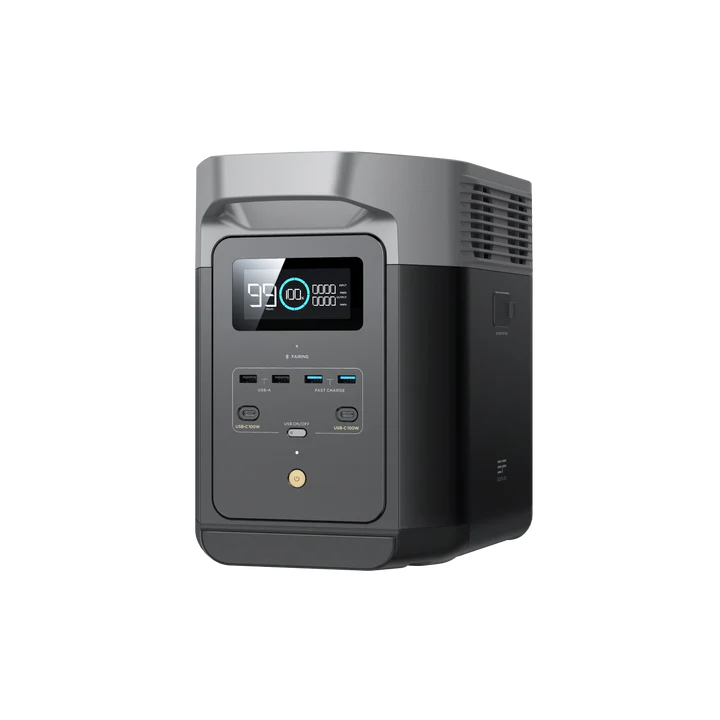
$499.00 · direct from EcoFlow
Last checked 58 days ago. Prices move — check before you buy.
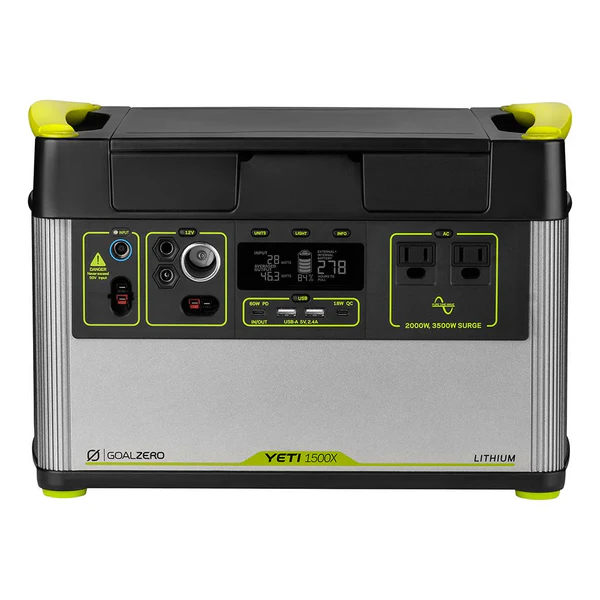
$1,124.89 · direct from Goal Zero
Last checked 1 day ago. Prices move — check before you buy.
Spec deltas
The Goal Zero Yeti 1500X costs $1,125. The EcoFlow DELTA 2 costs $499. For the extra $626 you get 492 more watt-hours of capacity and a battery rated for 500 charge cycles instead of 3,000.
That cycle number is the whole matchup. The Yeti runs older NMC chemistry good for roughly 500 cycles to 80% capacity, which reviewers put at three to five years of typical use before it noticeably fadesB1. The DELTA 2's LiFePO4 cells are rated for 3,000. One of these you may be replacing in three years; the other outlasts its own five-year warranty several times over.
The Yeti isn't outmatched everywhere. It holds 1,516Wh to the DELTA 2's 1,024, enough to clear the mid-size loads the DELTA 2 can't quite finish — a full remote workday, a long tailgate. But it's also 19 pounds heavier, covered for less than half as long, and charges over a slower USB-C. You're paying premium money for last-generation chemistry.
What the Numbers Reveal
Each conclusion stated first — the numbers behind it on one line, the full analysis below.
rated cycles
Run it through delivered energy and the gap only widens: $0.16 per lifetime kilowatt-hour for the DELTA 2 against $1.48 for the Yeti. The cheaper unit to buy is also the cheaper unit to own, by nearly ten to one.
Yeti 1500X: 500 charge cycles at $1,125DELTA 2: 3,000 charge cycles at $499
Why it mattersAnyone weighing these on cost should stop here — the Yeti carries both the higher sticker and the higher lifetime price.
Capacity
You only draw from about 85% of rated capacity after inverter losses, and that drops the DELTA 2 below the 910Wh line — so the Yeti genuinely wins this one, finishing at 71% of its capacity while the DELTA 2 taps out. That is the single scenario where its extra 492Wh earns its keep.
Remote Workday needs about 910WhDELTA 2 holds 1,024Wh; Yeti holds 1,516Wh
Why it mattersIf the buy is specifically about running a full desk setup through a long outage with zero margin, the Yeti's capacity is the reason to consider it.
The heavier unit is also the one you'll nurse toward end-of-life first — a 500-cycle NMC pack under a 2-year warranty against a 3,000-cycle LFP pack under 5B1. Weight you feel once a trip; the warranty gap you feel the day something fails in year three.
Yeti 1500X: 45.64 lbs, 2-year warranty, 500-cycle NMCDELTA 2: 27 lbs, 5-year warranty, 3,000-cycle LFP
Why it mattersBuyers who move the unit often or plan to keep it a decade should treat the DELTA 2 as the default and make the Yeti prove otherwise.
The specific dimensions that decide these two units — everything else is a tie.
Lifetime Value
Selected because: Cycle life plus price is the axis that settles this pair; the Yeti loses it decisively.
cost / lifetime kWh
The DELTA 2 costs $0.16 per lifetime kilowatt-hour; the Yeti costs $1.48. That's the rare case where the cheaper unit up front is also nine times cheaper to own, because it pairs the lower price with six times the charge cycles. Spread across the warranty instead and the story holds: $96 per covered year for the DELTA 2 against $562 for the Yeti.
The Yeti's premium isn't buying longevity — it's buying brand and build. Nothing in the value math bends toward it, which is why the rest of this page is about finding the specific buyer for whom capacity or ruggedness outweighs a battery that's rated to fade first.
What the Specs Don't Tell You
Selected because: Cycle life, warranty value, and the DELTA 2's own fan-noise demerit all live here.
rated cycles
The decisive card is battery lifespan. Reviewers flag the Yeti's 500-cycle NMC pack as a structural disadvantage against current LiFePO4 units, translating to roughly three to five years before it fadesB1; the DELTA 2's 3,000 cycles are built to outlast that several times over. The warranty tracks the chemistry — 5 years against 2.
The DELTA 2's one genuine demerit sits right here too, and it's fair to name it first: its fan. It spins up above about 120 watts and, at full load, runs continuously around 50 dBA1. Goal Zero, for its part, doesn't publish a decibel figure for the Yeti at all, though reviewers describe it as a quiet unit in normal useB2. On switchover both sit in the same standby class, around 20 to 25 milliseconds — a functional tie for the light UPS duty either handles.
Your Life, Your Pick
Selected because: The Yeti's only real wins come from raw capacity in the mid-size scenarios.
The Yeti wins CPAP Overnight, Remote Workday, and Tailgate Party, and it wins them all the same way: 1,516Wh against 1,024 is simply more headroom. The Remote Workday is the one that matters, since a 910Wh desk day slips just past the DELTA 2's usable ceiling while the Yeti finishes at 71% of capacity.
Neither unit covers the scenarios people most often buy these for. A full 8-hour blackout wants about 1,645Wh and weekend camping about 2,100Wh; the DELTA 2 would need 189% and 241% of its own capacity, the Yeti 128% and 163%. Closer isn't the same as enough — if whole-outage backup or multi-day off-grid is the real goal, both are undersized.
Portability & Form Factor
Selected because: 27 lbs against 45.64 is a one-hand versus two-hand difference worth naming.
weight
27 pounds is a one-hand grab off the garage shelf. 45.64 is a two-hands, bent-knees lift, and 19 pounds is exactly the difference between tossing a unit in the trunk and planning how you'll get it there.
For anyone loading and unloading this regularly — campsite, tailgate, jobsite — the DELTA 2 is the one you actually carry without thinking about it. The Yeti's mass buys you nothing but the mass.
Strengths & trade-offs
EcoFlow DELTA 2
Strengths
- +Costs $625.9 less
- +Lighter by 18.6 lb
- +Longer warranty
- +Rated for 3,000 charge cycles — much longer battery lifespan
Trade-offs
- –No major technical downsides compared to rival.
Goal Zero Yeti 1500X
Strengths
- +Larger battery capacity
- +Higher AC output
- +Faster solar charging
Trade-offs
- –Substantially more expensive (+$625.9) than the DELTA 2.
- –Significantly heavier (+18.6 lbs), making it harder to move.
- –Shorter-lived battery — rated for 500 charge cycles vs the DELTA 2's 3,000, so it wears out sooner.
Will It Power Your Gear?
Scenario math and per-appliance runtimes, modeled from the spec record.
Scenario verdicts
We ran the math on six real-world scenarios. Here's which unit survives your actual life.
SCN-01 · 2 nights · needs 2,100Wh
Weekend Camping
Two nights off-grid with essential comfort
Neither unit
Neither unit covers this scenario's 2,100Wh: the DELTA 2 comes up 1,230Wh short (about 41% covered), the Yeti 1500X 811Wh (61%). Treat this as partial cover — enough for the essentials in it, not the whole list.
Battery budget usedlower = more headroom
LOAD Phone Charger 15W×6h · LED Lights 40W×8h · Box Fan 75W×14h · CPAP Machine 40W×16h
SCN-02 · 8 hours · needs 1,645Wh
8-Hour Blackout
Keep the essentials running through a night without power
Neither unit
Neither finishes a real 8-hour outage — it wants about 1,645Wh, more than either unit holds. The DELTA 2 would need 189% of its capacity, the Yeti 128%. Closer isn't the same as enough; if blackout coverage is the point, both are undersized and a 2kWh-class unit is the answer.
Battery budget usedlower = more headroom
LOAD Fridge 150W×8h · Router + Modem 20W×8h · LED Lights (4 bulbs) 40W×6h · Phone Charger 15W×3h
SCN-03 · 8 hours · needs 320Wh
CPAP Overnight
Sleep therapy without interruption — the #1 medical use case
Either unit
Both run a CPAP overnight with room to spare — the load is about 320Wh, roughly a third of either unit. The Yeti takes it on raw headroom, but two feet from your pillow the tiebreak is fan noise, and at a load this light the DELTA 2's fan stays off. Call it even and let price decide.
Battery budget usedlower = more headroom
LOAD CPAP Machine 40W×8h
SCN-04 · 8 hours · needs 910Wh
Remote Workday
Full work day off-grid without power anxiety
Yeti 1500X
The one scenario where the Yeti's extra capacity earns the premium. A full desk day runs about 910Wh, which after inverter losses sits just past the DELTA 2's usable ceiling — it taps out, the Yeti finishes at 71% used. If a zero-margin workday through a long outage is the exact job, this is the Yeti's case.
Battery budget usedlower = more headroom
LOAD Laptop 60W×8h · External Monitor 30W×8h · Router + Modem 20W×8h · Phone Charger 15W×2h
SCN-05 · 4 hours · needs 670Wh
Tailgate Party
Game day power for the crew
Yeti 1500X
Both handle game day; the Yeti 1500X keeps more in reserve (52% used vs 77%). Tailgating is a light load, though, so the number you'll feel is weight: 27 lbs for the DELTA 2 against 45.6 lbs for the Yeti 1500X, from the trunk to the setup spot.
Battery budget usedlower = more headroom
LOAD Blender 400W×0.5h · LED TV (55") 80W×4h · Bluetooth Speaker 15W×4h · Phone Charger (×3) 45W×2h
SCN-06 · 24 hours · needs 4,685Wh
Van Life Daily
A full day of mobile living — the ultimate endurance test
Neither unit
Neither unit covers this scenario's 4,685Wh: the DELTA 2 comes up 3,815Wh short (about 19% covered), the Yeti 1500X 3,396Wh (27%). This is well outside what either unit is for; the right answer here is a larger station, not a choice between these two.
Battery budget usedlower = more headroom
LOAD Mini-Fridge 150W×24h · Laptop 60W×4h · Phone Charger 15W×3h · LED Lights 40W×5h · Fan 75W×8h
The Load Test
RUNTIME = (Wh × 0.85) ÷ LOAD
None of the scenarios above exactly yours? Build it. Toggle what you'd plug in; both units are tested against the combined draw.
Essentials
Comfort & Convenience
High-Draw Appliances
Test duration
8h
Continuous draw
205W
Projected runtime
For this load: Yeti 1500X runs 6.3h vs 4.2h.
$1,124.89 list · direct from Goal Zero
Modeled from the spec record — same math as the tables below. Methodology
Runtime by appliance
Real-world runtime estimates for common appliances, modeled at 85% inverter efficiency.¹
Essentials
The basics you need runningscale 0–85.9hComfort & Convenience
Makes off-grid life actually enjoyablescale 0–17.2hHigh-Draw Appliances
These reveal the real limitsscale 0–1.3h¹ Runtime = (capacity × 0.85) ÷ appliance watts. Within each group, all bars share one time scale (the group's longest runtime), so lengths are comparable across appliances; identical runtimes collapse into a single blue/orange bar. Actual runtime varies with battery age, temperature, and simultaneous loads — see methodology.
Conclusion
July 16, 2026
Verdict: the DELTA 2, on Power Score margin
The DELTA 2 is the better buy by a wide margin. It costs $499 to the Yeti's $1,125, weighs 27 lbs against 45.64, carries a 5-year warranty against 2, and its LiFePO4 battery is rated for 3,000 charge cycles against the Yeti's 500 — six times the life for less than half the money. It's also the cheaper unit to own over its life at $0.16 per lifetime kWh against $1.48. The Yeti's honest edge is 492Wh more capacity, which lets it win the CPAP, Remote Workday, and Tailgate scenarios the DELTA 2 runs up against; if you specifically need that headroom and value the ruggedized build, it earns a look. For everyone else, paying premium-brand money for a 500-cycle pack is the wrong trade.
Editor-assigned confidence, based on cited owner research and spec analysis.
List prices as of July 16, 2026. The links below open EcoFlow's and Goal Zero's current prices.
$499.00 · direct from EcoFlow
Last checked 58 days ago. Prices move — check before you buy.
or check the Yeti 1500X price$1,124.89 list
Written by Ian Schneider, Solar & Off-Grid Tester · Station Arena Test Desk · Updated July 16, 2026
Measured Data
Benchmark scores and the full spec record, side by side.
Benchmark scores
Not rated for both units (minimum threshold unmet): UPS, CPAP.
Full specifications
ᵈ Derived: price ÷ rated capacity. See the data behind our comparisons →
Comparison ToolAdd more power stations, side by sideOpen Tool →How these numbers are produced
Numeric verification
Every figure on this page traces to our spec database or arithmetic on it — no estimated numbers.
Owner claims
Statements about owner experience are cited to published reviews — see Sources & Research Notes below.
Runtime model
Runtime = (rated capacity × 0.85 inverter efficiency) ÷ device wattage. Solar recharge estimates assume panels deliver 70% of rated output. Cold weather, battery age, and stacked loads reduce real-world results.
Power Score
Computed from 14 published spec dimensions, weighted per use-case bench. Higher is better; a unit must meet a bench's minimum threshold to be rated.
See the full weight table and data sourcing on our methodology page →Class ranking (the star rating)
Each unit's star score is a category ranking, not customer reviews — no buyer opinions feed it. We score every station on size-independent quality (value, output, portability, endurance, ports, warranty, and more), then percentile-rank it against the other units in its capacity class, so a class-leading compact unit and a class-leading whole-home unit can both earn 5★. Here, DELTA 2 rates 4.1/5 (46th percentile of 27 Everyday-class units), and Yeti 1500X rates 3.3/5 (1st percentile of 27 Everyday-class units).
How the class ranking is computed →Test Notes & Caveats
Hidden gotchas and advantages we spotted that you won't find on the product page.
The DELTA 2's one demerit
Fair to say it up front: the DELTA 2's fan spins up above about 120 watts and, at full load, holds around 50 dB continuously. It's the one place the Yeti's quieter reputation genuinely counts. For a light bedroom load it stays off; for heavy output, expect to hear it.
Only the DELTA 2 Lists a UPS Mode
The DELTA 2 can sit between the wall and your gear and hand it to battery when the grid drops — rated ≤20ms — fine on paper for routers and most electronics; the fussiest PC power supplies sit right at this line. Worth it for a router, a desktop PC, or a CPAP. The Yeti 1500X's spec sheet lists no UPS mode, so anything plugged into it rides an outage only as far as your reaction time.
What a covered year actually costs
Spread each price across its warranty and the DELTA 2 runs $96 per covered year against the Yeti's $562. The Yeti's 2-year term also happens to end right about when its 500-cycle pack starts fading — the coverage and the chemistry run out together.
Six times the life, in real years
The DELTA 2's LiFePO4 pack is rated for 3,000 cycles; the Yeti's NMC pack for 500. In typical use that's roughly three to five years for the Yeti before it noticeably fades, against a DELTA 2 built to outlast its five-year warranty several times over. This is the number that settles the matchup.
Yeti publishes no dB figure
Goal Zero doesn't list a decibel rating for the Yeti 1500X, so its quietness rests on reviewer impressions rather than a spec. Those impressions are consistently positive, but 'unstated' isn't the same as 'measured' — worth knowing if silence is your deciding factor.
Full record above — the Test Desk pick is the DELTA 2.
Check DELTA 2 price →or check the Yeti 1500X priceOwnership Analysis
What happens after you buy — true cost of ownership, brand trust, and growth potential.
Lifetime value
Service lifeyears at one full cycle per day
Lifetime energy delivered
Cost per delivered kWh
│ warranty ends · Reaching the cycle rating means ~80% capacity remains — degraded, not dead.
Analyst note
The DELTA 2 wins on both sticker price and long-term value. At $0.16/kWh over its lifetime, it's meaningfully cheaper to own. Clear value winner.
Delivers each lifetime kWh for $1.32 less — check the DELTA 2 price →
Brand trust
EcoFlow
Ecosystem
Largest in portable power — 12-15 models across DELTA Pro, DELTA 3, and RIVER 3 series, plus solar panels and smart home panels
Support
US-based phone/email/chat support (1-800-368-8604). Experiences are polarized — many report hassle-free prepaid-label replacements, but others report long waits and refurbished units sent for new claims. Pro tip: buying from Costco or Amazon gives you a stronger return safety net.
Community
Largest community in the space — Reddit r/Ecoflow_community (~31K members), multiple Facebook groups, and an official community forum
App experience
Rated 4.6/5 iOS (~8,400 ratings) · 4.2/5 Android (~17,000 ratings)
Unique strength
The deepest ecosystem in portable power and the fastest charging, backed by the most active innovation cadence in the category.
Worth knowing
Support experiences are polarized, and there was an October 2025 recall on a different model (DELTA Max 2000) worth being aware of. Buying through Costco or Amazon gives you a stronger return safety net.
Goal Zero
Ecosystem
Focused — a compact current line (6th-gen Yeti and Yeti Pro series), the previous-gen X series now out of stock across every model on Goal Zero's own store (checked 2026-09-13: 200X, 500X, 1000X, 1500X, 3000X, 6000X, some listed only as open-box), so buying one new means finding retailer stock, Sherpa power banks for the under-100Wh tier, plus Alta coolers, Nomad/Ranger solar panels, and vehicle integration kits
Support
US-based company (Salt Lake City, owned by NRG Energy). Historically considered premium support, but 2025-2026 reports describe long wait times, unresponsive email communication, and tickets going unaddressed for weeks. The "premium support justifies premium pricing" argument is weakening.
Community
Small but loyal — strong following in overlanding and preparedness communities. Official community forums were recently shuttered, frustrating long-time users.
App experience
Rated 4.4/5 iOS (~1,200 ratings) but recent reviews skew negative — recurring connectivity issues, crashes, and stability problems.
Unique strength
The heritage brand — ruggedized, weather-resistant designs and a US-based company with a loyal overlanding and preparedness following.
Worth knowing
Support quality has slipped from its former premium standard, with 2025-2026 reports of long waits, and the lineup is seen as slower to innovate than its rivals.
Analyst note
This is the reigning heritage brand against the one that outpaced it on chemistry and charging. Goal Zero still builds the tougher-feeling box; EcoFlow builds the one that lasts longer and costs less to run. If brand and ruggedness rank above longevity and value, the Yeti makes its case — otherwise the trajectory favors EcoFlow.
Growth path
DELTA 2
EXPANDABLESupports EcoFlow expansion batteries, so you can add capacity later without replacing the base unit — useful if your needs may climb past 1,024Wh.
Accepts up to 500W of solar. Suitable for a 1-2 panel setup.
Generous port selection supports complex multi-device setups.
Expansion batteries are EcoFlow-specific. You're investing in the EcoFlow ecosystem.
Yeti 1500X
EXPANDABLESupports Goal Zero expansion batteries, so you can add capacity later without replacing the base unit — useful if your needs may climb past 1,516Wh.
Accepts up to 600W of solar. Suitable for a 1-2 panel setup.
Adequate ports for most setups, but heavy users may want a power strip.
Expansion batteries are Goal Zero-specific. You're investing in the Goal Zero ecosystem.
Realistic full solar rechargeat 70% of rated panel output — see methodology
Analyst note
Both expand, so neither locks you out of growth — decide on capacity, price, and the rest, not the expansion checkbox.
What Owners Report
Patterns from published owner reports and long-term reviews — every claim cited to its source below.
EcoFlow DELTA 2
Reviewers who lived with the DELTA 2 through outages, camping trips, and daily home-office duty came away endorsing its fast charging, LiFePO4 reliability, and expandabilityA3. It's a unit that earns trust with time rather than losing it.
The recurring gripe is the fan. It triggers above about 120 watts, and at full load it runs continuously at a level one tester compared to a gaming laptopA1A2. EcoFlow has said it plans to soften that in firmware, as it has on earlier modelsA4. For a bedroom medical load over 120W, plan on either the fan or an extension cord to the next roomA1.
“When charging at 1200W the fans sound like a gaming laptop, though you can lower the charging speed in the app to silence it.”
Sources
portablepowerlab.com
Goal Zero Yeti 1500X
The Yeti earns steady praise for its build — a dense, durable enclosure with rugged port covers that has held up in vehicle installs and off-grid cabins, and it runs quietlyB2. That reputation for solidity is real and it's most of what the premium buys.
The problem is underneath. Its NMC chemistry is rated for about 500 cycles to 80%, which several reviewers call a structural disadvantage against today's LiFePO4 unitsB1, and it pairs that with relatively slow AC charging and pricing that has stayed premium into 2026B4. The Yeti app offers genuinely deep remote control and monitoring, though owners have found its reliability uneven over the yearsB3.
“A quiet, capacious power station with a dense, durable enclosure and durable port covers that has held up under sustained use in vehicle installs and off-grid structures.”
Sources
portablepowerauthority.com · bestgeneratorsolar.com · pcworld.com · offgridweb.com · makeuseof.com · batteryskills.com · digitalcameraworld.com
Sources & Research Notes
Every owner claim in this report is traceable to a published source. The bracketed references above resolve here.
Recurring owner themes
- Fan noise under moderate-to-high load is the dominant, repeatedly-cited complaint; the fan spins up above ~120W. [DELTA 2 · 3 entries]
- Praised for build quality, quiet operation, and a capable remote app; held back by 500-cycle NMC chemistry, slow AC charging, and premium pricing versus modern LFP units. [Yeti 1500X · 3 entries]
- A1
“Fans trigger at anything above 120 watts; at maximum load (1,500–1,800W) they run continuously at ~48–55 dB. Powering medical equipment above 120W in a bedroom means listening to the fans or running an extension cable out of the room.”
portablepowerlab.com — EcoFlow Delta 2 Review: 6 Months of Real Use; PCWorld — EcoFlow Delta 2 review · 2026 · [negative]
- A2
“When charging at 1200W the fans sound like a gaming laptop, though you can lower the charging speed in the app to silence it.”
PCWorld — EcoFlow Delta 2 power station review · 2026 · [mixed]
- A3
“After 18 months of real-world testing through multiple power outages, camping trips, and daily home-office use, the unit earned recognition for fast charging, reliable LiFePO4 battery chemistry, and expandability.”
portablepowerlab.com — EcoFlow Delta 2 Review: 6 Months of Real Use · 2026 · [positive]
- A4
“EcoFlow officials indicated they plan to address the fan noise in an upcoming firmware update, as they have for other models after release.”
portablepowerlab.com — EcoFlow Delta 2 Review · 2026 (dated claim — may be partially addressed) · [mixed]
- B1
“Uses lithium NMC chemistry rated for 500 cycles to 80% capacity — roughly 3-5 years before noticeable degradation with typical use — which puts it at a structural disadvantage against the current wave of LiFePO4 competitors.”
portablepowerauthority.com / bestgeneratorsolar.com — Yeti 1500X review · 2025-2026 · [negative]
- B2
“A quiet, capacious power station with a dense, durable enclosure and durable port covers that has held up under sustained use in vehicle installs and off-grid structures.”
pcworld.com / offgridweb.com — Yeti 1500X review · 2025-2026 · [positive]
- B3
“Bluetooth and WiFi app control via the Yeti app provides detailed real-time analytics and full remote control — turning AC outlets on/off, monitoring solar input, checking battery status from a distance — though owner feedback on app reliability has been mixed over the years.”
makeuseof.com / batteryskills.com — Yeti 1500X review · 2025-2026 · [mixed]
- B4
“Relatively slow AC charging and persistent premium pricing weigh against it in 2025-2026.”
bestgeneratorsolar.com / digitalcameraworld.com — Yeti 1500X review · 2025-2026 · [negative]
Research compiled July 16, 2026.
What Owners Actually Report
Drawn from 164 comments on independent review channels — not from retailer reviews, which skew to the first week of ownership. Each line is our summary of one commenter's claim, linked to the original. We record what they said, including where it contradicts the spec sheet.
EcoFlow DELTA 2
224 claims from 155 comments · 178 from owners · 60 with figures
- Runtime
- 32 · 13% negative
- Price & value
- 38 · 4% negative
- Charging
- 17 · 23% negative
- Durability
- 22 · 67% negative
- Warranty & support
- 22 · 59% negative
What owners complain about
Ignores solar unless he unplugs it from the wall, so he switched to the AC180.
Solar inputowner63 agreedsource →
His Delta 2 went bad three months after purchase and EcoFlow agreed it was defective.
Durabilityownerafter 3 months236 agreedsource →
Past 30 days the five-year warranty only gets a refurbished unit covered for 30 days.
Warranty & supportowner236 agreedsource →
What owners praise
DELTA 2 plus extra battery and 600W solar cost ~$1200 and paid for itself in under 2 years in California.
Price & valuemeasuredowner736 agreedsource →
Batteries still hold 98%+ capacity, ahead of the 80%-at-10-years warranty curve.
Durabilitymeasuredowner736 agreedsource →
Gets 180-190W into it from a 100Ah LiFePO4 via XT60i cable, no converter needed.
Chargingmeasuredowner106 agreedsource →
Goal Zero Yeti 1500X
13 claims from 9 comments · 10 from owners · 2 with figures
- Solar input
- 2 · 100% negative
- Charging
- 2 · 0% negative
- Runtime
- 1 · 0% negative
- Price & value
- 3 · 18% negative
- Expandability
- 1 · 0% negative
What owners complain about
The 600W max MPPT input is his biggest pain; wants 2000W input.
Solar inputmeasuredowner6 agreedsource →
Goal Zero is available in Canada but is so expensive.
Price & valuesource →
What owners praise
Runs the fridge during outages and is valued for portability.
Runtimeowner6 agreedsource →
With the rapid charger it recharges quickly enough for his needs.
Chargingowner6 agreedsource →
Picked one up for $500 because the Anderson port was damaged, then repaired it himself.
Price & valuemeasuredowner1 agreedsource →
Claims are weighted by how specific they are, whether the commenter owns the unit, and how many readers agreed. Comments that mention a product under a rival's review count for more, because the commenter had no reason to be there. This is what buyers report, not our test results — for measurements we ran ourselves, see the methodology.
Who Should Buy Which
Buy the DELTA 2 if you…
- →You keep your gear a long time — the 3,000-cycle LFP pack and 5-year warranty are built to outlast the Yeti twice over.
- →You carry it. At 27 lbs it's a one-hand lift; the Yeti is a two-hand job every time.
- →Value is the whole point: $499 buys both the cheaper unit and the cheaper unit to own.
Buy the Yeti 1500X if you…
- →You specifically need the extra 492Wh for a full remote workday or a long tailgate, and the price and lifespan penalty is worth that headroom to you.
- →You want the ruggedized, weather-resistant enclosure and the deep Yeti app for remote monitoring, and you're comfortable inside a shorter service life.
If neither fits
If you actually need to cover a full 8-hour blackout (about 1,645Wh) or a weekend of camping (about 2,100Wh), neither finishes the job — the DELTA 2 would need 189% and 241% of its capacity, the Yeti 128% and 163%. For genuine whole-outage or multi-day off-grid use, step up to a 2kWh-class unit instead of stretching either of these.
The Bottom Line
Take the DELTA 2. It's less than half the price, six times the cycle life, 19 pounds lighter, and covered more than twice as long — and it's the cheaper unit to own over its life, $0.16 per kilowatt-hour against $1.48. The Yeti's extra 492Wh wins a couple of mid-size scenarios, but it wins them on a 500-cycle NMC pack you'll be replacing while the DELTA 2 is still on its first battery.
Buy the Yeti only if the ruggedized build and the deeper app are genuinely worth premium-brand money for last-generation chemistry. That's a narrow buyer, and if it isn't you, the DELTA 2 is the easy call.
Frequently Asked Questions
Answers drawn from the spec record and cited owner research.
Is the Goal Zero Yeti 1500X worth more than double the price of the EcoFlow DELTA 2?
For most buyers, no. The Yeti costs $1,125 to the DELTA 2's $499 and buys 492 more watt-hours, but its NMC battery is rated for 500 charge cycles against the DELTA 2's 3,000. You're paying premium money for a shorter-lived pack, and the DELTA 2 is cheaper both up front and per lifetime kWh ($0.16 against $1.48).
Why does the Yeti 1500X win some usage scenarios if the DELTA 2 is the better buy?
Raw capacity. The Yeti holds 1,516Wh to the DELTA 2's 1,024, so it clears mid-size loads like a full remote workday (about 910Wh) or a long tailgate that the DELTA 2 runs right up against. That edge is real, but it costs $626 more and rides on a battery rated for a fraction of the DELTA 2's lifespan.
How long will the Yeti 1500X battery last?
Its NMC cells are rated for roughly 500 cycles to 80% capacity, which reviewers translate to about three to five years of typical use before noticeable fade. The DELTA 2's LiFePO4 battery is rated for 3,000 cycles, six times as many. If you plan to keep the unit long-term, that's the single biggest difference between them.
Which is quieter, the DELTA 2 or the Yeti 1500X?
The DELTA 2's fan is its known weak spot — it ramps up above about 120 watts and, at full load, runs continuously around 50 dB. Goal Zero doesn't publish a decibel figure for the Yeti, but reviewers describe it as a quiet unit under normal use. If near-silent operation two feet from your bed matters most, the Yeti has the edge; for everything else the DELTA 2's value wins.
Is the DELTA 2 big enough for home backup?
For a full 8-hour blackout, no — that scenario wants about 1,645Wh and the DELTA 2 holds 1,024. It's sized for essentials: a CPAP overnight, phones, laptops, a few hours of fridge cycling. Both the DELTA 2 and the Yeti fall short of true whole-outage backup; for that, look at a 2kWh-class unit.
Where to buy
EcoFlow DELTA 2Pick
$499.00
$499.00 · direct from EcoFlow
Last checked 58 days ago. Prices move — check before you buy.
Goal Zero Yeti 1500X
$1,124.89
$1,124.89 · direct from Goal Zero
Last checked 1 day ago. Prices move — check before you buy.
Prices may vary by retailer and are subject to change.