Head-to-head test
EcoFlow DELTA 2 Max vs EcoFlow DELTA Pro
The DELTA 2 Max can't finish a Weekend Camping scenario on its own charge — it needs 121% of what it holds — while the DELTA Pro covers the same trip at 69%, for $850 more.
Full profiles: EcoFlow DELTA 2 Max → · EcoFlow DELTA Pro →

Written by Gunner GustafsonUpdated
Whole-Home Backup Tester, Station Arena Test Desk
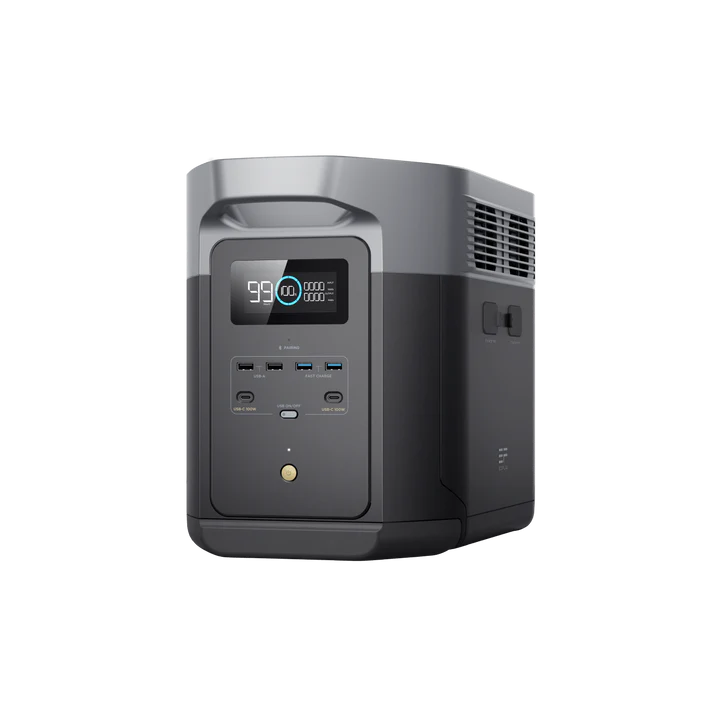
$1,049.00 · direct from EcoFlow
Last checked 1 day ago. Prices move — check before you buy.
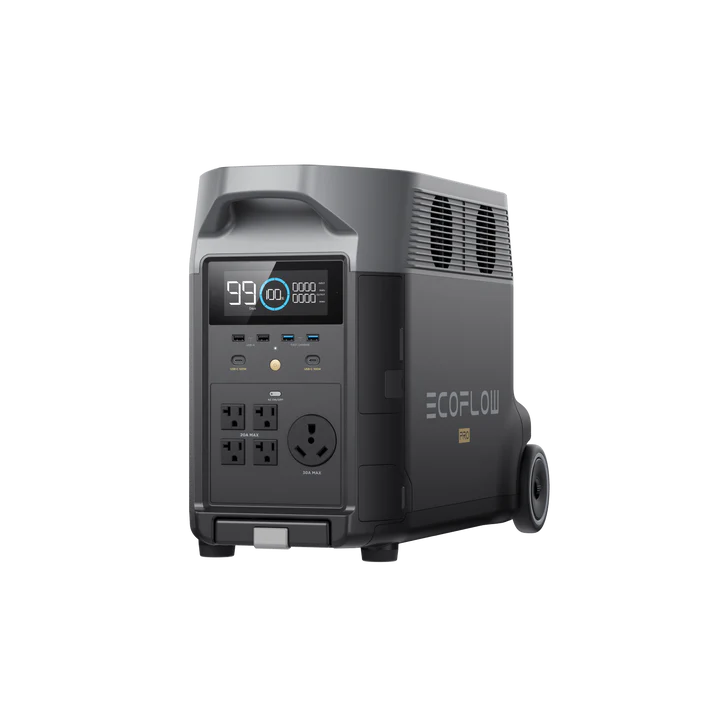
$1,899.00 · direct from EcoFlow
Last checked 1 day ago. Prices move — check before you buy.
Spec deltas
The DELTA 2 Max can't complete a Weekend Camping scenario on its own charge — it needs 121% of its 2,048Wh capacity, more than it holds. The DELTA Pro covers the identical trip at 69%, with headroom left over, for just $850 more.
That $850 gap buys 1,552Wh more capacity, 1,200W more continuous output, and 500 additional rated cycles, which together push lifetime cost to eleven cents per kWh against the DELTA 2 Max's twenty-one. Owners describe the Pro as a proven home-backup platform, run through multiple overnight outages spanning monthsB1B3.
The DELTA 2 Max isn't without a case — it's 48.3 lbs lighter and rated 30dB quieter, both real if you're carrying or hearing it. Neither answers the capacity gap that decides most of the scenarios on this page.
What the Numbers Reveal
Each conclusion stated first — the numbers behind it on one line, the full analysis below.
Capacity
Set against a $850 price gap, that's not a close call. A unit that can't complete the trip it's sized for isn't the cheaper option for costing $850 less — you'd need a mid-trip recharge the Pro owner never has to plan around.
Weekend Camping scenario needs roughly 2,100WhDELTA 2 Max: 2,048Wh capacity, can't complete it (121% needed)DELTA Pro: 3,600Wh capacity, completes it at 69%
Why it mattersAnyone whose actual use case looks like a weekend away should treat the Pro's headroom as the deciding spec, not the $850 sticker gap.
Cost per warranty year is just price divided by five — it says nothing about how much energy you actually get for that money. Cost per lifetime kWh accounts for both capacity and cycle life, and that's the number that flips once the Pro's 1,552Wh larger capacity and 500 extra rated cycles enter the math.
DELTA 2 Max: $259 cost per warranty year, $0.21 per lifetime kWhDELTA Pro: $280 cost per warranty year, $0.11 per lifetime kWh
Why it mattersBuyers using "cost per warranty year" as a shortcut are reading the wrong number; on actual cost of ownership, the pricier unit wins here.
weight
Neither unit is silent under load, though. DELTA 2 Max owners report its own fans get loud enough during heavy draw or charging that EcoFlow built a Quiet Charging mode specifically to trade noise for slower charge timesA1, while Pro owners describe a noticeable high-pitched whine past roughly 2,000WB4. The Pro's noise complaint sits on top of a rating that's already double the DELTA 2 Max's.
DELTA 2 Max: 30dB noise rating, 50.7 lbsDELTA Pro: 60dB noise rating, 99 lbs
Why it mattersBuyers in a noise-sensitive space — a shared campsite, a bedroom running a CPAP — should register the 30dB gap as real, not assume either unit runs silent.
The specific dimensions that decide these two units — everything else is a tie.
Your Life, Your Pick
Selected because: The DELTA 2 Max fails to complete Weekend Camping on its own capacity — the clearest evidence on the page.
Weekend Camping is the scenario that actually separates these two: the DELTA 2 Max needs 121% of its own capacity and doesn't finish, while the Pro covers it at 69%. An 8-Hour Blackout tells a milder version of the same story — 94% against 54%, with the DELTA 2 Max running much closer to empty. Remote Workday (52% against 30%) and Tailgate Party (38% against 22%) both keep the same pattern.
CPAP Overnight is the one near-tie — 18% against 10%, both comfortable. Van Life Daily is where both fail: the DELTA 2 Max needs 269% of its capacity, the Pro needs 153%. Neither is built for that load.
Lifetime Value
Selected because: Cost-per-warranty-year and cost-per-lifetime-kWh point opposite directions, worth untangling.
cost / lifetime kWh
At $259 per warranty year against the Pro's $280, the DELTA 2 Max looks like the better deal by a narrow, simple metric. That number is just price divided by five years, though — it doesn't know the Pro delivers 1,552Wh more capacity per cycle.
Cost per lifetime kWh corrects for that: twenty-one cents for the DELTA 2 Max against eleven for the Pro. The $21-a-year gap in the simpler metric flips into a near-half-price advantage for the Pro once actual energy delivered is the unit of measure.
Portability & Form Factor
Selected because: 48.3-lb weight gap and a 30dB noise gap are the DELTA 2 Max's real answers.
weight
Fifty pounds against ninety-nine is close to a doubling — the DELTA 2 Max is a one-person carry to the car, the Pro is a two-hands, bent-knees lift that ships with wheels for a reason. The 30dB-against-60dB noise gap follows the same pattern: real, and large enough to matter for anyone running this near where they sleep.
Neither number is free, though. The DELTA 2 Max's own reviews cite fan noise as the recurring complaint at its scaleA1 — it's the quieter of the two, not a silent one.
What the Specs Don't Tell You
Selected because: Weight and noise flags both fire against the Pro and are the only real counterweight on the page.
rated cycles
Two flags fire and both land against the Pro: its 99 lbs is flagged as a real commitment to move, and its 60dB rating under load is flagged as audibly loud. Both are the DELTA 2 Max's legitimate counter-arguments to an otherwise one-sided capacity and cost comparison.
Neither flag changes the scenario math, though — the DELTA 2 Max still can't complete a Weekend Camping trip on its own charge, weight and noise notwithstanding.
Strengths & trade-offs
EcoFlow DELTA 2 Max
Strengths
- +Costs $850 less
- +Lighter by 48.3 lb
Trade-offs
- –Weaker inverter (-1,200W) limits appliance compatibility.
EcoFlow DELTA Pro
Strengths
- +Larger battery capacity
- +Higher AC output
- +Faster solar charging
Trade-offs
- –Substantially more expensive (+$850) than the DELTA 2 Max.
- –Significantly heavier (+48.3 lbs), making it harder to move.
- –Very heavy unit that may be difficult for one person to lift.
- –Can receive complaints about fan noise under heavy load.
Will It Power Your Gear?
Scenario math and per-appliance runtimes, modeled from the spec record.
Scenario verdicts
We ran the math on six real-world scenarios. Here's which unit survives your actual life.
SCN-01 · 2 nights · needs 2,100Wh
Weekend Camping
Two nights off-grid with essential comfort
DELTA Pro
The DELTA 2 Max can't finish this one on its own charge — it needs 121% of what it holds. The Pro covers the same weekend with room to spare at 69%. This is the scenario where the capacity gap actually decides the purchase.
Battery budget usedlower = more headroom
LOAD Phone Charger 15W×6h · LED Lights 40W×8h · Box Fan 75W×14h · CPAP Machine 40W×16h
SCN-02 · 8 hours · needs 1,645Wh
8-Hour Blackout
Keep the essentials running through a night without power
DELTA Pro
Both survive the night. The DELTA Pro finishes at 54% used with 1,415Wh left — 86% of a second night. The DELTA 2 Max finishes at 94% with 96Wh, 6% of a second night. If your outages tend to run past one evening, that difference is the whole argument between them.
Battery budget usedlower = more headroom
LOAD Fridge 150W×8h · Router + Modem 20W×8h · LED Lights (4 bulbs) 40W×6h · Phone Charger 15W×3h
SCN-03 · 8 hours · needs 320Wh
CPAP Overnight
Sleep therapy without interruption — the #1 medical use case
DELTA 2 Max
Both handle an overnight easily — 18% of capacity for the DELTA 2 Max, 10% for the Pro. At this load size, decide on weight or noise instead of capacity.
Battery budget usedlower = more headroom
LOAD CPAP Machine 40W×8h
SCN-04 · 8 hours · needs 910Wh
Remote Workday
Full work day off-grid without power anxiety
DELTA Pro
The DELTA Pro clears the workday at 30% used, banking 2,150Wh — late work, extra calls, or a second laptop charge without arithmetic. The DELTA 2 Max at 52% also finishes, with 831Wh of slack for the unplanned.
Battery budget usedlower = more headroom
LOAD Laptop 60W×8h · External Monitor 30W×8h · Router + Modem 20W×8h · Phone Charger 15W×2h
SCN-05 · 4 hours · needs 670Wh
Tailgate Party
Game day power for the crew
DELTA Pro
Both handle game day; the DELTA Pro keeps more in reserve (22% used vs 38%). Tailgating is a light load, though, so the number you'll feel is weight: 50.7 lbs for the DELTA 2 Max against 99 lbs for the DELTA Pro, from the trunk to the setup spot.
Battery budget usedlower = more headroom
LOAD Blender 400W×0.5h · LED TV (55") 80W×4h · Bluetooth Speaker 15W×4h · Phone Charger (×3) 45W×2h
SCN-06 · 24 hours · needs 4,685Wh
Van Life Daily
A full day of mobile living — the ultimate endurance test
Neither unit
Neither unit covers this scenario's 4,685Wh: the DELTA 2 Max comes up 2,944Wh short (about 37% covered), the DELTA Pro 1,625Wh (65%). Treat this as partial cover — enough for the essentials in it, not the whole list.
Battery budget usedlower = more headroom
LOAD Mini-Fridge 150W×24h · Laptop 60W×4h · Phone Charger 15W×3h · LED Lights 40W×5h · Fan 75W×8h
The Load Test
RUNTIME = (Wh × 0.85) ÷ LOAD
None of the scenarios above exactly yours? Build it. Toggle what you'd plug in; both units are tested against the combined draw.
Essentials
Comfort & Convenience
High-Draw Appliances
Test duration
8h
Continuous draw
205W
Projected runtime
For this load: DELTA Pro runs 14.9h vs 8.5h.
$1,899 list · direct from EcoFlow
Modeled from the spec record — same math as the tables below. Methodology
Runtime by appliance
Real-world runtime estimates for common appliances, modeled at 85% inverter efficiency.¹
Essentials
The basics you need runningscale 0–204hComfort & Convenience
Makes off-grid life actually enjoyablescale 0–40.8hHigh-Draw Appliances
These reveal the real limitsscale 0–3.1h¹ Runtime = (capacity × 0.85) ÷ appliance watts. Within each group, all bars share one time scale (the group's longest runtime), so lengths are comparable across appliances; identical runtimes collapse into a single blue/orange bar. Actual runtime varies with battery age, temperature, and simultaneous loads — see methodology.
Conclusion
July 14, 2026
Verdict: the DELTA Pro, on Power Score margin
Take the DELTA Pro unless weight or noise is the deciding factor for you. For $850 more, it holds 1,552Wh more capacity, covers a Weekend Camping load at 69% instead of failing to complete it, and works out to roughly half the cost per lifetime kWh — eleven cents against twenty-one — once its larger capacity and 500 extra cycles are factored in. The DELTA 2 Max answers with 48.3 fewer pounds and a 30dB noise rating against the Pro's 60dB, both real advantages for a buyer who's carrying it themselves or running it somewhere quiet. Neither closes a gap this wide on capacity and real-world scenario coverage.
Editor-assigned confidence, based on cited owner research and spec analysis.
List prices as of July 14, 2026. The links below open EcoFlow's current price.
$1,899.00 · direct from EcoFlow
Last checked 1 day ago. Prices move — check before you buy.
or check the DELTA 2 Max price$1,049.00 list
Written by Gunner Gustafson, Whole-Home Backup Tester · Station Arena Test Desk · Updated July 14, 2026
Measured Data
Benchmark scores and the full spec record, side by side.
Benchmark scores
Not rated for both units (minimum threshold unmet): CPAP, Tailgating, Apartment Balcony.
Full specifications
ᵈ Derived: price ÷ rated capacity. See the data behind our comparisons →
Comparison ToolAdd more power stations, side by sideOpen Tool →How these numbers are produced
Numeric verification
Every figure on this page traces to our spec database or arithmetic on it — no estimated numbers.
Owner claims
Statements about owner experience are cited to published reviews — see Sources & Research Notes below.
Runtime model
Runtime = (rated capacity × 0.85 inverter efficiency) ÷ device wattage. Solar recharge estimates assume panels deliver 70% of rated output. Cold weather, battery age, and stacked loads reduce real-world results.
Power Score
Computed from 14 published spec dimensions, weighted per use-case bench. Higher is better; a unit must meet a bench's minimum threshold to be rated.
See the full weight table and data sourcing on our methodology page →Class ranking (the star rating)
Each unit's star score is a category ranking, not customer reviews — no buyer opinions feed it. We score every station on size-independent quality (value, output, portability, endurance, ports, warranty, and more), then percentile-rank it against the other units in its capacity class, so a class-leading compact unit and a class-leading whole-home unit can both earn 5★. Here, DELTA 2 Max rates 3.8/5 (28th percentile of 26 Large-class units), and DELTA Pro rates 3.9/5 (33rd percentile of 16 Home Backup-class units).
How the class ranking is computed →Test Notes & Caveats
Hidden gotchas and advantages we spotted that you won't find on the product page.
99 lbs Is a Commitment
This is the DELTA Pro's honest tradeoff for its extra capacity — a two-hands, bent-knees lift that ships with wheels for a reason. The DELTA 2 Max at 50.7 lbs is a one-person carry; the Pro isn't.
60dB Under Load
The Pro's fans are audibly loud past roughly 2,000W of draw, double the DELTA 2 Max's 30dB rating. Worth weighing seriously if this is running near where you sleep or work.
Warranty: No Difference
Both units carry the same 5-year warranty, so coverage isn't a tiebreaker here. Worth saying because the per-dollar framing can suggest otherwise: the DELTA 2 Max works out at 4.8 years of cover per $1,000 spent against the DELTA Pro's 2.6, but that spread is the price gap, not the terms.
Full record above — the Test Desk pick is the DELTA Pro.
Check DELTA Pro price →or check the DELTA 2 Max priceOwnership Analysis
What happens after you buy — true cost of ownership, brand trust, and growth potential.
Lifetime value
Service lifeyears at one full cycle per day
Lifetime energy delivered
Cost per delivered kWh
│ warranty ends · Reaching the cycle rating means ~80% capacity remains — degraded, not dead.
Analyst note
The DELTA 2 Max is cheaper to buy, but the DELTA Pro is cheaper to own. At $0.15/kWh over its lifetime vs $0.17/kWh, the DELTA Pro's higher cycle life and capacity make each dollar go further over the years.
Growth path
DELTA 2 Max
EXPANDABLESupports EcoFlow expansion batteries, so you can add capacity later without replacing the base unit — useful if your needs may climb past 2,048Wh.
Accepts up to 1,000W of solar. Enough for a serious multi-panel array.
Generous port selection supports complex multi-device setups.
Expansion batteries are EcoFlow-specific. You're investing in the EcoFlow ecosystem.
DELTA Pro
EXPANDABLESupports EcoFlow expansion batteries, so you can add capacity later without replacing the base unit — useful if your needs may climb past 3,600Wh.
Accepts up to 1,600W of solar. Enough for a serious multi-panel array.
Generous port selection supports complex multi-device setups.
Expansion batteries are EcoFlow-specific. You're investing in the EcoFlow ecosystem.
Realistic full solar rechargeat 70% of rated panel output — see methodology
Analyst note
Both expand, but the DELTA Pro's higher solar ceiling (1,600W vs 1,000W) gives it the stronger off-grid growth path — more panels can feed a bigger bank as it grows.
What Owners Report
Patterns from published owner reports and long-term reviews — every claim cited to its source below.
EcoFlow DELTA 2 Max
Fan noise is the DELTA 2 Max's most consistent complaint — cooling fans can get loud under heavy load or during charging, around 52dB by some measurements, though a Quiet Charging mode trades noise for a longer charge time and giving it 6 inches of clearance helps airflowA1. On the positive side, AC wall charging is fast: 0 to 80% in about 50 minutes, a full charge in roughly 80A2.
After six months of real use, owners report no structural degradation on the LiFePO4 cells — it still feels as solid as day oneA3. The overall read is mixed-positive: reviewers call it still worth buying, but with caveatsA4, which lines up with a unit that's now a generation behind the Pro on capacity and continuous output.
“Fast AC wall charging — 0 to 80% in about 50 minutes and a full charge in roughly 80 minutes.”
Sources
powerstationadvisor.com · pcworld.com · thesolarlab.com · protoolsadvisor.com · trailandkale.com
EcoFlow DELTA Pro
The DELTA Pro's recurring knock is fan noise: past roughly 2,000W, the fans put out a noticeable high-pitched whine that's distracting in a quiet room, though it stays quiet enough at lighter loadsB4 — a real cost of the extra capacity and output the DELTA 2 Max doesn't carry.
It's a tradeoff owners seem to accept, though: the Pro has built a reputation as a gold-standard home-backup platform, held up as primary backup across multiple overnight outages spanning months, running a fridge, lighting, and a space heater at onceB1B3. The integrated wheels are doing real work at 99 lbs — best on flat ground, with a cart recommended for anything unevenB2.
“Long regarded as a gold standard for home backup — designed for high-draw appliances and full-scale battery expansion, running home essentials like a fridge, lighting, and a space heater through outages.”
Sources
backuppowerhub.com · us.ecoflow.co · outdoorgearlab.com · bobvila.com · powerstationadvisor.com · robbsutton.com
Sources & Research Notes
Every owner claim in this report is traceable to a published source. The bracketed references above resolve here.
Recurring owner themes
- Solid LFP durability, fast charging, and ecosystem/expandability are the praise; loud fans under heavy load or charging are the recurring complaint. [DELTA 2 Max · 3 entries]
- Established home-backup platform with wheeled portability and massive expandability; the consistent knock is fan noise under heavy load. [DELTA Pro · 3 entries]
- A1
“Fan noise is a significant issue — cooling fans can get loud, around 52 dB during heavy loads or charging; a Quiet Charging mode reduces noise but extends charge time, and giving it 6 inches of clearance helps airflow.”
powerstationadvisor.com / pcworld.com — DELTA 2 Max review · 2025-2026 · [negative]
- A2
“Fast AC wall charging — 0 to 80% in about 50 minutes and a full charge in roughly 80 minutes.”
thesolarlab.com / protoolsadvisor.com — DELTA 2 Max review · 2025-2026 · [positive]
- A3
“LiFePO4 chemistry rated for 3,000+ cycles to 80% with superior thermal stability; after 6 months of real use there was no structural degradation and it felt as solid as day one.”
powerstationadvisor.com / trailandkale.com — DELTA 2 Max review · 2025-2026 · [positive]
- A4
“Reviewers say it's still worth buying but with caveats — a versatile unit with expandability and ecosystem compatibility.”
thesolarlab.com / powerstationadvisor.com — DELTA 2 Max review · 2025-2026 · [mixed]
- B1
“Long regarded as a gold standard for home backup — designed for high-draw appliances and full-scale battery expansion, running home essentials like a fridge, lighting, and a space heater through outages.”
backuppowerhub.com / us.ecoflow.com — EcoFlow DELTA Pro review · 2025-2026 · [positive]
- B2
“Heavy but wheeled — integrated wheels and a telescoping handle help move its considerable weight, though they work best on flat, smooth surfaces; a cart is needed for uneven ground.”
outdoorgearlab.com / bobvila.com — DELTA Pro-line review · 2025-2026 · [mixed]
- B3
“Reliable through extended outage use — served as primary backup across multiple overnight outages over months, powering essentials simultaneously; LFP battery rated for thousands of cycles and 10+ years of daily use.”
powerstationadvisor.com / robbsutton.com — DELTA Pro-line review · 2025-2026 · [positive]
- B4
“Not silent under heavy load — under 2000W-plus draws the fans emit a noticeable high-pitched whine that's distracting in a quiet room, though it runs quietly enough at lighter loads.”
outdoorgearlab.com — DELTA Pro-line noise testing · 2025-2026 · [negative]
Research compiled July 14, 2026.
What Owners Actually Report
Drawn from 202 comments on independent review channels — not from retailer reviews, which skew to the first week of ownership. Each line is our summary of one commenter's claim, linked to the original. We record what they said, including where it contradicts the spec sheet.
EcoFlow DELTA 2 Max
74 claims from 55 comments · 60 from owners · 20 with figures
- Runtime
- 13 · 0% negative
- Solar input
- 10 · 20% negative
- Price & value
- 11 · 45% negative
- Expandability
- 8 · 15% negative
- Noise
- 5 · 58% negative
What owners complain about
Its own MPPT is limited to a mere 60 VOC from solar panels.
Solar inputmeasuredowner19 agreedsource →
Delta 2 Max is promised at 30 dB but measured 42 dB in his hands.
Noisemeasuredowner5 agreedsource →
Got a 5kWh rival for less than he paid for a DELTA 2 Max with extra battery.
Price & valueowner17 agreedsource →
What owners praise
Feeding his lead-acid UPS from it stretches desktop runtime from 8 minutes to 4 hours.
Runtimemeasuredowner8 agreedsource →
Bought the Delta 2 Max for $899 on Black Friday; the Delta 2 was $399.
Price & valuemeasuredowner21 agreedsource →
Takes 500-1000W from a DIY 48V bank over XT60i, far cheaper than the official spare battery.
Expandabilitymeasuredowner19 agreedsource →
EcoFlow DELTA Pro
211 claims from 147 comments · 155 from owners · 39 with figures
- Price & value
- 37 · 26% negative
- Durability
- 22 · 73% negative
- Solar input
- 23 · 35% negative
- Runtime
- 18 · 23% negative
- Other
- 18 · 48% negative
What owners complain about
Bought October 2023, died June 2024.
Durabilitymeasuredownerafter 8 months25 agreedsource →
The 100 lb weight of the DELTA Pro is no joke.
Size & weightmeasuredowner14 agreedsource →
Even the 767's loudest fan state is far quieter than the DELTA Pro.
Noiseowner41 agreedsource →
What owners praise
Charges two DELTA Pros from two ~2,500W strings running at about 125V.
Solar inputmeasuredowner13 agreedsource →
Electric bill fell from $250 a month to between $26 and $44.
Price & valuemeasuredowner14 agreedsource →
Delta Pro with battery and 800W of solar keeps him fully off grid and happy.
Runtimeownerafter 8 months62 agreedsource →
Claims are weighted by how specific they are, whether the commenter owns the unit, and how many readers agreed. Comments that mention a product under a rival's review count for more, because the commenter had no reason to be there. This is what buyers report, not our test results — for measurements we ran ourselves, see the methodology.
Who Should Buy Which
Buy the DELTA 2 Max if you…
- →You're carrying it yourself and 48.3 fewer pounds is worth more to you than 1,552Wh of extra capacity.
- →Your real loads are modest — a CPAP overnight or a short tailgate — where the DELTA 2 Max's smaller capacity was never going to be the limit.
Buy the DELTA Pro if you…
- →Your actual use case looks like the Weekend Camping or 8-Hour Blackout scenarios, where the DELTA 2 Max runs short and the Pro doesn't.
- →You want the better lifetime cost per kWh and don't mind the extra weight or the louder fans to get it.
If neither fits
If your real need is full daily power for something like van life, neither wins outright — the DELTA 2 Max needs 269% of its own capacity and the Pro needs 153%. Look at a larger or multi-battery system sized for continuous daily draw.
The Bottom Line
This isn't close for most buyers. The DELTA Pro holds more, costs less per kWh delivered, and actually finishes the trips it's sized for — the DELTA 2 Max can't say the same about its own headline camping scenario.
Take the Pro unless you specifically need the DELTA 2 Max's 48.3-lb weight edge or its quieter 30dB rating. For most buyers, $850 is a small price for a unit that completes the job the cheaper one doesn't.
Frequently Asked Questions
Answers drawn from the spec record and cited owner research.
Can the EcoFlow DELTA 2 Max handle a full weekend of camping?
Not on its own charge. Our Weekend Camping scenario needs roughly 2,100Wh, which is 121% of the DELTA 2 Max's 2,048Wh capacity — it comes up short. The DELTA Pro covers the same load at 69%.
Is the DELTA Pro worth $850 more than the DELTA 2 Max?
For most real-world loads, yes. It holds 1,552Wh more capacity, completes scenarios the DELTA 2 Max can't finish, and costs roughly half as much per lifetime kWh. The DELTA 2 Max's answers are 48.3 fewer pounds and a 30dB quieter noise rating.
Which one is quieter?
The DELTA 2 Max, rated at 30dB against the Pro's 60dB. Neither is silent under heavy load — DELTA 2 Max owners still cite fan noise as a recurring complaint at its own scale — but the gap between the two is real.
Why does the DELTA Pro cost more per warranty year but less per lifetime kWh?
Cost per warranty year is just price divided by five, so the pricier Pro looks worse by that measure ($280 against $259). Cost per lifetime kWh accounts for how much energy each unit actually delivers, and the Pro's larger capacity and higher cycle count flip that number in its favor.
Where to buy
EcoFlow DELTA 2 Max
$1,049.00
$1,049.00 · direct from EcoFlow
Last checked 1 day ago. Prices move — check before you buy.
EcoFlow DELTA ProPick
$1,899.00
$1,899.00 · direct from EcoFlow
Last checked 1 day ago. Prices move — check before you buy.
Prices may vary by retailer and are subject to change.