Head-to-head test
Anker SOLIX F3800 vs Goal Zero Yeti 3000X
The F3800 costs $1,000 less than the Yeti 3000X and still beats it everywhere that matters — output, surge, cycle life, lifetime cost — but owners consistently report its solar input is locked down toward Anker's own pricier panels, a real caveat worth knowing before price alone makes the decision for you.
Full profiles: Anker SOLIX F3800 → · Goal Zero Yeti 3000X →

Written by Gunner GustafsonUpdated
Whole-Home Backup Tester, Station Arena Test Desk
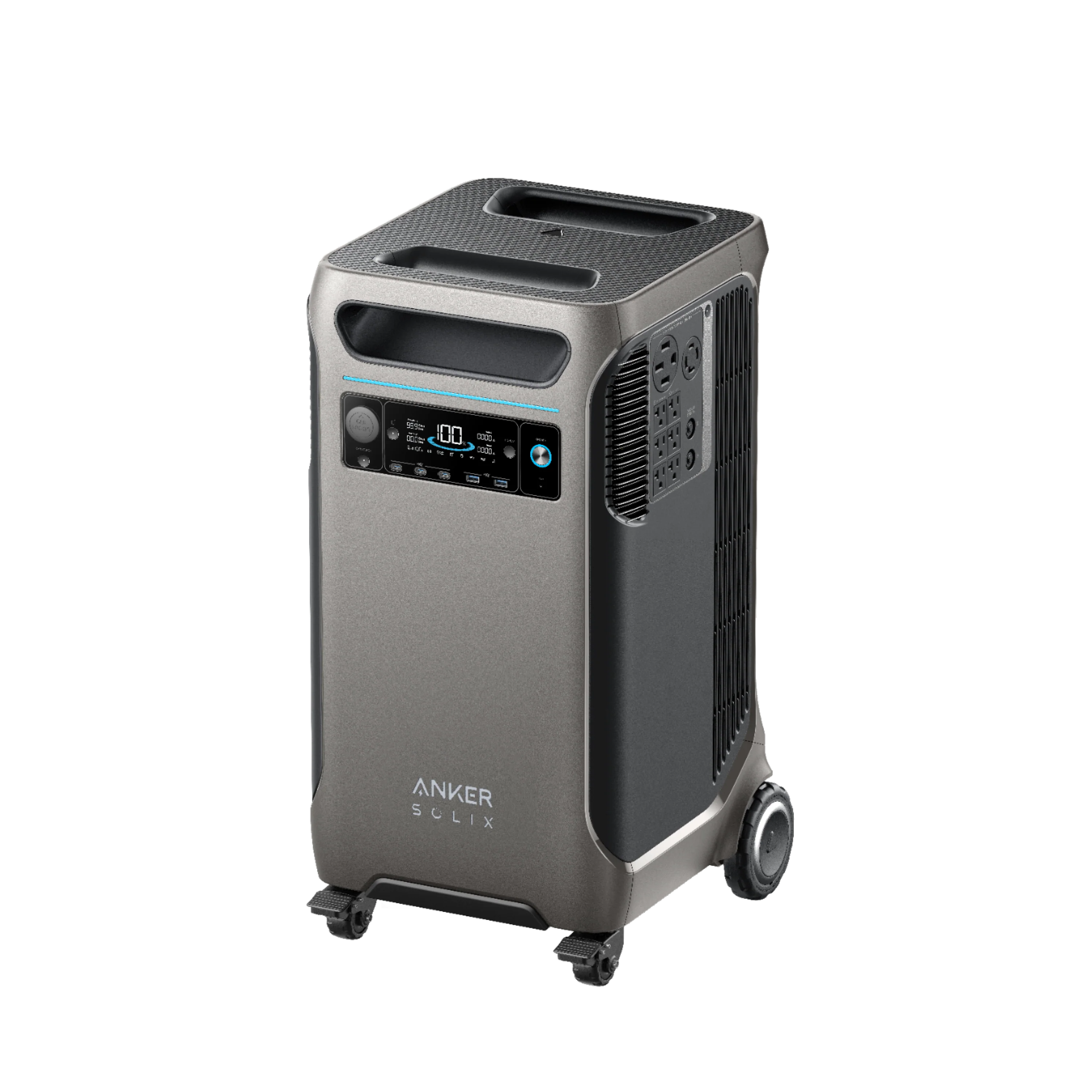
$2,199.99 · direct from Anker
Last checked 1 day ago. Prices move — check before you buy.
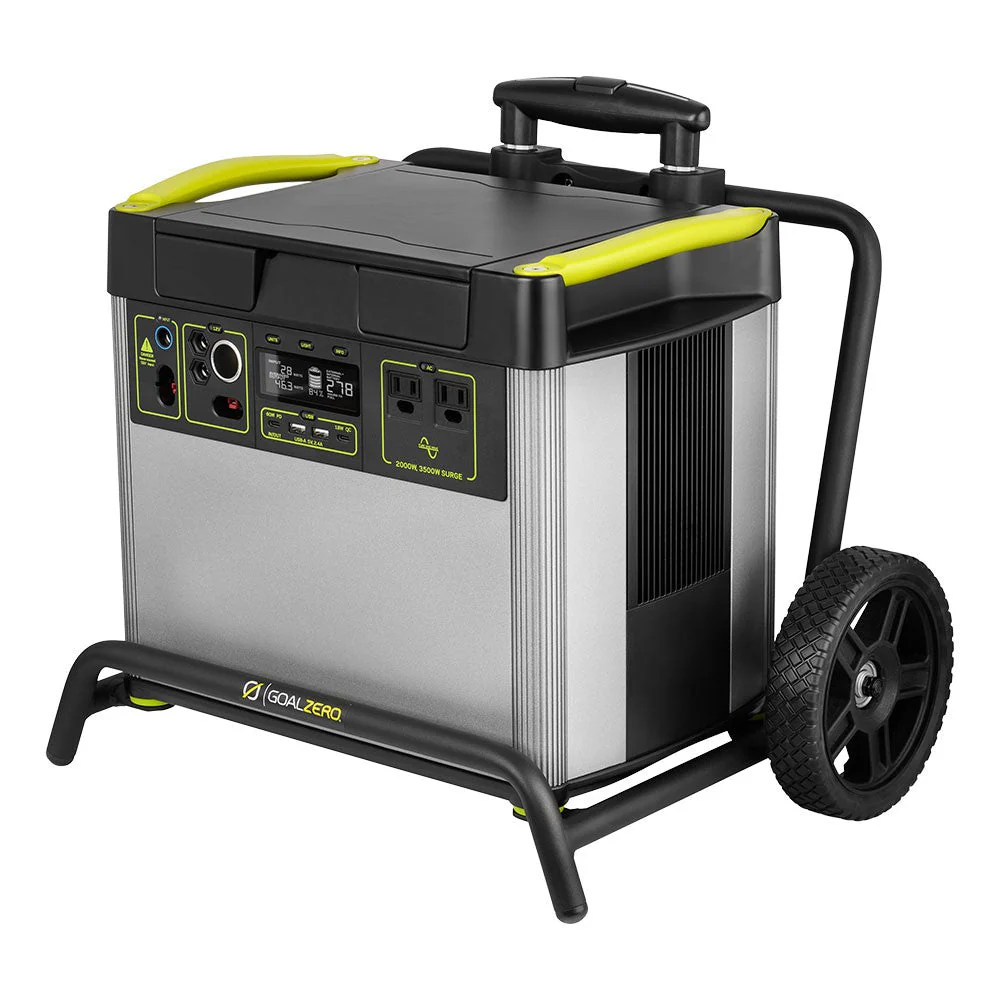
$2,999.95 · direct from Goal Zero
Last checked 1 day ago. Prices move — check before you buy.
Spec deltas
The Anker SOLIX F3800 costs $2,000 against the Goal Zero Yeti 3000X's $3,000 — $1,000 cheaper — and still outputs three times the continuous power, 6,000W against 2,000W.
Lifetime ownership cost tells the same story at a bigger scale: $0.23 per kilowatt-hour for the F3800 against $1.98 for the Yeti, on the strength of a 3,000-cycle cell against the Yeti's 500-cycle oneB1. A five-year warranty against a two-year one widens the gap further.
The honest catch on the F3800 side: owners consistently describe its solar input as restrictive, all but requiring Anker's own panels to make real use of its 2,400W ceilingA1A2A13A14. It's a real annoyance for anyone with an existing solar array — just not one that erases a $1,000 price gap and a sixfold cycle-life advantage.
What the Numbers Reveal
Each conclusion stated first — the numbers behind it on one line, the full analysis below.
Typical price
That combination exists because of the cycle-life gap, 3,000 against the Yeti's 500B1, not because Anker cut capacity or output to hit the lower price — the F3800 still delivers 6,000W continuous against the Yeti's 2,000W.
The F3800 lists at $2,000 against the Yeti 3000X's $3,000Lifetime cost is $0.23 per kWh for the F3800 vs $1.98 for the Yeti
Why it mattersBuyers assuming the cheaper unit must be the compromised one should recheck that assumption; here the cheaper unit is ahead on every core spec except weight.
solar input
That's a real cost the spec sheet hides: owners with an existing generic panel setup report working around the limitation with a secondary charge controllerA13, or budgeting for Anker's own panels on top of the unit's price.
The F3800's solar ceiling is 2,400W against the Yeti 3000X's 600WOwners consistently report the F3800's solar and DC input is restrictive, pushing them toward Anker's own panelsA1A2A13A14
Why it mattersAnyone with an existing solar array should weigh this before assuming the F3800 is the free lunch it looks like on paper.
rated cycles
Its only growth path compounds the problem: the Tank expansion battery runs lead-acid, delivers roughly half its added capacity usable, and caps how much of the Yeti's own lithium you can draw once it's connectedB4. You'd pay more upfront for a battery that also wears out faster and expands badly.
The Yeti 3000X costs $3,000, the higher price of this pairIts cycle rating is 500 against the F3800's 3,000B1
Why it mattersBuyers drawn to the Yeti's brand heritage should know the higher price isn't buying longer life or a real expansion path — it's buying neither.
The specific dimensions that decide these two units — everything else is a tie.
Lifetime Value
Selected because: The $0.23-vs-$1.98 gap is wider here than on the Plus comparison, and it comes with a lower sticker price too.
cost / lifetime kWh
The F3800's $0.23 per lifetime kilowatt-hour against the Yeti's $1.98 is the widest lifetime-cost gap in this matchup, and it isn't close. Cost per warranty-year makes the same point from another angle: $540 for the F3800 against $1,500 for the Yeti.
None of this required the F3800 to cost more. It's the cheaper unit at purchase too, $2,000 against $3,000. There's no premium being paid for the better economics here — the better economics come free with the lower price.
Growth Path
Selected because: Solar ceiling (2,400W vs 600W) and the F3800's panel-compatibility caveat both live here.
solar input
Both units technically expand, but only one expansion path is worth using. The F3800's solar ceiling is 2,400W against the Yeti's 600W, four times the room to add panels as a setup grows.
The catch is getting there: owners consistently describe the F3800's DC input as picky about which panels it accepts, steering buyers toward Anker's own array rather than generic MC4 hardwareA1A2A14. The Yeti's growth path has the opposite problem — no input-compatibility complaint, but its only battery-side expansion, the Tank, is lead-acid and hands back only about half of what you addB4.
Your Life, Your Pick
Selected because: Weekend Camping and the 8-Hour Blackout are where the capacity gap actually shows up in daily use.
Weekend Camping and the 8-Hour Blackout are where the F3800 pulls ahead outright. Both draw enough to matter, and the F3800 finishes each with meaningfully more capacity in reserve than the Yeti does. CPAP Overnight, Remote Workday, and Tailgate Party are all comfortable ties — neither unit gets close to its ceiling on any of them, so buy on price and portability for those jobs alone.
Van Life Daily beats both units outright, needing more energy than either battery holds even before real-world losses. If that's your actual daily load, neither of these is the right category — you want a hardwired system with real solar income, not a box you recharge from empty every night.
What the Specs Don't Tell You
Selected because: Weight, UPS speed, warranty term, and cycle life all fire and reward direct commentary.
rated cycles
The same four flags fire here as they do on the F3800 Plus: the F3800 is heavier, its UPS switchover is a touch faster (under 20ms against the Yeti's 25ms), its warranty runs three years longer, and its cell handles six times the charge cycles. None of the Yeti's numbers close any of those gaps.
The one flag that isn't a tracked gotcha but belongs alongside this list is the solar-input restriction owners report on the F3800A1A2. It's the honest asterisk on an otherwise one-sided page.
Brand Trust
Selected because: Cross-brand pair; Anker's aggressive pricing against Goal Zero's fading premium positioning is worth stating plainly.
Same two brands as always show up in this category: Anker pricing aggressively to win share, Goal Zero coasting on being first to market a decade ago. The F3800's numbers back up Anker's pitch better than the Yeti's numbers back up Goal Zero's premium positioning.
Support quality is sliding at both companies right now, so brand loyalty shouldn't settle this one. Settle it on the hardware sitting in front of you, and the hardware favors Anker by a wide margin here too.
Strengths & trade-offs
Anker SOLIX F3800
Strengths
- +Costs $1,000 less
- +Larger battery capacity
- +Higher AC output
- +Longer warranty
- +Faster solar charging
- +Rated for 3,000 charge cycles — much longer battery lifespan
Trade-offs
- –Significantly heavier (+62.5 lbs), making it harder to move.
- –Very heavy unit that may be difficult for one person to lift.
Goal Zero Yeti 3000X
Strengths
- +Lighter by 62.5 lb
Trade-offs
- –Substantially more expensive (+$1,000) than the SOLIX F3800.
- –Weaker inverter (-4,000W) limits appliance compatibility.
- –Shorter-lived battery — rated for 500 charge cycles vs the SOLIX F3800's 3,000, so it wears out sooner.
Will It Power Your Gear?
Scenario math and per-appliance runtimes, modeled from the spec record.
Scenario verdicts
We ran the math on six real-world scenarios. Here's which unit survives your actual life.
SCN-01 · 2 nights · needs 2,100Wh
Weekend Camping
Two nights off-grid with essential comfort
Yeti 3000X
A two-night camping trip pulls a big enough draw that the gap shows up: the F3800 covers it with real capacity to spare, while the Yeti works a lot closer to its smaller ceiling.
Battery budget usedlower = more headroom
LOAD Phone Charger 15W×6h · LED Lights 40W×8h · Box Fan 75W×14h · CPAP Machine 40W×16h
SCN-02 · 8 hours · needs 1,645Wh
8-Hour Blackout
Keep the essentials running through a night without power
SOLIX F3800
Same story over eight hours without grid power — the F3800 finishes with more than half its tank left, the Yeti with meaningfully less. Neither dies, but one has a bigger cushion if the outage runs long.
Battery budget usedlower = more headroom
LOAD Fridge 150W×8h · Router + Modem 20W×8h · LED Lights (4 bulbs) 40W×6h · Phone Charger 15W×3h
SCN-03 · 8 hours · needs 320Wh
CPAP Overnight
Sleep therapy without interruption — the #1 medical use case
Either unit
A CPAP is about 40W for eight hours, so both cover the night with room to spare and capacity decides nothing. Fan noise would — but neither maker publishes a fan-noise figure, so there's nothing to hold either of them to. Buy on price, weight, and whether you can live with a fan you haven't heard.
Battery budget usedlower = more headroom
LOAD CPAP Machine 40W×8h
SCN-04 · 8 hours · needs 910Wh
Remote Workday
Full work day off-grid without power anxiety
Either unit
Both power your workstation all day without strain. At these utilization levels the real difference is USB-C for direct laptop charging — 100W on the SOLIX F3800 against 60W — which beats the inverter for convenience and wastes less energy.
Battery budget usedlower = more headroom
LOAD Laptop 60W×8h · External Monitor 30W×8h · Router + Modem 20W×8h · Phone Charger 15W×2h
SCN-05 · 4 hours · needs 670Wh
Tailgate Party
Game day power for the crew
Yeti 3000X
The SOLIX F3800 at 132.3 lbs is not a take-along — it rolls off a truck bed if it travels at all, so this scenario belongs to the Yeti 3000X by default — and it earns it, covering the 670Wh with 1,907Wh to spare. Capacity was never the SOLIX F3800's problem here; getting to a tailgate was.
Battery budget usedlower = more headroom
LOAD Blender 400W×0.5h · LED TV (55") 80W×4h · Bluetooth Speaker 15W×4h · Phone Charger (×3) 45W×2h
SCN-06 · 24 hours · needs 4,685Wh
Van Life Daily
A full day of mobile living — the ultimate endurance test
Neither unit
Daily van-life draw outruns both batteries before the day is even over. That's not a capacity gap worth arguing about — it's a sign you need a different category of system entirely, one with real solar income built in.
Battery budget usedlower = more headroom
LOAD Mini-Fridge 150W×24h · Laptop 60W×4h · Phone Charger 15W×3h · LED Lights 40W×5h · Fan 75W×8h
The Load Test
RUNTIME = (Wh × 0.85) ÷ LOAD
None of the scenarios above exactly yours? Build it. Toggle what you'd plug in; both units are tested against the combined draw.
Essentials
Comfort & Convenience
High-Draw Appliances
Test duration
8h
Continuous draw
205W
Projected runtime
For this load: SOLIX F3800 runs 15.9h vs 12.6h.
$1,999.99 list · direct from Anker
Modeled from the spec record — same math as the tables below. Methodology
Runtime by appliance
Real-world runtime estimates for common appliances, modeled at 85% inverter efficiency.¹
Essentials
The basics you need runningscale 0–217.6hComfort & Convenience
Makes off-grid life actually enjoyablescale 0–43.5hHigh-Draw Appliances
These reveal the real limitsscale 0–3.3h¹ Runtime = (capacity × 0.85) ÷ appliance watts. Within each group, all bars share one time scale (the group's longest runtime), so lengths are comparable across appliances; identical runtimes collapse into a single blue/orange bar. Actual runtime varies with battery age, temperature, and simultaneous loads — see methodology.
Conclusion
July 15, 2026
Verdict: the SOLIX F3800
Take the F3800. At $2,000 it's $1,000 cheaper than the Yeti 3000X, yet delivers three times the continuous output (6,000W vs 2,000W), nearly triple the surge (9,000W vs 3,500W), six times the cycle life, and a lifetime cost of $0.23 per kWh against the Yeti's $1.98. The one real catch: owners consistently report its solar and DC input is restrictive, effectively steering buyers toward Anker's own panelsA1A2A13A14. That's a genuine annoyance, not a dealbreaker — the Yeti's problems (a 500-cycle chemistry and a lead-acid expansion path) run deeper.
Editor-assigned confidence, based on cited owner research and spec analysis.
List prices as of July 15, 2026. The links below open Anker's and Goal Zero's current prices.
$2,199.99 · direct from Anker
Last checked 1 day ago. Prices move — check before you buy.
or check the Yeti 3000X price$2,999.95 list
Written by Gunner Gustafson, Whole-Home Backup Tester · Station Arena Test Desk · Updated July 15, 2026
Measured Data
Benchmark scores and the full spec record, side by side.
Benchmark scores
Not rated for both units (minimum threshold unmet): Tailgating, Apartment Balcony.
Full specifications
ᵈ Derived: price ÷ rated capacity. See the data behind our comparisons →
Comparison ToolAdd more power stations, side by sideOpen Tool →How these numbers are produced
Numeric verification
Every figure on this page traces to our spec database or arithmetic on it — no estimated numbers.
Owner claims
Statements about owner experience are cited to published reviews — see Sources & Research Notes below.
Runtime model
Runtime = (rated capacity × 0.85 inverter efficiency) ÷ device wattage. Solar recharge estimates assume panels deliver 70% of rated output. Cold weather, battery age, and stacked loads reduce real-world results.
Power Score
Computed from 14 published spec dimensions, weighted per use-case bench. Higher is better; a unit must meet a bench's minimum threshold to be rated.
See the full weight table and data sourcing on our methodology page →Class ranking (the star rating)
Each unit's star score is a category ranking, not customer reviews — no buyer opinions feed it. We score every station on size-independent quality (value, output, portability, endurance, ports, warranty, and more), then percentile-rank it against the other units in its capacity class, so a class-leading compact unit and a class-leading whole-home unit can both earn 5★. Here, SOLIX F3800 rates 4.7/5 (80th percentile of 16 Home Backup-class units), and Yeti 3000X rates 3.3/5 (1st percentile of 26 Large-class units).
How the class ranking is computed →Test Notes & Caveats
Hidden gotchas and advantages we spotted that you won't find on the product page.
Weight Reality Check
Neither unit is grab-and-go. The Yeti 3000X (69.8 lbs) is manageable solo but heavier than a large checked suitcase. The SOLIX F3800 (132.3 lbs) is firmly a two-person lift. It goes where you put it and stays there. That's a 63 lb difference, and it is paid once — getting the heavier one into position, not every time you move it.
Only the SOLIX F3800 Lists a UPS Mode
The SOLIX F3800 can sit between the wall and your gear and hand it to battery when the grid drops — rated ≤20ms — fine on paper for routers and most electronics; the fussiest PC power supplies sit right at this line. Worth it for a router, a desktop PC, or a CPAP. The Yeti 3000X's spec sheet lists no UPS mode, so anything plugged into it rides an outage only as far as your reaction time.
Warranty: 5 Years vs 2
The SOLIX F3800 is covered for 5 years against the Yeti 3000X's 2 years. An underrated factor if you're keeping this unit for years.
Six Times the Charge Cycles
3,000 cycles against 500 isn't a rounding difference — it's the F3800 lasting roughly six times as many full charge-and-drain cycles before capacity meaningfully fades. That's the real engine behind the lifetime-cost gap, not the sticker price.
Full record above — the Test Desk pick is the SOLIX F3800.
Check SOLIX F3800 price →or check the Yeti 3000X priceOwnership Analysis
What happens after you buy — true cost of ownership, brand trust, and growth potential.
Lifetime value
Service lifeyears at one full cycle per day
Lifetime energy delivered
Cost per delivered kWh
│ warranty ends · Reaching the cycle rating means ~80% capacity remains — degraded, not dead.
Analyst note
The SOLIX F3800 wins on both sticker price and long-term value. At $0.17/kWh over its lifetime, it's meaningfully cheaper to own. Clear value winner.
Delivers each lifetime kWh for $1.81 less — check the SOLIX F3800 price →
Brand trust
Anker
Ecosystem
Anker's SOLIX line runs from compact C-series units up through the F-series flagships the F3800 sits near the top of, plus a home energy system if you want to go beyond a portable box.
Support
Support has historically been a strength, but recent patterns lean toward AI-driven ticket responses and complicated return logistics for anything this heavy — worth knowing before you need a warranty claim on a 132-pound unit.
Community
Moderate — active Reddit (r/Anker, r/AnkerSOLIXCommunity) and growing. Benefits from Anker's massive consumer electronics brand awareness.
App experience
Rated 4.5/5 iOS (~1,100 ratings) · 4.3/5 Android
Unique strength
Its cell technology is the actual driver of the wide cycle-life gap over the Yeti, not just a bigger battery pack.
Worth knowing
The solar-input restriction owners describe is a real product limitation, not a rumor — factor it in if you're not planning to buy Anker's own panels.
Goal Zero
Ecosystem
Goal Zero keeps a tighter lineup — Yeti and Yeti Pro stations plus coolers, solar panels, and vehicle kits built around them — coherent, but with fewer models to grow into.
Support
Premium support was Goal Zero's whole pitch. Reports of long waits and unanswered tickets undercut that pitch on a unit that's already the pricier of these two.
Community
The owner community is small but genuinely loyal, concentrated in overlanding and off-grid circles, though the shuttering of Goal Zero's official forums recently cost that community its home base.
App experience
Rated 4.4/5 iOS (~1,200 ratings) but recent reviews skew negative — recurring connectivity issues, crashes, and stability problems.
Unique strength
Pioneer of the portable power market — strongest brand heritage. US-based company with ruggedized, weather-resistant designs (IP ratings vary by model). Integrated "Yeti-Ready" ecosystem with coolers, lights, and vehicle kits.
Worth knowing
Goal Zero is widely regarded as the most expensive brand per watt-hour in this category, and the Yeti 3000X's numbers on this page are exactly why.
Analyst note
Anker is undercutting on price and backing it with better hardware; Goal Zero is charging a premium for a brand name built a decade ago. The F3800's solar-input quirk is real, but it's a narrower problem than the Yeti's structural cycle-life and expansion issues.
Growth path
SOLIX F3800
EXPANDABLESupports Anker expansion batteries, so you can add capacity later without replacing the base unit — useful if your needs may climb past 3,840Wh.
Accepts up to 2,400W of solar. Enough for a serious multi-panel array.
Generous port selection supports complex multi-device setups.
Expansion batteries are Anker-specific. You're investing in the Anker ecosystem.
Yeti 3000X
EXPANDABLESupports Goal Zero expansion batteries, so you can add capacity later without replacing the base unit — useful if your needs may climb past 3,032Wh.
Accepts up to 600W of solar. Suitable for a 1-2 panel setup.
Adequate ports for most setups, but heavy users may want a power strip.
Expansion batteries are Goal Zero-specific. You're investing in the Goal Zero ecosystem.
Realistic full solar rechargeat 70% of rated panel output — see methodology
Analyst note
Both expand, but the SOLIX F3800's higher solar ceiling (2,400W vs 600W) gives it the stronger off-grid growth path — more panels can feed a bigger bank as it grows.
What Owners Report
Patterns from published owner reports and long-term reviews — every claim cited to its source below.
Anker SOLIX F3800
The recurring owner complaint on the F3800 is its solar input: multiple owners describe it as restrictive enough to effectively lock them into Anker's own panels, calling the limited compatibility with generic MC4 arrays a real pain pointA1A2A13A14. One owner noted that workarounds exist using a secondary charge controller, but that nobody addressing the problem directlyA13.
Away from solar, reports run positive to mixed. One owner ran the F3800 off a single 120V outlet through a transfer switch and says it handled everything they threw at it, including a water pumpA5. Fan noise measures in the fifty-to-sixty-decibel range at load but reads as almost inaudible during normal useA11, with occasional buzzing from the battery packs during heavy AC startup that one owner traced, with Anker's help, to a vibrating component and resolved by repositioning the batteriesA6A7. Support itself is polarized: one owner reports being ghosted after a large purchaseA8, while others report fast, responsive replacementsA9A10.
“I have been using the F3800 for a couple weeks now, using only a single 120V outlet into a reliance transfer switch and it runs everything I throw at it including a water pump.”
Sources
diysolarforum.com · thesolarlab.com
Goal Zero Yeti 3000X
At just under 70 lbs, the 3000X still ships with a roll cart — owners treat it as required equipment, not an accessory, for moving the unit anywhere at allB2. That's before getting to what's inside it.
What's inside is an older Li-ion NMC cell rated for about 500 cycles to eighty percent capacity, a fraction of the 3,000-cycle LiFePO4 chemistry now standard in this price rangeB1. Its Tank expansion battery doesn't help the picture: lead-acid, delivering only about half its added capacity usable, and cutting how much of the Yeti's own lithium capacity you can draw once it's plugged inB4.
“A roughly 70-pound unit that comes with a roll cart, essential to move it around.”
Sources
poweredportablesolar.com · bestgeneratorsolar.com · shopsolarkits.com · rei.com · goalzero.com · protoolreviews.com
Sources & Research Notes
Every owner claim in this report is traceable to a published source. The bracketed references above resolve here.
Recurring owner themes
- Owners consistently complain that the solar/DC input is restrictive, effectively locking users into pricier Anker-branded panels rather than generic arrays. [SOLIX F3800 · 4 entries]
- Fan/inverter noise is generally reported as quiet at idle but with occasional intermittent buzzing/rattling under load or fault conditions. [SOLIX F3800 · 3 entries]
- Anker support experiences are polarized — some owners report fast, responsive replacements while at least one reports being ignored after a major purchase. [SOLIX F3800 · 3 entries]
- Large NMC capacity but a crippling 500-cycle rating, heavy weight (roll cart needed), and a limited lead-acid expansion path are the recurring points. [Yeti 3000X · 3 entries]
- A1
“The solar input for charging is a pain, so much so that I'm only using it if there is no other way to charge the F3800.”
diysolarforum.com — 'Anker F3800 user reviews and opinions welcome' · 2024-07 · [negative]
- A2
“The limitations of the inputs make it very difficult to use solar panels other than Anker's panels, which are pricey for a "full up" config.”
diysolarforum.com — 'Anker F3800 user reviews and opinions welcome' · 2024-07 · [negative]
- A5
“I have been using the F3800 for a couple weeks now, using only a single 120V outlet into a reliance transfer switch and it runs everything I throw at it including a water pump.”
diysolarforum.com — 'Anker F3800 user reviews and opinions welcome' · 2024-07 · [positive]
- A6
“I have 4 BP3800s and one of them made similar buzzing/rattling noise when a heavy AC load was starting up... only for around a second while inverter was ramping up.”
diysolarforum.com — 'Big issue with Anker Solix F3800 plus battery pack' · 2025-08 · [mixed]
- A7
“Anker support told me it was a ferrite bead vibrating inside the unit... This reduced the noise, initially. At some point, I moved the batteries around and now the noise is gone.”
diysolarforum.com — 'Big issue with Anker Solix F3800 plus battery pack' · 2025-08 · [mixed]
- A8
“Anker support is ghosting me after I spent over 20k on their solix line and solar panels within a month... they are not answering/returning my calls or emails.”
diysolarforum.com — 'Big issue with Anker Solix F3800 plus battery pack' · 2025-08 · [negative]
- A9
“I've called them and submitted tickets via their portal, always very responsive. They've even done advanced replacement for me.”
diysolarforum.com — 'Big issue with Anker Solix F3800 plus battery pack' · 2025-08 · [positive]
- A10
“I've had zero issues - especially compared to the EcoFlow firmware issues I fought with for months.”
diysolarforum.com — 'Anker solix f-3800 diy solar array' · 2024-02 · [positive]
- A11
“producing between 50 and 60 decibels when engaged, making it almost inaudible during regular use... until you try to lift it, that is.”
thesolarlab.com — 'Anker SOLIX F3800 Review: Did It Kill the Competition?' · unknown · [positive]
- A13
“no one on Youtube is addressing the solar input problem directly. But People smarter than myself with secondary charge controllers... are able to navigate around the problem.”
diysolarforum.com — 'Anker F3800 user reviews and opinions welcome' · 2024-07 · [negative]
- A14
“other than the solar input problem having limited panel array choices to max out it's input capability it's a great unit so far.”
diysolarforum.com — 'Anker F3800 user reviews and opinions welcome' · 2024-07 · [mixed]
- B1
“Its biggest drawback is the Li-ion NMC battery rated for only 500 cycles to 80% capacity, where LiFePO4 power stations last 3,000+ cycles.”
poweredportablesolar.com / bestgeneratorsolar.com — Yeti 3000X review · 2026 · [negative]
- B2
“A roughly 70-pound unit that comes with a roll cart, essential to move it around.”
shopsolarkits.com / rei.com — Yeti 3000X review · 2026 · [mixed]
- B4
“Expandable via the Goal Zero Tank system, but the Tank uses lead-acid batteries that allow only ~50% usable capacity and halve the onboard lithium capacity when connected — a limited expansion path.”
poweredportablesolar.com — Yeti 3000X / Tank review · 2026 · [negative]
Research compiled July 15, 2026.
Who Should Buy Which
Buy the SOLIX F3800 if you…
Buy the Yeti 3000X if you…
- →You're one person who needs to move this unit solo and regularly — 69.78 lbs against 132.3 lbs is the deciding factB2.
- →You already own a generic-panel solar array and want an input with fewer compatibility complaints, even at a smaller 600W ceiling.
If neither fits
If your daily draw runs anywhere near van-life scale, both of these come up short, each needing more than a full charge just to cover one day. Look at a hardwired system with real solar income instead of either portable unit.
The Bottom Line
The F3800 is the cheaper unit and the better one — on power, cycle life, warranty, and lifetime cost. A $1,000 lower price with three times the continuous output and six times the cycle life isn't a tradeoff, it's a clean win.
Its one real caveat, a solar input owners say favors Anker's own panelsA1A2, is worth knowing before you buy. It doesn't touch the other metrics that all favor the F3800 anyway — take it, and budget for Anker panels if you're building the solar side from scratch.
Frequently Asked Questions
Answers drawn from the spec record and cited owner research.
Is the Anker SOLIX F3800 cheaper than the Goal Zero Yeti 3000X?
Yes — $2,000 against $3,000, a $1,000 gap — and the F3800 also delivers three times the continuous output (6,000W vs 2,000W) and six times the cycle life. The lower price isn't buying a compromised unit here.
Can I use my existing solar panels with the F3800?
Maybe not easily. Owners consistently report the F3800's solar and DC input is restrictive and effectively steers buyers toward Anker's own panel lineup rather than generic MC4 arrays. Some report workarounds using a secondary charge controller, but it's a real limitation to budget for.
Why does the Goal Zero Yeti 3000X cost more but last fewer cycles?
Its price reflects Goal Zero's brand positioning, not its chemistry — the 3000X runs an older Li-ion NMC cell rated for about 500 cycles to eighty percent capacity, against the F3800's 3,000-cycle LiFePO4 cell. Higher price and shorter service life aren't connected here.
Is the Yeti 3000X's Tank expansion battery worth adding?
Not really. The Tank runs lead-acid, delivers only about half its added capacity usable, and reduces how much of the Yeti's own lithium capacity you can draw once it's connected. It's an expansion path that leaves you with less net usable power, not more.
Which one should I actually buy, the F3800 or the Yeti 3000X?
Take the F3800 unless you're carrying the unit solo and often, or you already own generic solar panels you don't want to replace. It's $1,000 cheaper, six times longer-lived, and far more capable at startup loads — the Yeti's only real advantages are its lighter 69.78-lb frame and a less finicky, if smaller, 600W solar input.
Where to buy
Anker SOLIX F3800Pick
$2,199.99
$2,199.99 · direct from Anker
Last checked 1 day ago. Prices move — check before you buy.
Goal Zero Yeti 3000X
$2,999.95
$2,999.95 · direct from Goal Zero
Last checked 1 day ago. Prices move — check before you buy.
Prices may vary by retailer and are subject to change.