Head-to-head test
Anker SOLIX F2600 vs Anker SOLIX F3800
Anker SOLIX F2600 vs Anker SOLIX F3800: Take the F2600 unless your load list has a motor on it. Both units run the same LFP chemistry, the same 3,000 cycles, the same five-year warranty, and both accept expansion batteries, so nothing about durability or growth argues for spending double.
Full profiles: Anker SOLIX F2600 → · Anker SOLIX F3800 →

Written by Gunner GustafsonUpdated
Whole-Home Backup Tester, Station Arena Test Desk
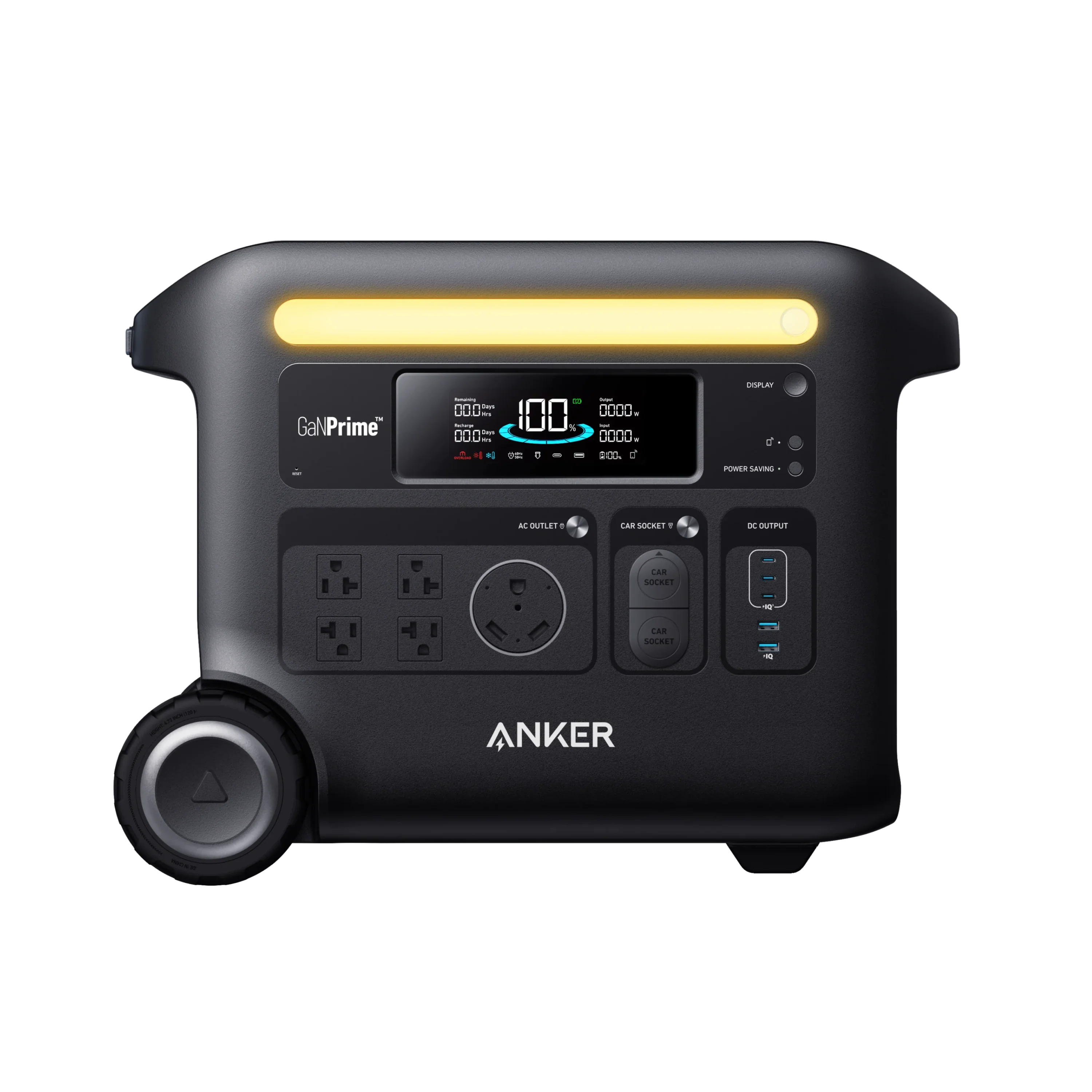
$1,499.99 · direct from Anker
Last checked 1 day ago. Prices move — check before you buy.
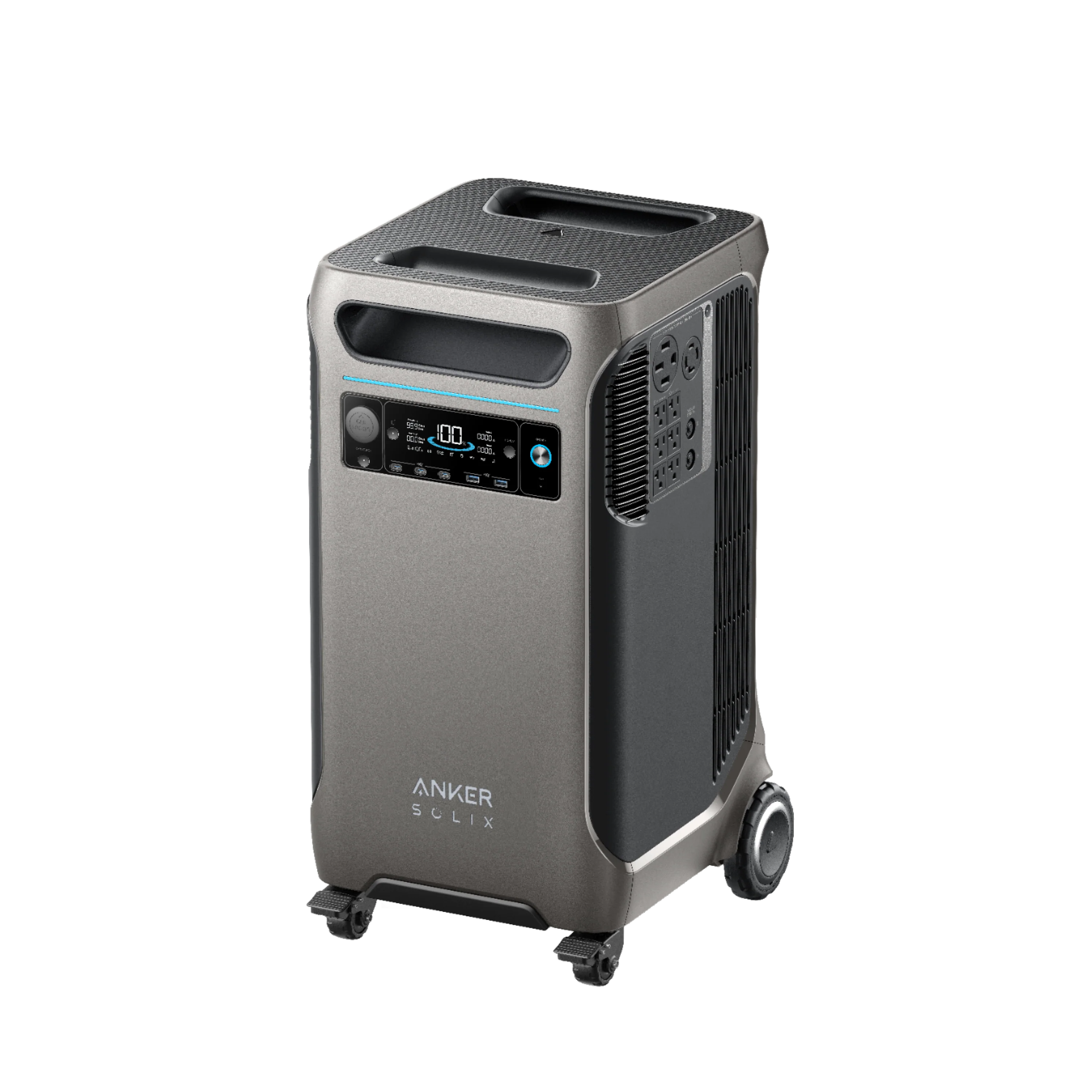
$2,199.99 · direct from Anker
Last checked 1 day ago. Prices move — check before you buy.
Spec deltas
Same brand, same cells, same 3,000-cycle rating, same five-year warranty, and a thousand-dollar gap between them. The F2600 is $1,000, the F3800 is $2,000, and the money does not go where most people assume. It buys another 1,280Wh, moving 2,560Wh up to 3,840Wh. Mostly it buys an inverter.
The F2600 covers a blackout night, a workday, a tailgate and a CPAP night without thinking about it, and a camping weekend with nothing to spare. The F3800 covers the same list with more left in the tank, plus one category the F2600 cannot touch: 6,000W continuous and 9,000W of surge, which is enough to start a well pump rather than trip on it.
So the question isn't which battery is bigger. It's whether anything you plan to plug in has a motor. If yes, the F3800 is the only one of these two that's the right tool and the price is simply what that tool costs. If no, take the F2600, keep the thousand dollars, and spend some of it on an expansion battery if the weekend ever runs tight.
What the Numbers Reveal
Each conclusion stated first — the numbers behind it on one line, the full analysis below.
continuous output
That is where the money goes. 6,200W more surge, 9,000W against 2,800W, is not a bigger battery. It's permission to put motors on the circuit, which is exactly the load list one owner describes running through a transfer switch, water pump includedB5. No quantity of watt-hours buys that.
SOLIX F2600: 2,400W continuous, 2,800W surgeSOLIX F3800: 6,000W continuous, 9,000W surgeOne owner runs a full circuit set including a water pump off the F3800 through a reliance transfer switchB5
Why it mattersIf anything on your list has a motor, the F2600 isn't the cheaper choice, it's the wrong one. If nothing does, you're funding surge you'll never draw.
Capacity
Strip out longevity and cost per kWh and only two differences survive at full size: 1,280Wh of capacity, and the inverter. Capacity you can add later from either starting point, because both take expansion batteries. The inverter is welded to the purchase the day you buy it.
Both units: 3,000 cycles, five-year warranty, expansion-battery supportLifetime energy works out to $0.13/kWh on the F2600 and $0.17/kWh on the F3800Capacity difference: 2,560Wh against 3,840Wh, so 1,280Wh
Why it mattersAnyone justifying the F3800 as the better long-term value should stop and re-check. Justify it on load, or buy the F2600.
solar input
With an Anker array on a fixed install, the F3800 refills in the time the F2600 is still working on it, and that's a genuine off-grid edge. Bring panels you already own and the two converge on whatever those panels actually make, at which point the bigger input is a spec you paid for and can't fill.
F2600 accepts 1,000W of solar into a 2,560Wh pack, so roughly two and a half hours of ideal sun from emptyF3800 accepts 2,400W into 3,840Wh, so about an hour and a halfOwners consistently report the F3800's solar input is restrictive, hard to feed with non-Anker panels, and workable only with a secondary charge controllerB1B2B13B14
Why it mattersIf you own third-party panels, price Anker's before you count the 2,400W input as a reason to upgrade.
weight
The camper's actual problem is that a 2,100Wh weekend leaves the F2600 with nothing spare, and the fix for that is a battery module, not a heavier inverter. Expansion carries the F2600 to 4,608WhA2 without turning the base unit into something you need help lifting.
Weekend Camping needs 2,100Wh: 97% of the F2600's pack, 64% of the F3800's, and the scenario goes to the F3800F2600: 70.5 lb. F3800: 132.3 lbThe F2600 scales to 4,608Wh through the BP2600 moduleA2
Why it mattersCampers, tailgaters and anyone loading this into a vehicle should buy the F2600 and solve capacity with a module. The F3800 is a fixed appliance.
The specific dimensions that decide these two units — everything else is a tie.
What the Specs Don't Tell You
Selected because: Surge headroom settles this matchup: 2,800W over a 2,400W rating on the F2600 against 9,000W over 6,000W on the F3800.
The F2600 runs 2,400W and surges to 2,800W. That 400W gap is the entire margin you have when something with a motor decides to start while the kettle is already on. The F3800 carries 3,000W of margin above its rating, which is the difference between an inverter that shrugs and one that clicks off and takes the fridge with it.
The other two cards decide less than they look like they do. Same chemistry, same cycle count, same five years of coverage on both, so durability is a wash and the warranty column is really just a note about what you paid. Weight is the one that follows you home, and it isn't a spec so much as a decision about which room the unit lives in for the rest of its life.
Your Life, Your Pick
Selected because: Both units clear five of six scenarios, so the table's real job is showing where the F2600 gets tight and where both simply run out.
Five of six scenarios end with both units still running, which is the most useful thing on this board. The F3800 takes four of them, and every one of those wins is about what's left in the tank rather than whether the job got done. The exception worth reading closely is camping: a 2,100Wh weekend consumes 97% of the F2600's pack against 64% of the F3800's, and 97% is not a margin, it's an arrival at empty on Sunday afternoon.
The one honest no on the board is van life. A 4,685Wh day is 215% of the F2600 and 144% of the F3800, so full-time living overruns both, and not narrowly. That isn't a knock on either unit. It's the edge of the category, drawn clearly enough that you should believe it.
Lifetime Value
Selected because: Identical 3,000 cycles and five-year warranty on both, with lifetime energy landing within four cents a kilowatt-hour ($0.13 against $0.17).
cost / lifetime kWh
Thirteen cents a kilowatt-hour against seventeen. Over 3,000 cycles the F2600 delivers 7,680 kWh and the F3800 delivers 11,520 kWh, and the F3800's energy costs slightly more per unit because you paid twice the price for one and a half times the pack. In the only currency that matters across five years, these two are nearly the same machine. You aren't buying cheaper power and you aren't buying a longer life.
So refuse the value argument in both directions. Whoever tells you the F3800 is the smarter long-term buy because it's bigger has confused capacity with cost, and whoever calls the F2600 the value pick on four cents a kilowatt-hour is selling you a rounding error. Decide on load, decide on weight, and let this section be the thing that stops you agonising over the money.
Growth Path
Selected because: Both accept expansion batteries, which means capacity can be bought later and inverter output never can.
solar input
Both take expansion batteries, and that quietly changes the shape of the decision: capacity is the one thing you can buy later. The F2600 scales to 4,608Wh through the BP2600 moduleA2, so the camper who found the weekend tight has a route that doesn't run through the bigger base unit. Nothing you bolt on ever adds a watt of inverter output. Buy the output you need now and add the watt-hours when the shortfall is real.
The F3800 does hold the better off-grid growth path on paper, with a 2,400W solar ceiling against the F2600's 1,000W, and more panels feeding a bigger bank is a real advantage as the system grows. It comes with an asterisk from the field: owners consistently report the DC input is restrictive enough that filling it means buying Anker's own panels, or routing around it with a secondary charge controllerB1B2B13B14. Budget for that before you count it as a reason to spend more.
Strengths & trade-offs
Anker SOLIX F2600
Strengths
- +Costs $900 less
- +Lighter by 61.8 lb
Trade-offs
- –Weaker inverter (-3,600W) limits appliance compatibility.
Anker SOLIX F3800
Strengths
- +Larger battery capacity
- +Higher AC output
- +Faster solar charging
Trade-offs
- –Substantially more expensive (+$900) than the SOLIX F2600.
- –Significantly heavier (+61.8 lbs), making it harder to move.
- –Very heavy unit that may be difficult for one person to lift.
Will It Power Your Gear?
Scenario math and per-appliance runtimes, modeled from the spec record.
Scenario verdicts
We ran the math on six real-world scenarios. Here's which unit survives your actual life.
SCN-01 · 2 nights · needs 2,100Wh
Weekend Camping
Two nights off-grid with essential comfort
SOLIX F2600
A 2,100Wh weekend eats 97% of the F2600 against 64% of the F3800, so the bigger unit takes this one on the numbers. Read it as a warning rather than a recommendation: the F2600 finishes the weekend with nothing spare, and the cure for that is an expansion battery, not hauling 132.3 lb to a campsite.
Battery budget usedlower = more headroom
LOAD Phone Charger 15W×6h · LED Lights 40W×8h · Box Fan 75W×14h · CPAP Machine 40W×16h
SCN-02 · 8 hours · needs 1,645Wh
8-Hour Blackout
Keep the essentials running through a night without power
SOLIX F3800
The F3800 finishes a standard outage night at half its pack while the F2600 sits about three-quarters spent, so the win goes to the bigger unit. Both keep the lights on. What actually separates them in a real blackout isn't this percentage, it's whether the well pump starts, and that's decided in the surge column.
Battery budget usedlower = more headroom
LOAD Fridge 150W×8h · Router + Modem 20W×8h · LED Lights (4 bulbs) 40W×6h · Phone Charger 15W×3h
SCN-03 · 8 hours · needs 320Wh
CPAP Overnight
Sleep therapy without interruption — the #1 medical use case
Either unit
A night on CPAP is 320Wh, or 15% of the F2600 and 10% of the F3800. Both sleep through it without noticing, so this is a dead heat and you should break it on the two specs that differ: price and weight. Both switch over in 20ms, so neither will drop the machine on a blink.
Battery budget usedlower = more headroom
LOAD CPAP Machine 40W×8h
SCN-04 · 8 hours · needs 910Wh
Remote Workday
Full work day off-grid without power anxiety
SOLIX F3800
The SOLIX F3800 clears the workday at 28% used, banking 2,354Wh — late work, extra calls, or a second laptop charge without arithmetic. The SOLIX F2600 at 42% also finishes, with 1,266Wh of slack for the unplanned.
Battery budget usedlower = more headroom
LOAD Laptop 60W×8h · External Monitor 30W×8h · Router + Modem 20W×8h · Phone Charger 15W×2h
SCN-05 · 4 hours · needs 670Wh
Tailgate Party
Game day power for the crew
SOLIX F2600
The SOLIX F3800 at 132.3 lbs is not a take-along — it rolls off a truck bed if it travels at all, so this scenario belongs to the SOLIX F2600 by default — and it earns it, covering the 670Wh with 1,506Wh to spare. Capacity was never the SOLIX F3800's problem here; getting to a tailgate was.
Battery budget usedlower = more headroom
LOAD Blender 400W×0.5h · LED TV (55") 80W×4h · Bluetooth Speaker 15W×4h · Phone Charger (×3) 45W×2h
SCN-06 · 24 hours · needs 4,685Wh
Van Life Daily
A full day of mobile living — the ultimate endurance test
Neither unit
Nobody wins this one. A 4,685Wh day is 215% of the F2600 and 144% of the F3800, so full-time van living overruns both and it isn't close. Either plan expansion batteries from day one or accept that this is a job for a wired house bank rather than a portable.
Battery budget usedlower = more headroom
LOAD Mini-Fridge 150W×24h · Laptop 60W×4h · Phone Charger 15W×3h · LED Lights 40W×5h · Fan 75W×8h
The Load Test
RUNTIME = (Wh × 0.85) ÷ LOAD
None of the scenarios above exactly yours? Build it. Toggle what you'd plug in; both units are tested against the combined draw.
Essentials
Comfort & Convenience
High-Draw Appliances
Test duration
8h
Continuous draw
205W
Projected runtime
For this load: SOLIX F3800 runs 15.9h vs 10.6h.
$1,999.99 list · direct from Anker
Modeled from the spec record — same math as the tables below. Methodology
Runtime by appliance
Real-world runtime estimates for common appliances, modeled at 85% inverter efficiency.¹
Essentials
The basics you need runningscale 0–217.6hComfort & Convenience
Makes off-grid life actually enjoyablescale 0–43.5hHigh-Draw Appliances
These reveal the real limitsscale 0–3.3h¹ Runtime = (capacity × 0.85) ÷ appliance watts. Within each group, all bars share one time scale (the group's longest runtime), so lengths are comparable across appliances; identical runtimes collapse into a single blue/orange bar. Actual runtime varies with battery age, temperature, and simultaneous loads — see methodology.
Conclusion
August 1, 2026
Verdict: the Anker SOLIX F2600
Take the F2600 unless your load list has a motor on it. Both units run the same LFP chemistry, the same 3,000 cycles, the same five-year warranty, and both accept expansion batteries, so nothing about durability or growth argues for spending double. What the F3800 adds is inverter: 6,000W continuous and 9,000W surge against the F2600's 2,400W and 2,800W. That is the difference between running a house circuit and starting a compressor on it. If you're wiring into a transfer switch, pumping water, or starting a large AC, the F2600 isn't the cheaper option, it's the wrong one, and the F3800 earns every dollar. If your list is a fridge, lights, laptops and a CPAP, you're paying $1,000 for headroom you will never draw, in a box you can't lift alone.
Editor-assigned confidence, based on cited owner research and spec analysis.
List prices as of August 1, 2026. The links below open Anker's current price.
$1,499.99 · direct from Anker
Last checked 1 day ago. Prices move — check before you buy.
or check the SOLIX F3800 price$2,199.99 list
Written by Gunner Gustafson, Whole-Home Backup Tester · Station Arena Test Desk · Updated August 1, 2026
Measured Data
Benchmark scores and the full spec record, side by side.
Benchmark scores
Not rated for both units (minimum threshold unmet): UPS, Tailgating.
Full specifications
ᵈ Derived: price ÷ rated capacity. See the data behind our comparisons →
Comparison ToolAdd more power stations, side by sideOpen Tool →How these numbers are produced
Numeric verification
Every figure on this page traces to our spec database or arithmetic on it — no estimated numbers.
Owner claims
Statements about owner experience are cited to published reviews — see Sources & Research Notes below.
Runtime model
Runtime = (rated capacity × 0.85 inverter efficiency) ÷ device wattage. Solar recharge estimates assume panels deliver 70% of rated output. Cold weather, battery age, and stacked loads reduce real-world results.
Power Score
Computed from 14 published spec dimensions, weighted per use-case bench. Higher is better; a unit must meet a bench's minimum threshold to be rated.
See the full weight table and data sourcing on our methodology page →Class ranking (the star rating)
Each unit's star score is a category ranking, not customer reviews — no buyer opinions feed it. We score every station on size-independent quality (value, output, portability, endurance, ports, warranty, and more), then percentile-rank it against the other units in its capacity class, so a class-leading compact unit and a class-leading whole-home unit can both earn 5★. Here, SOLIX F2600 rates 4.0/5 (40th percentile of 26 Large-class units), and SOLIX F3800 rates 4.7/5 (80th percentile of 16 Home Backup-class units).
How the class ranking is computed →Test Notes & Caveats
Hidden gotchas and advantages we spotted that you won't find on the product page.
One of these moves, the other arrives
The F2600 is a two-hands, bent-knees lift a single person can make: truck bed, campsite, basement stairs. The F3800 is a hand truck and a helper, which means wherever it lands on day one is where it lives. That is the real cost of the bigger inverter, and it's a cost you pay every time the unit needs to be somewhere else.
Starting current is what the extra money buys
The F3800 clears 9,000W on a surge against 6,000W continuous, half again its rating, which is enough margin to start a motor without drama. The F2600 gets 2,800W over a 2,400W rating. That reads as fine until a compressor kicks in while something else is already drawing, because a motor pulls far more in its first half-second than it does running. This is the single spec that decides which of these two you need.
Same promise, twice the annual price
Five years on both, 3,000 cycles on both, same chemistry. What differs is what those five years cost: $200 a year of purchase price on the F2600 against $400 on the F3800. The warranty column decides nothing here. It just quietly doubles the price of an identical promise.
Full record above — the Test Desk pick is the SOLIX F2600.
Check SOLIX F2600 price →or check the SOLIX F3800 priceOwnership Analysis
What happens after you buy — true cost of ownership, brand trust, and growth potential.
Lifetime value
Service lifeyears at one full cycle per day
Lifetime energy delivered
Cost per delivered kWh
│ warranty ends · Reaching the cycle rating means ~80% capacity remains — degraded, not dead.
Analyst note
Both units have similar long-term ownership costs ($0.14/kWh vs $0.17/kWh). The price difference is what you see on the sticker — neither is a hidden bargain or rip-off. One thing to know reading the table: both carry the same 3,000-cycle rating, so the lifetime rows are sticker price and capacity in disguise — the wear horizon is identical and decides nothing here.
Growth path
SOLIX F2600
EXPANDABLESupports Anker expansion batteries, so you can add capacity later without replacing the base unit — useful if your needs may climb past 2,560Wh.
Accepts up to 1,000W of solar. Enough for a serious multi-panel array.
Generous port selection supports complex multi-device setups.
Expansion batteries are Anker-specific. You're investing in the Anker ecosystem.
SOLIX F3800
EXPANDABLESupports Anker expansion batteries, so you can add capacity later without replacing the base unit — useful if your needs may climb past 3,840Wh.
Accepts up to 2,400W of solar. Enough for a serious multi-panel array.
Generous port selection supports complex multi-device setups.
Expansion batteries are Anker-specific. You're investing in the Anker ecosystem.
Realistic full solar rechargeat 70% of rated panel output — see methodology
Analyst note
Both expand, but the SOLIX F3800's higher solar ceiling (2,400W vs 1,000W) gives it the stronger off-grid growth path — more panels can feed a bigger bank as it grows.
What Owners Report
Patterns from published owner reports and long-term reviews — every claim cited to its source below.
Anker SOLIX F2600
The F2600's field record is short but unusually consistent. Owners praise the inverter's headroom, the quiet running and the app, and the sharpest recurring complaint is that the cable design could be more space-efficientA3. It reviews well specifically on the job it's bought for, which is riding out a power outage without fussA4. Reviewers clock HyperFlash taking it from empty to 80% in about 78 minutesA1, and recharge speed is a survival spec when the outage doesn't schedule itself.
What's missing is time. The coverage that exists is review-cycle and retailer-review material rather than owners three winters in, so treat the durability picture as the spec sheet's promise (3,000 cycles, five years) rather than a verified recordA1A3A4.
“Packs 2,560Wh into the same footprint as the F2000, with HyperFlash fast charging reaching 0-80% in about 78 minutes.”
Sources
backuppowerhub.com · ankersolix.com · homedepot.com · outboundpower.com · samsclub.com · batteryskills.com · thesolarlab.com
Anker SOLIX F3800
The F3800's loudest owner theme has nothing to do with capacity. It's the DC input. One owner calls solar charging painful enough that he only uses it when there's no other way to fill the unitB1, another says the input limits make non-Anker panels very difficult to use in a full configurationB2, and a third notes that the workaround takes a secondary charge controller and more expertise than most buyers haveB13. The fairest summary comes from an owner who likes the thing: a great unit, other than the solar input problem limiting which panels can max it outB14.
Two more findings the spec sheet doesn't mention. Charging at the full 1,800W from a wall outlet made one owner's line cord get very hot, and he backed the rate down to 600-800WB3. Another reports no passthrough on the 120VAC input, meaning you cannot charge from the wall while dischargingB4. Against that, it does the job it's bought for: one owner runs everything he throws at it, water pump included, through a single 120V feed into a transfer switchB5, and another reports zero issues after months of fighting firmware bugs on a competitor's gearB10.
Support is a coin flip. One owner describes being ghosted after spending over 20k on Anker's SOLIX line and panels inside a monthB8, while another calls them consistently responsive and has had an advance replacementB9. A buzzing complaint under heavy AC startup turned out to be a ferrite bead vibrating inside the unit, and it went away entirely once the packs were movedB6B7. The honest limit on all of this: usable F3800 commentary concentrates in a couple of DIY solar forum threads, with no CPAP-specific reports and nothing past the six-month markB1B6B8.
“I have been using the F3800 for a couple weeks now, using only a single 120V outlet into a reliance transfer switch and it runs everything I throw at it including a water pump.”
Sources
diysolarforum.com · thesolarlab.com
Sources & Research Notes
Every owner claim in this report is traceable to a published source. The bracketed references above resolve here.
Recurring owner themes
- Fast HyperFlash charging, quiet operation, a good app, expandability, and a 5-year warranty are the standout praise for this 2,560Wh unit. [SOLIX F2600 · 3 entries]
- Owners consistently complain that the solar/DC input is restrictive, effectively locking users into pricier Anker-branded panels rather than generic arrays. [SOLIX F3800 · 4 entries]
- Fan/inverter noise is generally reported as quiet at idle but with occasional intermittent buzzing/rattling under load or fault conditions. [SOLIX F3800 · 3 entries]
- Anker support experiences are polarized — some owners report fast, responsive replacements while at least one reports being ignored after a major purchase. [SOLIX F3800 · 3 entries]
- A1
“Packs 2,560Wh into the same footprint as the F2000, with HyperFlash fast charging reaching 0-80% in about 78 minutes.”
backuppowerhub.com / ankersolix.com — SOLIX F2600 review · 2026 · [positive]
- A2
“Expandable via the BP2600 battery module, scaling total capacity to 4,608Wh through Anker's proprietary link cable.”
homedepot.com / outboundpower.com — SOLIX F2600 / BP2600 · 2026 · [positive]
- A3
“Owners praise ample inverter power, quiet operation, and a user-friendly app; some suggest the cable design could be more space-efficient.”
samsclub.com / batteryskills.com — SOLIX F2600 owner reviews · 2026 · [positive]
- A4
“InfiniPower LFP rated for 3,000 cycles with a 5-year warranty; well-received for power-outage performance and ease of use.”
backuppowerhub.com / thesolarlab.com — SOLIX F2600 review · 2026 · [positive]
- B1
“The solar input for charging is a pain, so much so that I'm only using it if there is no other way to charge the F3800.”
diysolarforum.com — 'Anker F3800 user reviews and opinions welcome' · 2024-07 · [negative]
- B2
“The limitations of the inputs make it very difficult to use solar panels other than Anker's panels, which are pricey for a "full up" config.”
diysolarforum.com — 'Anker F3800 user reviews and opinions welcome' · 2024-07 · [negative]
- B3
“if you charge the F3800 from a 120VAC wall outlet at full rate (1800 watts), the line cord gets very hot. I've backed off the charge rate to 600-800 watts.”
diysolarforum.com — 'Anker F3800 user reviews and opinions welcome' · 2024-07 · [negative]
- B4
“the lack of passthru mode, you cannot charge via the 120VAC input while discharging.”
diysolarforum.com — 'Anker F3800 user reviews and opinions welcome' · 2024-07 · [negative]
- B5
“I have been using the F3800 for a couple weeks now, using only a single 120V outlet into a reliance transfer switch and it runs everything I throw at it including a water pump.”
diysolarforum.com — 'Anker F3800 user reviews and opinions welcome' · 2024-07 · [positive]
- B6
“I have 4 BP3800s and one of them made similar buzzing/rattling noise when a heavy AC load was starting up... only for around a second while inverter was ramping up.”
diysolarforum.com — 'Big issue with Anker Solix F3800 plus battery pack' · 2025-08 · [mixed]
- B7
“Anker support told me it was a ferrite bead vibrating inside the unit... This reduced the noise, initially. At some point, I moved the batteries around and now the noise is gone.”
diysolarforum.com — 'Big issue with Anker Solix F3800 plus battery pack' · 2025-08 · [mixed]
- B8
“Anker support is ghosting me after I spent over 20k on their solix line and solar panels within a month... they are not answering/returning my calls or emails.”
diysolarforum.com — 'Big issue with Anker Solix F3800 plus battery pack' · 2025-08 · [negative]
- B9
“I've called them and submitted tickets via their portal, always very responsive. They've even done advanced replacement for me.”
diysolarforum.com — 'Big issue with Anker Solix F3800 plus battery pack' · 2025-08 · [positive]
- B10
“I've had zero issues - especially compared to the EcoFlow firmware issues I fought with for months.”
diysolarforum.com — 'Anker solix f-3800 diy solar array' · 2024-02 · [positive]
- B13
“no one on Youtube is addressing the solar input problem directly. But People smarter than myself with secondary charge controllers... are able to navigate around the problem.”
diysolarforum.com — 'Anker F3800 user reviews and opinions welcome' · 2024-07 · [negative]
- B14
“other than the solar input problem having limited panel array choices to max out it's input capability it's a great unit so far.”
diysolarforum.com — 'Anker F3800 user reviews and opinions welcome' · 2024-07 · [mixed]
Research compiled August 1, 2026.
Who Should Buy Which
Buy the SOLIX F2600 if you…
- →The outage kit: fridge, a few lamps, the modem, phones, laptops and a CPAP through the night. An 8-hour blackout runs 1,645Wh, which is 76% of the F2600's pack, so that's a night covered with the lights still on.
- →Anyone who has to move it. The F2600 is the only one of these two a single person picks up and carries, which decides most camping, truck-bed and basement-stairs cases before capacity gets a vote.
- →The buyer who wants to start now and grow later: $1,000 in today, a BP2600 module when the weekend genuinely runs shortA2, and nothing spent on inverter capability that never gets used.
Buy the SOLIX F3800 if you…
- →Anything with a motor in it: a well pump, a septic pump, a large AC compressor. 9,000W of surge is the one reason on this page to spend the extra thousand, and it is a completely sufficient one.
- →Transfer-switch backup where you want to stop curating the load list. At 6,000W continuous the house mostly behaves like the house, which is how one owner describes living with it, water pump and allB5.
- →The fixed off-grid install where you're buying the array anyway and buying it from Anker doesn't sting, since that's what filling the 2,400W input tends to requireB1B2.
If neither fits
A 4,685Wh van-life day breaks both, at 215% of the F2600 and 144% of the F3800, so if you're living out of the vehicle full-time stop shopping portables and price a wired 12V house bank with an inverter/charger and roof panels. At the other end, if the honest job is a CPAP, a phone and a laptop, that's 320Wh a night, or 10-15% of either pack. Buy something a third of this size and keep the rest of the money.
The Bottom Line
Take the F2600 and keep the thousand dollars, unless something on your circuit list has a motor in it. These two share cells, cycle life, warranty and expansion path, so what actually separates them is starting current and mass, and only one of those is something a buyer can want. If you're wiring a transfer switch for a well pump or a large AC, the F3800 is the right tool and its price is the price of that tool. If you're covering a fridge, the modem and a CPAP for a night, you're being asked to pay double for headroom that will sit idle in the corner of a room you can't easily move it out of.
The camper's version is the one worth repeating: a weekend leaves the F2600 at 97% of its pack, close enough to empty that you'll feel it, and the answer to that is a battery module rather than a heavier base unit. Buy the output you need, add the watt-hours when the shortfall is real, and put the difference into panels.
Frequently Asked Questions
Answers drawn from the spec record and cited owner research.
Is the Anker SOLIX F3800 worth double the price of the F2600?
Only if you need the inverter. $1,000 against $2,000 buys 1,280 more watt-hours and, far more importantly, 6,000W continuous with 9,000W of surge instead of 2,400W and 2,800W. Both use the same cells, carry the same 3,000-cycle rating and the same five-year warranty, and both accept expansion batteries. If nothing you plug in has a compressor in it, the F2600 does the same job for half the money.
Can the Anker SOLIX F2600 run a refrigerator during a blackout?
Yes, comfortably. A standard 8-hour outage load of 1,645Wh comes to 76% of the F2600's pack, so a normal night is well inside it. The thing to watch isn't the fridge on its own, it's stacking: the cushion above the F2600's 2,400W rating is thin, so don't have the microwave and a space heater running when the compressor cycles on.
Which Anker SOLIX is better for camping or an RV?
The F2600, unless the RV is parked permanently. It's the only one of the two a single person loads and unloads without help, and that settles most trips before the spec sheet gets involved. The catch is capacity: a 2,100Wh camping weekend leaves the F2600 essentially empty, so if that's your typical weekend, plan on a BP2600 expansion module rather than the heavier base unit.
Can I add battery capacity later instead of buying the bigger unit?
Yes, and it's usually the smarter order of operations. Both models accept Anker expansion batteries, and the F2600 scales to 4,608Wh with the BP2600 module. Inverter output is the one thing you can never add later, so buy the output your loads require and grow the battery when the shortfall actually shows up.
How fast do the F2600 and F3800 recharge from solar?
On paper the F3800 wins clearly: 2,400W of solar input into 3,840Wh is about an hour and a half of ideal sun from empty, against roughly two and a half hours for the F2600's 1,000W into 2,560Wh. In practice, owners consistently report the F3800's DC input is restrictive and effectively steers you toward Anker's own panels. If you're bringing an array you already own, confirm compatibility before you treat that ceiling as a reason to upgrade.
Where to buy
Anker SOLIX F2600Pick
$1,499.99
$1,499.99 · direct from Anker
Last checked 1 day ago. Prices move — check before you buy.
Anker SOLIX F3800
$2,199.99
$2,199.99 · direct from Anker
Last checked 1 day ago. Prices move — check before you buy.
Prices may vary by retailer and are subject to change.