Head-to-head test
EcoFlow DELTA Pro 3 vs EcoFlow DELTA Pro Ultra
EcoFlow DELTA Pro 3 vs EcoFlow DELTA Pro Ultra: Take the DELTA Pro Ultra if this is going into a subpanel as permanent whole-home backup — its 7,200W output and 10.8kW surge cover loads the DELTA Pro 3 simply can't start, and the 10-year warranty means it costs less per year of coverage despite the higher sticker price.
Full profiles: EcoFlow DELTA Pro 3 → · EcoFlow DELTA Pro Ultra →

Written by Gunner GustafsonUpdated
Whole-Home Backup Tester, Station Arena Test Desk
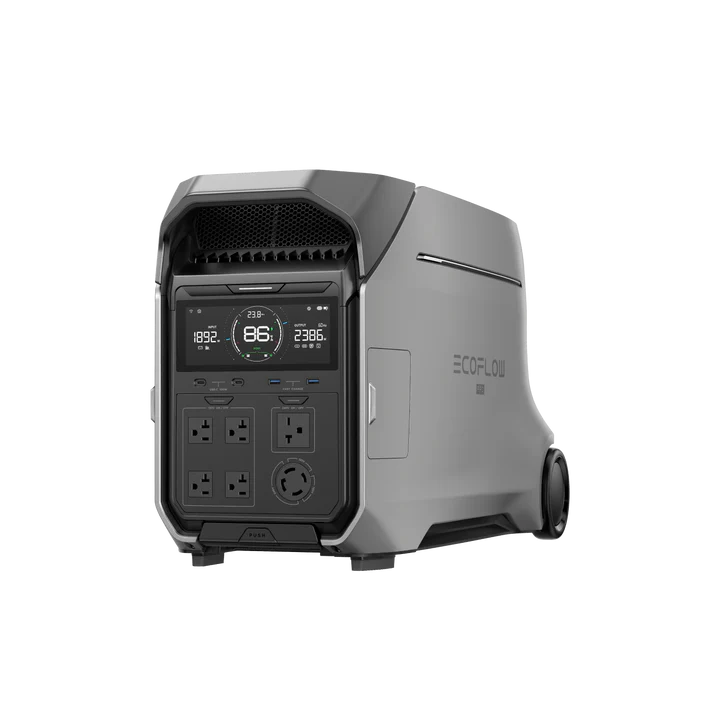
$2,799.00 · direct from EcoFlow
Last checked 1 day ago. Prices move — check before you buy.
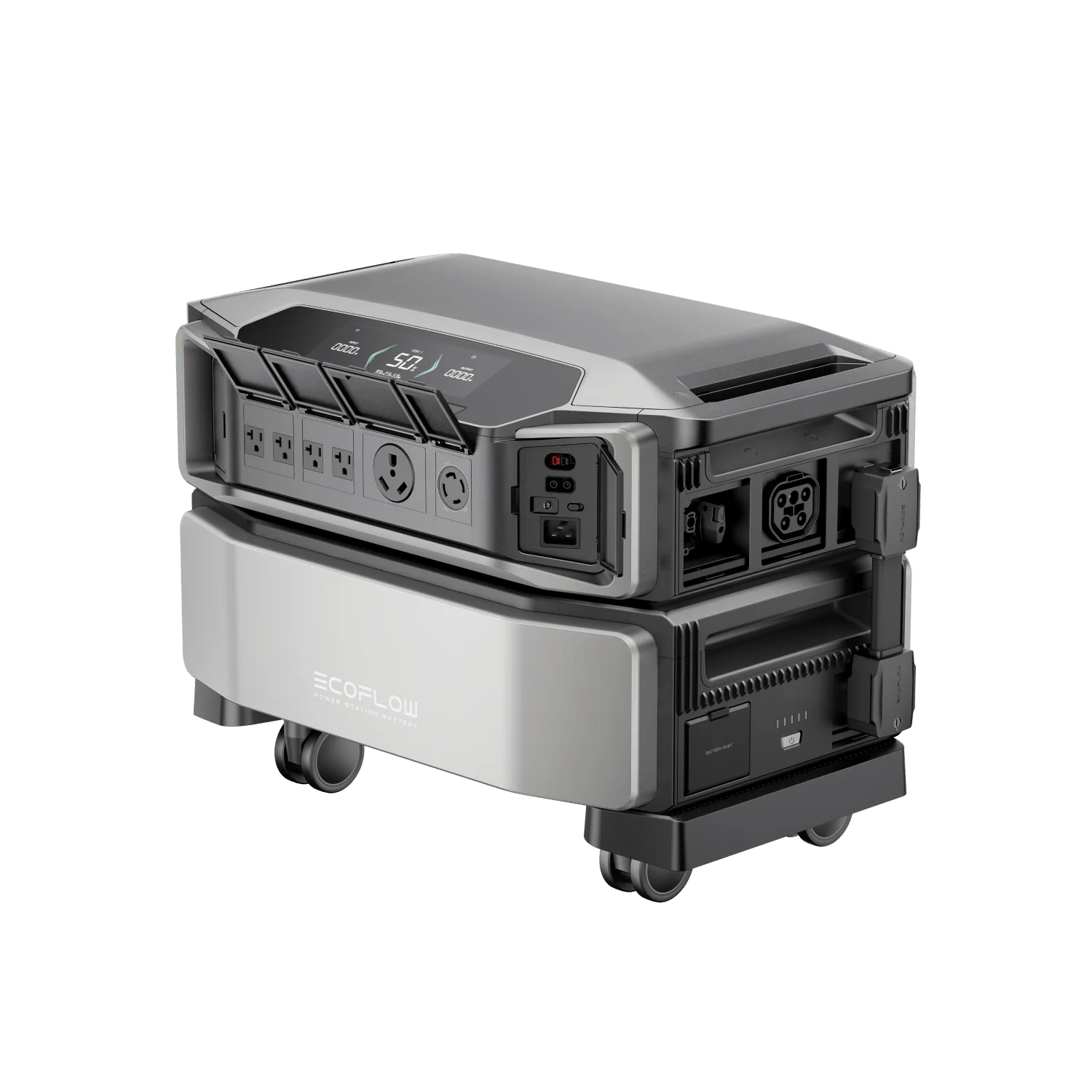
$4,199.00 · direct from EcoFlow
Last checked 1 day ago. Prices move — check before you buy.
Spec deltas
These are siblings from the same EcoFlow lineup, and the numbers show it: both use LFP chemistry, both hit 30dB noise ratings, and their lifetime cost per kWh lands within a penny of each other — $0.20 for the DELTA Pro 3, $0.19 for the DELTA Pro Ultra. This isn't a value comparison so much as a scale comparison.
Where they actually diverge is output and warranty. The Ultra runs a 7,200W continuous inverter against the DELTA Pro 3's 4,000W, backed by a 10-year warranty against 5. That's the difference between a unit sized for a few big appliances and one sized to run a house.
It costs $1,400 more and weighs 69.4 lbs more to get there. Whether that trade is worth it comes down to one question: does anything in your home actually need 7,200W, or is 4,000W already more than enough?
What the Numbers Reveal
Each conclusion stated first — the numbers behind it on one line, the full analysis below.
Typical price
EcoFlow priced the Ultra's warranty like insurance worth having, not a premium tacked on top. Judging this purely by the sticker gets the annualized math backwards.
DELTA Pro Ultra costs $4,199 with a 10-year warranty, working out to $410 per warranty-yearDELTA Pro 3 costs $2,799 with a 5-year warranty, working out to $640 per warranty-year
Why it mattersBuyers comparing these on price alone should compare cost-per-warranty-year instead — by that measure, the "cheaper" DELTA Pro 3 is actually the pricier ownership decision.
weight
That's also why EcoFlow gave the Ultra a true 0ms UPS instead of the DELTA Pro 3's still-fast 10ms — it's built to be wired into a subpanel as permanent infrastructure, not picked up and moved.
DELTA Pro Ultra weighs 181.8 lbs against the DELTA Pro 3's 112.4 lbs, a difference of 69.4 lbsDELTA Pro Ultra offers true 0ms UPS switchover; the DELTA Pro 3's switchover is 10ms
Why it mattersIf it's going in once and staying, the weight is irrelevant and the extra output is the entire point. If there's any chance you'd relocate it, the DELTA Pro 3's 69.4 fewer lbs matter more than the spec gap.
rated cycles
3,500 cycles still works out to roughly 9.6 years of daily use per the engine's own math, so the trade isn't as costly as it sounds — you're buying real headroom on the one scenario that actually breaks the DELTA Pro 3, at a still-generous cycle count.
Van Life Daily needs 4,685Wh: the DELTA Pro 3 would need 135% of its capacity and can't cover it, the DELTA Pro Ultra needs 90% and canDELTA Pro 3 is rated for 4,000 cycles; DELTA Pro Ultra is rated for 3,500 cycles — fewer, despite being the larger unit
Why it mattersIf your daily load already saturates the DELTA Pro 3's 4,096Wh, the Ultra's bigger tank is worth the modest cycle-count trade.
EcoFlow priced the extra capacity and the extra five years of warranty almost exactly to offset the DELTA Pro 3's higher cycle count. This is one of the rare cases where "buy more" and "buy the cheaper one" are financially close to the same decision.
DELTA Pro 3 cost per lifetime kWh is $0.20; DELTA Pro Ultra's is $0.19DELTA Pro Ultra's price is $1,400 higher and its rated cycles are 500 fewer than the DELTA Pro 3's
Why it mattersSkip the spreadsheet on this one — the lifetime value gap is a rounding error, so decide on whether you actually need the extra output and warranty, not on which one is technically cheaper to own.
The specific dimensions that decide these two units — everything else is a tie.
PowerScore Breakdown
Selected because: The gap here — 8,583 for the Ultra against 5,501 for the DELTA Pro 3 — is the widest of any comparison DELTA Pro 3 shows up in.
overall power score
8,583 against 5,501 is a wide gap for two units in the same product family, and it comes from the Ultra leading on nearly every raw spec: 7,200W continuous output against 4,000W, a 10.8kW surge against 6kW, and 6,144Wh of capacity against 4,096Wh.
The DELTA Pro 3 isn't a weak unit by that score — it's simply scaled for a different job. The gap says more about how much more house the Ultra is built to run than it does about either unit being poorly made.
Portability & Form Factor
Selected because: 69.4 lbs is a meaningful hands-on difference and reframes whether either unit is meant to be moved.
weight
112.4 lbs against 181.8 is the difference between a unit two people can carry and one that's realistically getting a dedicated spot the day it arrives. The Ultra's weight tracks directly with its bigger inverter and battery bank — it's not padding, it's the hardware that lets it start a central ACB4.
The DELTA Pro 3 remains the one you could plausibly still take camping or relocate room to room. If portability matters at all, that 69.4-lb gap should carry more weight in the decision than the spec sheet difference does.
Lifetime Value
Selected because: Near-identical cost per kWh despite a $1,400 price gap — worth explaining so buyers don't over-index on the sticker.
cost / lifetime kWh
$0.20 per lifetime kWh for the DELTA Pro 3 against $0.19 for the Ultra is close enough to call a tie — a $1,400 price gap that mostly cancels out once capacity and warranty length get factored in. Cost per warranty-year is the more telling number: $640 for the DELTA Pro 3 against $410 for the Ultra, because five extra years of coverage more than offsets the higher sticker.
In practice, this means the value argument for either unit is weak on its own — you're not really saving money by picking the DELTA Pro 3, you're saving $1,400 up front and giving up warranty years and output to do it.
Your Life, Your Pick
Selected because: Van Life Daily is the one scenario the DELTA Pro 3 fails and the Ultra clears — the clearest capability gap between siblings.
Weekend Camping, the 8-Hour Blackout, Remote Workday, and Tailgate Party all go to the Ultra or tie, with the DELTA Pro 3 running closer to the edge of its capacity in each — for instance the DELTA Pro 3 uses 60% of its tank on a camping weekend against the Ultra's 40%. CPAP Overnight is a clean tie; both units use well under 10% of their capacity for that job.
Van Life Daily is the real dividing line: the DELTA Pro 3 would need 135% of its own capacity and can't cover a 4,685Wh day, while the Ultra covers it using 90%. That's the one scenario where the smaller sibling is structurally outmatched, not just running tighter.
What the Specs Don't Tell You
Selected because: Weight and UPS speed are the two concrete, spec-true differences once price is mostly neutralized.
rated cycles
Weight is the clearest tradeoff — 69.4 more lbs to get the Ultra's extra output and capacity, which matters a great deal if the unit ever needs to move and not at all if it's getting wired into a subpanel once.
UPS switchover speed is the other real difference: the Ultra's true 0ms switchover against the DELTA Pro 3's 10ms. Both are fast enough for most electronics, but a true online UPS is the safer bet for anything that genuinely can't tolerate even a brief interruption.
Strengths & trade-offs
EcoFlow DELTA Pro 3
Strengths
- +Costs $1,400 less
- +Lighter by 69.4 lb
Trade-offs
- –Weaker inverter (-3,200W) limits appliance compatibility.
- –Very heavy unit that may be difficult for one person to lift.
EcoFlow DELTA Pro Ultra
Strengths
- +Larger battery capacity
- +Higher AC output
- +Longer warranty
- +Faster solar charging
Trade-offs
- –Substantially more expensive (+$1,400) than the DELTA Pro 3.
- –Significantly heavier (+69.4 lbs), making it harder to move.
- –Very heavy unit that may be difficult for one person to lift.
Will It Power Your Gear?
Scenario math and per-appliance runtimes, modeled from the spec record.
Scenario verdicts
We ran the math on six real-world scenarios. Here's which unit survives your actual life.
SCN-01 · 2 nights · needs 2,100Wh
Weekend Camping
Two nights off-grid with essential comfort
Neither unit
Scoring these two at a campsite is a category error: neither travels — the DELTA Pro 3 is 112.4 lbs and the DELTA Pro Ultra 181.8 lbs, and at those weights they roll off a truck bed if they go anywhere at all. The 2,100Wh here is trivial for either — it's the going that doesn't happen. If you need power away from the building, you're shopping the wrong class.
Battery budget usedlower = more headroom
LOAD Phone Charger 15W×6h · LED Lights 40W×8h · Box Fan 75W×14h · CPAP Machine 40W×16h
SCN-02 · 8 hours · needs 1,645Wh
8-Hour Blackout
Keep the essentials running through a night without power
DELTA Pro Ultra
Both survive the night. The DELTA Pro Ultra finishes at 31% used with 3,577Wh left — 2.2 more nights like it. The DELTA Pro 3 finishes at 47% with 1,837Wh, 1.1 more nights like it. If your outages tend to run past one evening, that difference is the whole argument between them.
Battery budget usedlower = more headroom
LOAD Fridge 150W×8h · Router + Modem 20W×8h · LED Lights (4 bulbs) 40W×6h · Phone Charger 15W×3h
SCN-03 · 8 hours · needs 320Wh
CPAP Overnight
Sleep therapy without interruption — the #1 medical use case
Either unit
A CPAP is about 40W for eight hours, so both cover the night many times over and the capacity margin is a formality. Both happen to list 30dB — the same published figure twice, not a measured tie — so there is nothing in the noise column to separate them either. Buy whichever is cheaper or easier to carry.
Battery budget usedlower = more headroom
LOAD CPAP Machine 40W×8h
SCN-04 · 8 hours · needs 910Wh
Remote Workday
Full work day off-grid without power anxiety
Either unit
Both power your workstation all day without strain, and their USB-C output is a wash — pick on weight, ports, or price.
Battery budget usedlower = more headroom
LOAD Laptop 60W×8h · External Monitor 30W×8h · Router + Modem 20W×8h · Phone Charger 15W×2h
SCN-05 · 4 hours · needs 670Wh
Tailgate Party
Game day power for the crew
Neither unit
Scoring these two at a tailgate is a category error: neither travels — the DELTA Pro 3 is 112.4 lbs and the DELTA Pro Ultra 181.8 lbs, and at those weights they roll off a truck bed if they go anywhere at all. The 670Wh here is trivial for either — it's the going that doesn't happen. If you need power away from the building, you're shopping the wrong class.
Battery budget usedlower = more headroom
LOAD Blender 400W×0.5h · LED TV (55") 80W×4h · Bluetooth Speaker 15W×4h · Phone Charger (×3) 45W×2h
SCN-06 · 24 hours · needs 4,685Wh
Van Life Daily
A full day of mobile living — the ultimate endurance test
DELTA Pro Ultra
The DELTA Pro 3 doesn't finish — 3,482Wh usable against the 4,685Wh this needs leaves it 1,203Wh short, about 74% of the scenario covered. The DELTA Pro Ultra covers it with 537Wh to spare.
Battery budget usedlower = more headroom
LOAD Mini-Fridge 150W×24h · Laptop 60W×4h · Phone Charger 15W×3h · LED Lights 40W×5h · Fan 75W×8h
The Load Test
RUNTIME = (Wh × 0.85) ÷ LOAD
None of the scenarios above exactly yours? Build it. Toggle what you'd plug in; both units are tested against the combined draw.
Essentials
Comfort & Convenience
High-Draw Appliances
Test duration
8h
Continuous draw
205W
Projected runtime
For this load: DELTA Pro Ultra runs 25.5h vs 17h.
$4,199 list · direct from EcoFlow
Modeled from the spec record — same math as the tables below. Methodology
Runtime by appliance
Real-world runtime estimates for common appliances, modeled at 85% inverter efficiency.¹
Essentials
The basics you need runningscale 0–348.2hComfort & Convenience
Makes off-grid life actually enjoyablescale 0–69.6hHigh-Draw Appliances
These reveal the real limitsscale 0–5.2h¹ Runtime = (capacity × 0.85) ÷ appliance watts. Within each group, all bars share one time scale (the group's longest runtime), so lengths are comparable across appliances; identical runtimes collapse into a single blue/orange bar. Actual runtime varies with battery age, temperature, and simultaneous loads — see methodology.
Conclusion
July 14, 2026
Verdict: the DELTA Pro Ultra, on Power Score margin
Take the DELTA Pro Ultra if this is going into a subpanel as permanent whole-home backup — its 7,200W output and 10.8kW surge cover loads the DELTA Pro 3 simply can't start, and the 10-year warranty means it costs less per year of coverage despite the higher sticker price. The honest catch: at 181.8 lbs, it's nearly 70 lbs heavier and built to be installed once, not carried around. If you might ever move the unit, or your loads top out well under 4,000W, the DELTA Pro 3 does the job for $1,400 less and is genuinely easier to place. Their lifetime cost per kWh is within a penny of each other, so this isn't really a value argument either way — it's a capability one.
Editor-assigned confidence, based on cited owner research and spec analysis.
List prices as of July 14, 2026. The links below open EcoFlow's current price.
$4,199.00 · direct from EcoFlow
Last checked 1 day ago. Prices move — check before you buy.
or check the DELTA Pro 3 price$2,799.00 list
Written by Gunner Gustafson, Whole-Home Backup Tester · Station Arena Test Desk · Updated July 14, 2026
Measured Data
Benchmark scores and the full spec record, side by side.
Benchmark scores
Not rated for both units (minimum threshold unmet): RV Living, Solar Generator.
Full specifications
ᵈ Derived: price ÷ rated capacity. See the data behind our comparisons →
Comparison ToolAdd more power stations, side by sideOpen Tool →How these numbers are produced
Numeric verification
Every figure on this page traces to our spec database or arithmetic on it — no estimated numbers.
Owner claims
Statements about owner experience are cited to published reviews — see Sources & Research Notes below.
Runtime model
Runtime = (rated capacity × 0.85 inverter efficiency) ÷ device wattage. Solar recharge estimates assume panels deliver 70% of rated output. Cold weather, battery age, and stacked loads reduce real-world results.
Power Score
Computed from 14 published spec dimensions, weighted per use-case bench. Higher is better; a unit must meet a bench's minimum threshold to be rated.
See the full weight table and data sourcing on our methodology page →Class ranking (the star rating)
Each unit's star score is a category ranking, not customer reviews — no buyer opinions feed it. We score every station on size-independent quality (value, output, portability, endurance, ports, warranty, and more), then percentile-rank it against the other units in its capacity class, so a class-leading compact unit and a class-leading whole-home unit can both earn 5★. Here, DELTA Pro 3 rates 4.0/5 (40th percentile of 16 Home Backup-class units), and DELTA Pro Ultra rates 4.9/5 (93rd percentile of 16 Home Backup-class units).
How the class ranking is computed →Test Notes & Caveats
Hidden gotchas and advantages we spotted that you won't find on the product page.
69.4 Pounds Is the Cost of the Ultra's Extra Output
The DELTA Pro Ultra's bigger inverter and larger battery bank are what let it start loads the DELTA Pro 3 can't — but that capability comes wired to nearly 70 extra pounds. Treat the weight as a direct trade for the output, not a manufacturing shortfall.
True UPS vs Fast UPS
The Ultra's 0ms switchover is a genuine online UPS — power never actually interrupts. The DELTA Pro 3's 10ms switchover is fast enough that most electronics won't notice, but it's not the same guarantee. For anything that truly cannot tolerate a blip, the Ultra is the safer spec.
Warranty: 10 Years vs 5
The DELTA Pro Ultra is covered for 10 years against the DELTA Pro 3's 5 years. An underrated factor if you're keeping this unit for years.
Full record above — the Test Desk pick is the DELTA Pro Ultra.
Check DELTA Pro Ultra price →or check the DELTA Pro 3 priceOwnership Analysis
What happens after you buy — true cost of ownership, brand trust, and growth potential.
Lifetime value
Service lifeyears at one full cycle per day
Lifetime energy delivered
Cost per delivered kWh
│ warranty ends · Reaching the cycle rating means ~80% capacity remains — degraded, not dead.
Analyst note
Both units have similar long-term ownership costs ($0.17/kWh vs $0.2/kWh). The price difference is what you see on the sticker — neither is a hidden bargain or rip-off. One caution on the lifespan row: the DELTA Pro 3 takes longer to reach its cycle rating, but a cycle moves a different amount of energy on each unit — the DELTA Pro Ultra still delivers more over its shorter horizon (21,504 vs 16,384 kWh). Years measure wear, not usefulness.
Growth path
DELTA Pro 3
EXPANDABLESupports EcoFlow expansion batteries, so you can add capacity later without replacing the base unit — useful if your needs may climb past 4,096Wh.
Accepts up to 2,000W of solar. Enough for a serious multi-panel array.
Generous port selection supports complex multi-device setups.
Expansion batteries are EcoFlow-specific. You're investing in the EcoFlow ecosystem.
DELTA Pro Ultra
EXPANDABLESupports EcoFlow expansion batteries, so you can add capacity later without replacing the base unit — useful if your needs may climb past 6,144Wh.
Accepts up to 5,600W of solar. Enough for a serious multi-panel array.
Adequate ports for most setups, but heavy users may want a power strip.
Expansion batteries are EcoFlow-specific. You're investing in the EcoFlow ecosystem.
Realistic full solar rechargeat 70% of rated panel output — see methodology
Analyst note
Both expand, but the DELTA Pro Ultra's higher solar ceiling (5,600W vs 2,000W) gives it the stronger off-grid growth path — more panels can feed a bigger bank as it grows.
What Owners Report
Patterns from published owner reports and long-term reviews — every claim cited to its source below.
EcoFlow DELTA Pro 3
Even sitting next to its bigger sibling, the DELTA Pro 3 holds its own on the fundamentals: a 4,096Wh LFP battery with 4,000W continuous output (6,000W with X-Boost), dual-voltage 120V/240V, and expansion into EcoFlow's own battery lineup for households that outgrow the base capacityA1. Reviewers already call it a gold-standard whole-home backup unit in its own right, not just the smaller option in the lineupA4.
The recharge story is one place it doesn't concede ground — reviewers clock it reaching 80% in under an hour on fast input, a pace that holds up well even against the Ultra's larger charging ceilingA3. It's the unit in this pair you can still reasonably move yourself, at 112.4 lbs, which the Ultra can't claim.
“4,096Wh LFP battery with 4,000W continuous AC output (6,000W with X-Boost) and dual-voltage 120V/240V, expandable to 48kWh.”
Sources
ecoflow.com · amazon.com · homedepot.com · thepowerpick.com · outboundpower.com · techradar.com · thesolarlab.com
EcoFlow DELTA Pro Ultra
The DELTA Pro Ultra's headline number is scale: 6,144Wh per battery with 7,200W continuous output and a 10.8kW surge, expandable across a full system for whole-household backupB1. It's LFP-rated for well over 3,000 cycles, putting it solidly in the decade-plus lifespan bracketB2.
Owners describe it as a powerful, easy-to-set-up whole-home backup, and reviewers specifically note its inverter is large enough to power a central AC unit, something the smaller DELTA Pro 3 isn't sized to attemptB4. Industry-fast charging tops it up quickly, and it runs silently at low draw thanks to an online UPS that protects sensitive electronics around the clockB3.
“6,144Wh per battery with 7,200W continuous output (10.8kW surge), expandable to 90kWh across a system for a household — over 30 days of essential backup.”
Sources
ecoflow.com · homedepot.com · autoboosting.com · ecogadgethub.com
Sources & Research Notes
Every owner claim in this report is traceable to a published source. The bracketed references above resolve here.
Recurring owner themes
- Huge 4,096Wh LFP capacity, 4,000W dual-voltage output, very fast charging, and big expandability are the standout praise; it's heavy at ~113 lbs. [DELTA Pro 3 · 2 entries]
- Whole-home scale (to 90kWh), 7,200W output, online UPS, silent operation under load, and industry-fast charging are the standout features. [DELTA Pro Ultra · 2 entries]
- A1
“4,096Wh LFP battery with 4,000W continuous AC output (6,000W with X-Boost) and dual-voltage 120V/240V, expandable to 48kWh.”
ecoflow.com / amazon.com — DELTA Pro 3 · 2026 · [positive]
- A3
“Multi-charge technology reaches 0-80% in about 50 minutes using up to 7,000W input, with a full charge in roughly 90 minutes; up to 2,600W solar.”
outboundpower.com / techradar.com — DELTA Pro 3 review · 2026 · [positive]
- A4
“Weighs about 113.5 lbs; reviewers call it a gold-standard whole-home backup unit for 2026.”
techradar.com / thesolarlab.com — DELTA Pro 3 review · 2026 · [positive]
- B1
“6,144Wh per battery with 7,200W continuous output (10.8kW surge), expandable to 90kWh across a system for a household — over 30 days of essential backup.”
ecoflow.com / homedepot.com — DELTA Pro Ultra · 2026 · [positive]
- B2
“LFP chemistry rated for over 3,500 cycles to 80% (10+ years of use).”
ecoflow.com / autoboosting.com — DELTA Pro Ultra review · 2026 · [positive]
- B3
“Industry-fast 8,800W charging tops up two batteries in about 2 hours; an online UPS protects sensitive electronics round the clock, and it runs at 0 dB (silent) for draws under 2,000W.”
ecoflow.com / ecogadgethub.com — DELTA Pro Ultra review · 2026 · [positive]
- B4
“Owners call it a powerful, easy-to-use whole-home backup with quick setup, strong solar input, and good app monitoring; its 7,200W inverter can power a 3-ton central AC.”
homedepot.com owner reviews — DELTA Pro Ultra · 2026 · [positive]
Research compiled July 14, 2026.
What Owners Actually Report
Drawn from 138 comments on independent review channels — not from retailer reviews, which skew to the first week of ownership. Each line is our summary of one commenter's claim, linked to the original. We record what they said, including where it contradicts the spec sheet.
EcoFlow DELTA Pro 3
74 claims from 50 comments · 50 from owners · 22 with figures
- Charging
- 8 · 30% negative
- Runtime
- 7 · 0% negative
- Price & value
- 11 · 3% negative
- Expandability
- 7 · 97% negative
- Warranty & support
- 8 · 69% negative
What owners complain about
His DP3 can only charge from an external 120V source while outputting 240V.
Chargingowner7 agreedsource →
At almost 120 lb he would not call the DP3 portable.
Size & weightmeasuredowner3 agreedsource →
Regrets buying the DP3 over the F3800 because it lacks 240V passthrough.
Expandabilityowner4 agreedsource →
What owners praise
Recharges in about 70 minutes at 3400W from a 240V generator inlet.
Chargingmeasuredowner57 agreedsource →
Ran lights, fans, modem, fridge and a 1300W air conditioner through a 5-day hurricane outage.
Runtimemeasuredowner30 agreedsource →
Costco sells a DELTA Pro 3 twin pack at $4,999, dropping to $4,499 on sale.
Price & valuemeasuredowner6 agreedsource →
EcoFlow DELTA Pro Ultra
144 claims from 88 comments · 100 from owners · 35 with figures
- Price & value
- 22 · 18% negative
- Runtime
- 16 · 0% negative
- Expandability
- 17 · 16% negative
- Charging
- 11 · 4% negative
- Other
- 18 · 19% negative
What owners complain about
A second battery bought separately adds $1900, roughly doubling the cost.
Expandabilitymeasuredowner5 agreedsource →
After firmware updates max solar charging dropped from 7kW to 3.5kW.
App & firmwaremeasuredowner5 agreedsource →
Still charges at 7kW from a generator, so the cap looks solar-specific.
Solar inputmeasuredowner5 agreedsource →
What owners praise
Charges at 6000W from a gas generator, hitting 100% in a little over 3 hours with some sun.
Chargingmeasuredowner36 agreedsource →
Costco deal gave him the DPU with two batteries, 12kWh, for $4,500.
Price & valuemeasuredowner53 agreedsource →
Delivered with batteries manufactured less than 90 days earlier.
Shippingmeasuredowner53 agreedsource →
Claims are weighted by how specific they are, whether the commenter owns the unit, and how many readers agreed. Comments that mention a product under a rival's review count for more, because the commenter had no reason to be there. This is what buyers report, not our test results — for measurements we ran ourselves, see the methodology.
Who Should Buy Which
Buy the DELTA Pro 3 if you…
- →You want whole-home-capable backup but your biggest loads top out under 4,000W — a fridge, router, lights, and a laptop, not a central AC.
- →You want the option to relocate the unit, or you're carrying it yourself without help.
Buy the DELTA Pro Ultra if you…
- →You're wiring this into a subpanel as permanent infrastructure and it's never leaving that spot.
- →You have a load — central AC, a well pump, a workshop tool — that genuinely needs 7,200W and the surge headroom to start it.
If neither fits
If your real need is a couple of hundred watt-hours for a phone and a router during short outages, both of these whole-home platforms are serious overkill at 4,000+ Wh and $3,000+. A compact 500-1,000Wh unit will cover that job for a fraction of the price and none of the weight.
The Bottom Line
These aren't really competing on value — their lifetime cost per kWh sits within a penny of each other despite a $1,400 price gap, and the DELTA Pro Ultra's longer warranty actually makes it the cheaper unit per year of coverage. The real decision is capability and placement: the Ultra's 7,200W output and 10.8kW surge cover loads like a central AC that the DELTA Pro 3 can't touch, at the cost of 69.4 extra pounds and a unit that's staying wherever you install it.
Choose the Ultra for permanent whole-home backup with real appliance loads to run. Choose the DELTA Pro 3 if 4,000W already covers your needs, or if there's any real chance the unit needs to move once it's in place.
Frequently Asked Questions
Answers drawn from the spec record and cited owner research.
Is the DELTA Pro Ultra worth $1,400 more than the DELTA Pro 3?
If you need its 7,200W output or plan to run true whole-home backup, yes — and stretched over its 10-year warranty against the DELTA Pro 3's 5, it actually costs less per year of coverage. If your loads stay under 4,000W, the DELTA Pro 3 does the same job for less money and 69.4 fewer pounds.
Which one is cheaper to own long-term?
They're essentially tied — $0.20 per lifetime kWh for the DELTA Pro 3 against $0.19 for the Ultra, a gap small enough to be a rounding error. This isn't really a value decision either way; it comes down to whether you need the Ultra's extra output and warranty length.
Can the DELTA Pro 3 run a central air conditioner?
Not reliably — its 4,000W continuous output and 6,000W surge are sized for smaller appliance loads. The DELTA Pro Ultra's 7,200W output and 10.8kW surge are built for exactly that kind of heavy start-up load.
Why does the smaller DELTA Pro 3 have a higher cycle rating than the Ultra?
The DELTA Pro 3 is rated for 4,000 cycles against the Ultra's 3,500 — a real but modest gap. At 3,500 cycles, the Ultra still works out to roughly 9.6 years of daily use, so it's not a meaningful downside given everything else it adds in output and capacity.
Is the DELTA Pro Ultra too heavy to move?
At 181.8 lbs, it's built to be installed once and left in place, not relocated regularly. If you need a unit you can realistically move yourself, the DELTA Pro 3 at 112.4 lbs is the better fit, even though it gives up some output and capacity to get there.
Where to buy
EcoFlow DELTA Pro 3
$2,799.00
$2,799.00 · direct from EcoFlow
Last checked 1 day ago. Prices move — check before you buy.
EcoFlow DELTA Pro UltraPick
$4,199.00
$4,199.00 · direct from EcoFlow
Last checked 1 day ago. Prices move — check before you buy.
Prices may vary by retailer and are subject to change.