Head-to-head test
EcoFlow DELTA 3 1500 vs Jackery Explorer 1000 Plus
The cheaper unit is also the bigger one here — the DELTA 3 1500 holds 272Wh more than the Jackery for $400 less, so the Jackery's price has to justify itself on longevity and a proven record, not energy.
Full profiles: EcoFlow DELTA 3 1500 → · Jackery Explorer 1000 Plus →

Written by Ian SchneiderUpdated
Solar & Off-Grid Tester, Station Arena Test Desk
Spec deltas
The DELTA 3 1500 is $400 cheaper than the Jackery Explorer 1000 Plus and holds more energy — 1,536Wh to 1,264Wh. That's the unusual matchup where the lower-priced box is also the bigger one, which reframes everything after it.
So what does the Jackery's $999 buy if not capacity? Longevity and a track record. Its LiFePO4 pack is rated 4,000 cycles to the DELTA 3 1500's 3,000, and it's one of the most thoroughly vetted 1kWh units of 2026 — a six-month owner test carried it through outages, camping, and daily desk use without dramaB3B4. It also outputs 2,000W to 1,800 and takes 800W of solar to 500.
The DELTA 3 1500's answer is simply more battery for less money — $0.13 per lifetime kWh to the Jackery's $0.20. The asterisk is that its field record is thin where the Jackery's is deep, so safe-and-proven is the Jackery's real pitch. Chasing capacity per dollar, the EcoFlow wins; wanting the unit least likely to surprise you, the Jackery's record earns its price.
What the Numbers Reveal
Each conclusion stated first — the numbers behind it on one line, the full analysis below.
Capacity
Usually you trade capacity for price; here the DELTA 3 1500 gives you both, holding 272Wh more than the Jackery for $400 less. Since both run LiFePO4 and both expand, the Jackery can't answer with chemistry or headroom — its reply has to be something other than stored energy.
the DELTA 3 1500 is $599 and 1,536Whthe Jackery is $999 and 1,264Whboth are LiFePO4 and both expand
Why it mattersIf you're buying watt-hours per dollar, the DELTA 3 1500 ends the conversation before it starts.
rated cycles
The Jackery's extra 1,000 cycles are roughly three more years at daily use, and unlike the DELTA 3 1500 that rating sits on a deep, positive field recordB3B4 rather than a handful of uneasy forum postsA1A2. You're paying $400 for longevity you can actually verify.
the Jackery is rated 4,000 cycles vs the DELTA 3 1500's 3,000a six-month test found the Jackery dependable across outages and daily useB3the DELTA 3 1500's field data is thin and mixedA1A2
Why it mattersBuyers who keep gear a decade and hate surprises are the ones for whom the Jackery's premium is real.
continuous output
The Jackery's 2,000W output and 4,000W surge are the stronger inverter on paper, but a laptop-monitor-router day is a 910Wh problem, not a wattage one — and there the DELTA 3 1500's larger 1,536Wh tank leaves more in reserve at day's end (70% used to the Jackery's 85%). Unless you're starting a big motor, capacity decides this, and the EcoFlow has more of it.
the Jackery sustains 2,000W and surges 4,000Wthe DELTA 3 1500 sustains 1,800W and surges 3,600Wa remote workday draws about 910Wh
Why it mattersDesk-and-outage users want the bigger tank; only heavy-surge appliance users should prize the Jackery's inverter.
The specific dimensions that decide these two units — everything else is a tie.
Lifetime Value
Selected because: Cheaper and bigger — the DELTA 3 1500 wins price and cost-to-own at once.
This is the section the Jackery can't win. The DELTA 3 1500 costs $0.13 per lifetime kWh to the Jackery's $0.20, and it starts $400 cheaper on a bigger battery — so it's ahead on day-one price and on cost spread across the whole life of the pack.
The Jackery narrows it exactly one way: 4,000 cycles to 3,000 means its higher price amortizes over more total energy. But starting $400 behind on 272Wh less capacity is a hole extra cycle life doesn't climb out of. On pure economics, the EcoFlow is the better deal twice over.
Your Life, Your Pick
Selected because: The extra 272Wh shows up as more buffer on a workday and tailgate.
For the loads people actually run, the extra capacity shows up where it counts. A remote workday near 910Wh leaves the DELTA 3 1500 at 70% used and the Jackery at 85% — both finish the day, but the EcoFlow keeps more in hand for the evening. A tailgate's lighter draw tilts the same way.
Neither clears the big jobs alone — a full camping weekend or a fridge-and-lights blackout runs past both tanks, 1,264Wh and 1,536Wh alike — but the DELTA 3 1500 is closer every time because it simply holds more. If your scenarios sit at the edge of a 1kWh unit, the bigger battery is the safer pick.
What the Specs Don't Tell You
Selected because: Cycle life favors the Jackery; the undisclosed noise spec is p1's honest catch.
rated cycles
The one card that clearly favors the Jackery is battery life: 4,000 cycles to the DELTA 3 1500's 3,000, which at daily use is roughly three extra years before either fades to the ~80% plateau every LFP pack settles intoB1. If you cycle a unit hard every day, that gap is the Jackery earning a slice of its premium.
The UPS tiebreak is nearly a wash — the DELTA 3 1500 hands off in 15ms to the Jackery's 20, both standby-class, neither truly line-interactive. And the honest strike against the EcoFlow: it publishes no noise figure at all, while the Jackery rates a quiet 30dB. On a unit you might run at your desk all day, a disclosed number beats an unknown one.
Brand Trust
Selected because: Jackery's proven, recognized design vs the DELTA 3 1500's unknown record.
Jackery is the Toyota of this category — the most recognized name, the widest retail shelf space, and on this unit a genuinely proven design reviewers keep crowning the best-rounded 1kWh of 2026B4. The knocks are a category-worst app and the smallest owner community of the majors, plus support that draws steady complaints, so buy through Costco or Amazon for the return cushion.
EcoFlow has the deeper ecosystem and a far better app, but the DELTA 3 1500 itself is the unknown. It's a discontinued short-run SKU whose thin forum record leans negativeA1A2, so you're betting on EcoFlow's engineering more than on this specific unit's reputation. If a spotless track record is what lets you sleep, that column belongs to the Jackery.
Strengths & trade-offs
EcoFlow DELTA 3 1500
Strengths
- +Larger battery capacity
Trade-offs
- –Shorter-lived battery — rated for 3,000 charge cycles vs the Explorer 1000 Plus's 4,000, so it wears out sooner.
Jackery Explorer 1000 Plus
Strengths
- +Lighter by 4 lb
- +Higher AC output
- +Faster solar charging
- +Rated for 4,000 charge cycles — much longer battery lifespan
Trade-offs
- –No major technical downsides compared to rival.
Will It Power Your Gear?
Scenario math and per-appliance runtimes, modeled from the spec record.
Scenario verdicts
We ran the math on six real-world scenarios. Here's which unit survives your actual life.
SCN-01 · 2 nights · needs 2,100Wh
Weekend Camping
Two nights off-grid with essential comfort
Neither unit
Neither unit covers this scenario's 2,100Wh: the DELTA 3 1500 comes up 794Wh short (about 62% covered), the Explorer 1000 Plus 1,026Wh (51%). Either gets you most of the way, so this is a scenario you plan around rather than one you should rule them out for.
Battery budget usedlower = more headroom
LOAD Phone Charger 15W×6h · LED Lights 40W×8h · Box Fan 75W×14h · CPAP Machine 40W×16h
SCN-02 · 8 hours · needs 1,645Wh
8-Hour Blackout
Keep the essentials running through a night without power
Neither unit
Neither unit covers this scenario's 1,645Wh: the DELTA 3 1500 comes up 339Wh short (about 79% covered), the Explorer 1000 Plus 571Wh (65%). Either gets you most of the way, so this is a scenario you plan around rather than one you should rule them out for.
Battery budget usedlower = more headroom
LOAD Fridge 150W×8h · Router + Modem 20W×8h · LED Lights (4 bulbs) 40W×6h · Phone Charger 15W×3h
SCN-03 · 8 hours · needs 320Wh
CPAP Overnight
Sleep therapy without interruption — the #1 medical use case
Either unit
A CPAP's roughly 320Wh night barely dents either unit — the DELTA 3 1500 uses about a quarter of its tank, the Jackery under a third — so capacity is irrelevant and the real question is the fan 18 inches from your head. Here the Jackery has the edge you can verify: a published 30dB rating, where the DELTA 3 1500 discloses no noise figure at all. For overnight medical use, a known-quiet unit beats an unknown one.
Battery budget usedlower = more headroom
LOAD CPAP Machine 40W×8h
SCN-04 · 8 hours · needs 910Wh
Remote Workday
Full work day off-grid without power anxiety
DELTA 3 1500
The DELTA 3 1500 clears the workday at 70% used, banking 396Wh — late work, extra calls, or a second laptop charge without arithmetic. The Explorer 1000 Plus at 85% also finishes, with 164Wh of slack for the unplanned.
Battery budget usedlower = more headroom
LOAD Laptop 60W×8h · External Monitor 30W×8h · Router + Modem 20W×8h · Phone Charger 15W×2h
SCN-05 · 4 hours · needs 670Wh
Tailgate Party
Game day power for the crew
DELTA 3 1500
Both handle game day; the DELTA 3 1500 keeps more in reserve (51% used vs 62%). Tailgating is a light load, though, so the number you'll feel is weight: 32 lbs for the Explorer 1000 Plus against 36 lbs for the DELTA 3 1500, from the trunk to the setup spot.
Battery budget usedlower = more headroom
LOAD Blender 400W×0.5h · LED TV (55") 80W×4h · Bluetooth Speaker 15W×4h · Phone Charger (×3) 45W×2h
SCN-06 · 24 hours · needs 4,685Wh
Van Life Daily
A full day of mobile living — the ultimate endurance test
Neither unit
Neither unit covers this scenario's 4,685Wh: the DELTA 3 1500 comes up 3,379Wh short (about 28% covered), the Explorer 1000 Plus 3,611Wh (23%). This is well outside what either unit is for; the right answer here is a larger station, not a choice between these two.
Battery budget usedlower = more headroom
LOAD Mini-Fridge 150W×24h · Laptop 60W×4h · Phone Charger 15W×3h · LED Lights 40W×5h · Fan 75W×8h
The Load Test
RUNTIME = (Wh × 0.85) ÷ LOAD
None of the scenarios above exactly yours? Build it. Toggle what you'd plug in; both units are tested against the combined draw.
Essentials
Comfort & Convenience
High-Draw Appliances
Test duration
8h
Continuous draw
205W
Projected runtime
For this load: DELTA 3 1500 runs 6.4h vs 5.2h.
Planning for more than this? Describe your whole setup and get it sized →
Modeled from the spec record — same math as the tables below. Methodology
Runtime by appliance
Real-world runtime estimates for common appliances, modeled at 85% inverter efficiency.¹
Essentials
The basics you need runningscale 0–87hComfort & Convenience
Makes off-grid life actually enjoyablescale 0–17.4hHigh-Draw Appliances
These reveal the real limitsscale 0–1.3h¹ Runtime = (capacity × 0.85) ÷ appliance watts. Within each group, all bars share one time scale (the group's longest runtime), so lengths are comparable across appliances; identical runtimes collapse into a single blue/orange bar. Actual runtime varies with battery age, temperature, and simultaneous loads — see methodology.
Conclusion
July 18, 2026
Verdict withdrawn: the DELTA 3 1500 is no longer sold
We picked the DELTA 3 1500, but it's been discontinued (EcoFlow now points buyers to the DELTA 3 Max). The Explorer 1000 Plus is still on sale, but that alone doesn't make it our pick. The comparison below is still accurate if you own either one.
Today the Explorer 1000 Plus is $619, $80 under its typical $699. The verdict weighs typical prices, not today's. Prices checked 16 days ago.
Editor-assigned confidence, based on cited owner research and spec analysis.
Written by Ian Schneider, Solar & Off-Grid Tester · Station Arena Test Desk · Updated July 18, 2026
Black Friday · 38 days out
Price to beat:Explorer 1000 Plus $619
The lowest we have recorded. A Black Friday price above it is a sale this unit has already had.
Measured Data
Benchmark scores and the full spec record, side by side.
Benchmark scores
Full specifications
ᵈ Derived: price ÷ rated capacity. See the data behind our comparisons →
Comparison ToolAdd more power stations, side by sideOpen Tool →How these numbers are produced
Numeric verification
Every figure on this page traces to our spec database or arithmetic on it — no estimated numbers.
Owner claims
Statements about owner experience are cited to published reviews — see Sources & Research Notes below.
Runtime model
Runtime = (rated capacity × 0.85 inverter efficiency) ÷ device wattage. Solar recharge estimates assume panels deliver 70% of rated output. Cold weather, battery age, and stacked loads reduce real-world results.
Power Score
Computed from 14 published spec dimensions, weighted per use-case bench. Higher is better; a unit must meet a bench's minimum threshold to be rated.
See the full weight table and data sourcing on our methodology page →Class ranking (the star rating)
Each unit's star score is a category ranking, not customer reviews — no buyer opinions feed it. We score every station on size-independent quality (value, output, portability, endurance, ports, warranty, and more), then percentile-rank it against the other units in its capacity class, so a class-leading compact unit and a class-leading whole-home unit can both earn 5★. Here, DELTA 3 1500 rates 5.0/5 (99th percentile of 27 Everyday-class units), and Explorer 1000 Plus rates 4.6/5 (77th percentile of 27 Everyday-class units).
How the class ranking is computed →Test Notes & Caveats
Hidden gotchas and advantages we spotted that you won't find on the product page.
15ms versus 20ms — both standby, neither line-interactive
The DELTA 3 1500 switches to battery in 15ms and the Jackery in 20 — a hair apart, and both in the standby tier rather than the sub-10ms line-interactive class a desktop PC or NAS ideally wants. For a laptop, router, or CPAP either is fine; for gear that can't tolerate even a brief blink, neither is the right tool. Call this one a draw.
Warranty: No Difference
Both units carry the same 5-year warranty, so coverage isn't a tiebreaker here. The Explorer 1000 Plus's figure is a maximum rather than a guarantee — it depends on registering the unit with Jackery, which is what extends the base term to the full period.
4,000 cycles versus 3,000 — where the Jackery's price goes
The Jackery's LiFePO4 pack is rated 4,000 charge cycles to the DELTA 3 1500's 3,000 — about a third more full charges, or roughly three extra years at daily use, before either settles to the ~80% plateau every LFP battery reaches. Reviewers confirmed the Jackery genuinely reaching that rating in testing. It's the clearest thing the Jackery's higher price actually buys, and it matters most to heavy daily cyclers.
The Jackery publishes 30dB; the DELTA 3 1500 publishes nothing
The Jackery rates itself at a quiet 30dB. The DELTA 3 1500 lists no noise figure. That silence isn't proof it runs loud, but on a unit you might sit beside all day it's a fair mark against, and one more reason the Jackery's premium isn't only about cycles. If quiet matters, buy the number you can see.
Ownership Analysis
What happens after you buy — true cost of ownership, brand trust, and growth potential.
Lifetime value
Service lifeyears at one full cycle per day
Lifetime energy delivered
Cost per delivered kWh
│ warranty ends · Reaching the cycle rating means ~80% capacity remains — degraded, not dead.
Analyst note
The DELTA 3 1500 is no longer sold, so there is no price to work its cost per kWh from, and this comparison doesn't quote one. On what you can actually buy today, the Explorer 1000 Plus works out at $0.14/kWh over its rated life. If you already own the DELTA 3 1500, the hardware comparison still holds: over its rated life the DELTA 3 1500 delivers about 4,608 kWh and the Explorer 1000 Plus about 5,056 kWh.
Brand trust
EcoFlow
Ecosystem
Largest in portable power — 12-15 models across DELTA Pro, DELTA 3, and RIVER 3 series, plus solar panels and smart home panels
Support
US-based phone/email/chat support (1-800-368-8604). Experiences are polarized — many report hassle-free prepaid-label replacements, but others report long waits and refurbished units sent for new claims. Pro tip: buying from Costco or Amazon gives you a stronger return safety net.
Community
Largest community in the space — Reddit r/Ecoflow_community (~31K members), multiple Facebook groups, and an official community forum
App experience
Rated 4.6/5 iOS (~8,400 ratings) · 4.2/5 Android (~17,000 ratings)
Unique strength
Fastest-charging technology (X-Stream), deepest product ecosystem, and most active innovation cadence. At the top of the range sit two whole-home paths: the TITAN line, one 5 kWh unit that grows to 30 kWh, and the DELTA Pro Ultra platform, which stacks batteries and inverters further — flagship paths, not line-wide features.
Worth knowing
Tested subscription paywalls for advanced app features in early 2025 before community backlash paused the plan. No parts or service offered out of warranty.
Jackery
Ecosystem
12-15+ models across Explorer (portable) and HomePower (home backup) series, plus SolarSaga panel ecosystem and innovative form factors
Support
US-based support but widely criticized. Reddit reports describe slow/dismissive responses, scripted AI agents, strict receipt requirements for warranty claims, and refurbished replacements for clearly defective units. Strongly recommended: buy from Costco or Amazon for return protection.
Community
Smallest community of the major brands — Reddit r/Jackery has ~2,000 members. YouTube presence is solid due to brand recognition.
App experience
Rated 2.3-3.3/5 iOS and Android — the weakest app experience of the major brands. Multiple confusing apps (Jackery app vs Jackery Home) and mandatory login even offline.
Unique strength
Highest brand recognition and widest retail distribution (Costco, Home Depot, Best Buy, Amazon). The "Toyota" of power stations — dependable, proven, wide availability. Innovative form factors like the Solar Gazebo and Solar Mars Bot.
Worth knowing
A couple of older models still ship NMC chemistry with a shorter rated lifespan, so check the cycle rating on the specific unit — though most of the current line has moved to LFP. Generally perceived as overpriced for the specs offered compared to newer competitors. App experience is significantly behind rivals.
Analyst note
This is a proven name against a deeper toolkit. Jackery is the most recognized brand in the category and the widest on retail shelves, and this unit is one of its best-reviewed — the knocks are a category-worst app, the smallest owner community of the majors, and support that draws steady complaints, so buy through Costco or Amazon for the return cushion. EcoFlow brings the larger ecosystem and a much better app, but the DELTA 3 1500 in particular is a discontinued short-run SKU with a thin, uneasy field record, so you're trusting EcoFlow's engineering more than this model's reputation. Let capacity-per-dollar or a proven track record decide it, not the logo.
Growth path
DELTA 3 1500
EXPANDABLESupports EcoFlow expansion batteries, so you can add capacity later without replacing the base unit — useful if your needs may climb past 1,536Wh.
Accepts up to 500W of solar. Suitable for a 1-2 panel setup.
Generous port selection supports complex multi-device setups.
Expansion batteries are EcoFlow-specific. You're investing in the EcoFlow ecosystem.
Explorer 1000 Plus
EXPANDABLESupports Jackery expansion batteries, so you can add capacity later without replacing the base unit — useful if your needs may climb past 1,264Wh.
Accepts up to 800W of solar. Suitable for a 1-2 panel setup.
Adequate ports for most setups, but heavy users may want a power strip.
Expansion batteries are Jackery-specific. You're investing in the Jackery ecosystem.
Realistic full solar rechargeat 70% of rated panel output — see methodology
Analyst note
Growth only counts if you can still buy in, and the DELTA 3 1500 is no longer sold (EcoFlow points owners to the DELTA 3 Max). That leaves the Explorer 1000 Plus: it starts at 1,264Wh and takes Jackery expansion batteries, so the ceiling moves if your needs do. The DELTA 3 1500's expandability still matters if you already own one, but it isn't a reason to pick it over the Explorer 1000 Plus.
What Owners Report
Patterns from published owner reports and long-term reviews — every claim cited to its source below.
EcoFlow DELTA 3 1500
What's known about the DELTA 3 1500 comes from a couple of forum threads rather than owners at scale, and two technical questions dominate them. Idle draw was the live debate — cited anywhere from about 25-30W down to a firmware-trimmed 17W (from roughly 40W), with nobody certain the 1500 specifically got that fixA4. Its UPS cutover was pegged at 15ms, a step slower than the sub-10ms owners report for the standard Delta 3 and Delta 3 PlusA5.
The reliability thread is thinner and less reassuring: the Delta 3 line drew more failure reports than the older Delta 2 in that discussion, one poster relaying a neighbor who lost three units in eight monthsA1A2. EcoFlow has since discontinued the 1500, so this is close to all the field data there is. Strong on paper, unproven in practice.
“Posters described the Delta 3 1500 as essentially a Delta 2/Delta 3 hybrid — UPS-cutover electronics carried over from the Delta 2, housed in a new case with what one called "larger grade B cells."”
Sources
diysolarforum.com
Jackery Explorer 1000 Plus
The Explorer 1000 Plus is one of the best-documented 1kWh units of 2026, and the field verdict holds together. A six-month test across dozens of camping trips, two extended outages, and daily home-office use ran every appliance inside its 2,000W rating, and a simulated outage powered a fridge, lights, a laptop, and a router at onceB3. Testers clocked the pack genuinely reaching 4,000 cycles and AC recharges landing near 1.7 hoursB1.
Expandability is the other headline: add up to three batteries and total capacity climbs toward 5,000Wh, enough to run a fridge for three-plus daysB2. The recurring verdict is best-rounded of 2026B4. What it isn't is cheap for the capacity — the exact seam this matchup pries open.
“The LiFePO4 battery genuinely hits 4,000 cycles, AC recharge consistently shows ~1.7-hour full charges, and the 2,000W pure sine wave inverter handles surge loads.”
Sources
backuppowerhub.com · thesolarlab.com · vettedhomegear.com · walkingsolar.com · mtnweekly.com · sparklingpicks.com · trustedreviews.com
Sources & Research Notes
Every owner claim in this report is traceable to a published source. The bracketed references above resolve here.
Recurring owner themes
- Forum posters flagged the Delta 3 1500 as less reliable than EcoFlow's earlier Delta 2, both from direct failure reports and from its unusual hybrid Delta 2/Delta 3 hardware platform. [DELTA 3 1500 · 3 entries]
- Idle power draw and UPS cutover time are both discussed as possible regressions or open questions relative to the standard Delta 3 / Delta 3 Plus, without firm confirmation for the 1500 variant specifically. [DELTA 3 1500 · 2 entries]
- Expandability to a multi-kWh bank, dependable 2,000W output, fast charging, and best-rounded-of-2026 status are the consistent praise. [Explorer 1000 Plus · 3 entries]
- A1
“A poster's neighbor had three separate Delta 3 1500 units fail on him over roughly eight months.”
diysolarforum.com — "Ecoflow Delta 3 1500 (the newer one), refurbed from EF for $360pt, shipped free" · 2026-02 · [negative]
- A2
“Forum consensus leaned toward the Delta 3 line seeing more failure reports than the Delta 2 — one poster said their two Delta 2 units never gave them a single issue by comparison.”
diysolarforum.com — "Ecoflow Delta 3 1500 (the newer one), refurbed from EF for $360pt, shipped free" · 2026-02 · [negative]
- A4
“Idle power draw for the Delta 3 line was debated — some cite roughly 25-30W, others said a firmware update cut it from about 40W to 17W — and posters weren't sure whether the 1500 specifically had received that fix.”
diysolarforum.com — "EcoFlow Delta 3 1500? Any user experiences" and "...refurbed from EF for $360pt" threads · 2026-02 to 2026-03 · [mixed]
- A5
“The Delta 3 1500's UPS cutover was pegged at 15ms in forum discussion, versus a sub-10ms cutover reported for the standard Delta 3 and Delta 3 Plus.”
diysolarforum.com — "EcoFlow Delta 3 1500? Any user experiences" · 2026-03 · [mixed]
- B1
“The LiFePO4 battery genuinely hits 4,000 cycles, AC recharge consistently shows ~1.7-hour full charges, and the 2,000W pure sine wave inverter handles surge loads.”
backuppowerhub.com / thesolarlab.com — Explorer 1000 Plus review · 2026 · [positive]
- B2
“Expandable — you can add up to three additional batteries, bringing total capacity to about 5,000Wh; at maximum you could run a refrigerator for 3+ days or power a home office through multi-day outages.”
backuppowerhub.com / vettedhomegear.com — Explorer 1000 Plus review · 2026 · [positive]
- B3
“After six months across dozens of camping trips, two extended outages, and daily home-office use, it ran every appliance within its 2,000W rating; in a simulated outage it powered a refrigerator, lights, a laptop, and a Wi-Fi router simultaneously.”
walkingsolar.com / mtnweekly.com — Explorer 1000 Plus 6-month review · 2026 · [positive]
- B4
“Widely called one of the most well-rounded portable power stations of 2026 — 4,000-cycle LFP battery, 2,000W output, fast wall charging, and expandable design check every important box.”
sparklingpicks.com / trustedreviews.com — Explorer 1000 Plus review · 2026 · [positive]
Research compiled July 18, 2026.
Who Should Buy Which
Buy the DELTA 3 1500 if you…
- →You want the most capacity per dollar — 1,536Wh for $599, more battery than the Jackery for $400 less.
- →Your loads are desk-and-outage sized, where the bigger tank matters more than the Jackery's extra output.
- →You'll buy from a retailer with an easy return window and don't mind being an early owner of a less-proven unit.
Buy the Explorer 1000 Plus if you…
- →You keep gear for a decade and want the 4,000-cycle battery and the longer real-world life it impliesB1.
- →You want the most thoroughly proven 1kWh unit here — six months of documented, drama-free useB3.
- →You run higher-surge appliances and value the 2,000W output and 4,000W surge, or want the rated 30dB quiet.
If neither fits
Neither covers a full weekend of camping or a whole 8-hour blackout on its own — both sit near 1kWh, short of those loads, though both expand (the Jackery notably far, toward 5,000WhB2). If you need whole-outage runtime out of the box, look at a 2kWh-class unit instead.
The Bottom Line
The DELTA 3 1500 is the better deal on the two things that usually trade off against each other: it holds 272Wh more than the Jackery and costs $400 less, at $0.13 per lifetime kWh to $0.20. For anyone shopping capacity per dollar, that settles it.
The Jackery's honest pitch is certainty. Its 4,000-cycle battery outlasts the EcoFlow's 3,000, and its six-month field record is deep and clean where the DELTA 3 1500's is thin and a little uneasyB3A2. If you want the 1kWh unit least likely to surprise you and you'll pay $400 for that peace of mind, buy the Jackery. Everyone else gets more battery for less with the EcoFlow — from a retailer with an easy return.
Frequently Asked Questions
Answers drawn from the spec record and cited owner research.
EcoFlow DELTA 3 1500 vs Jackery Explorer 1000 Plus — which should I buy?
The DELTA 3 1500 for most buyers: it holds more energy (1,536Wh vs 1,264Wh) for $400 less ($599 vs $999) and costs less per lifetime kWh. Pay up for the Jackery if you want the longer-lived battery (4,000 cycles vs 3,000) and the most proven track record in this matchup — it's one of the best-documented 1kWh units of 2026. Short version: EcoFlow for value, Jackery for a sure thing.
Is the Jackery Explorer 1000 Plus worth $400 more?
Only for specific reasons, since it holds 272Wh less than the DELTA 3 1500. What the extra $400 buys is a 4,000-cycle battery (to 3,000), a bit more output and solar, and a deep, positive field record. If longevity and a proven name matter more to you than capacity per dollar, yes; otherwise the EcoFlow is the better deal.
Which lasts longer, the DELTA 3 1500 or the Explorer 1000 Plus?
The Jackery, on paper and in testing: 4,000 charge cycles to the DELTA 3 1500's 3,000, roughly three more years at daily use, and reviewers confirmed the pack genuinely reaching that rating. The DELTA 3 1500's 3,000 cycles are still a decade-plus for most people, but its field record is thin, so the Jackery is the safer bet for longevity.
Can these power stations expand?
Both do. The DELTA 3 1500 takes EcoFlow expansion batteries beyond its 1,536Wh base, and the Jackery adds up to three batteries toward about 5,000Wh — enough for a fridge for three-plus days. If a large expandable bank is the goal, the Jackery's ceiling is the higher one; if you just want more usable capacity in the base unit, the DELTA 3 1500 starts bigger for less.
Brand matchup
EcoFlow vs Jackery: measured across every matchup →Where to buy
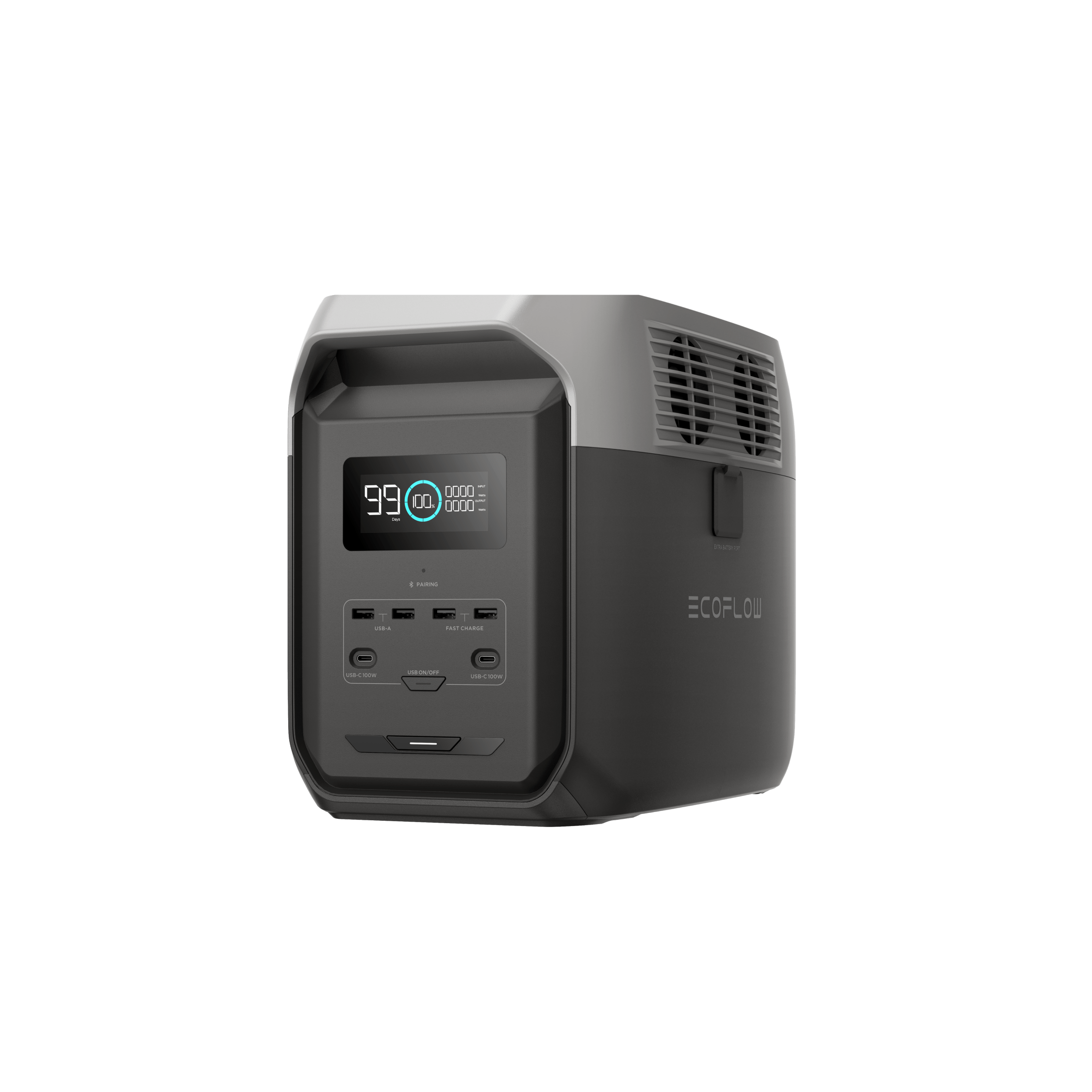
EcoFlow DELTA 3 1500
No longer sold

Jackery Explorer 1000 Plus
$619.00
$619.00 · direct from Jackery
down from $699 · 11% below usual
Last checked 16 days ago. Prices move — check before you buy.
Prices may vary by retailer and are subject to change.