Head-to-head test
BLUETTI Elite 300 vs BLUETTI Elite 320
Cycle the Elite 320 daily and you're replacing it in year eight while the Elite 300 is barely half-used, and the Elite 300 is the one that costs $99 more.
Full profiles: BLUETTI Elite 300 → · BLUETTI Elite 320 →

Written by Gunner GustafsonUpdated
Whole-Home Backup Tester, Station Arena Test Desk
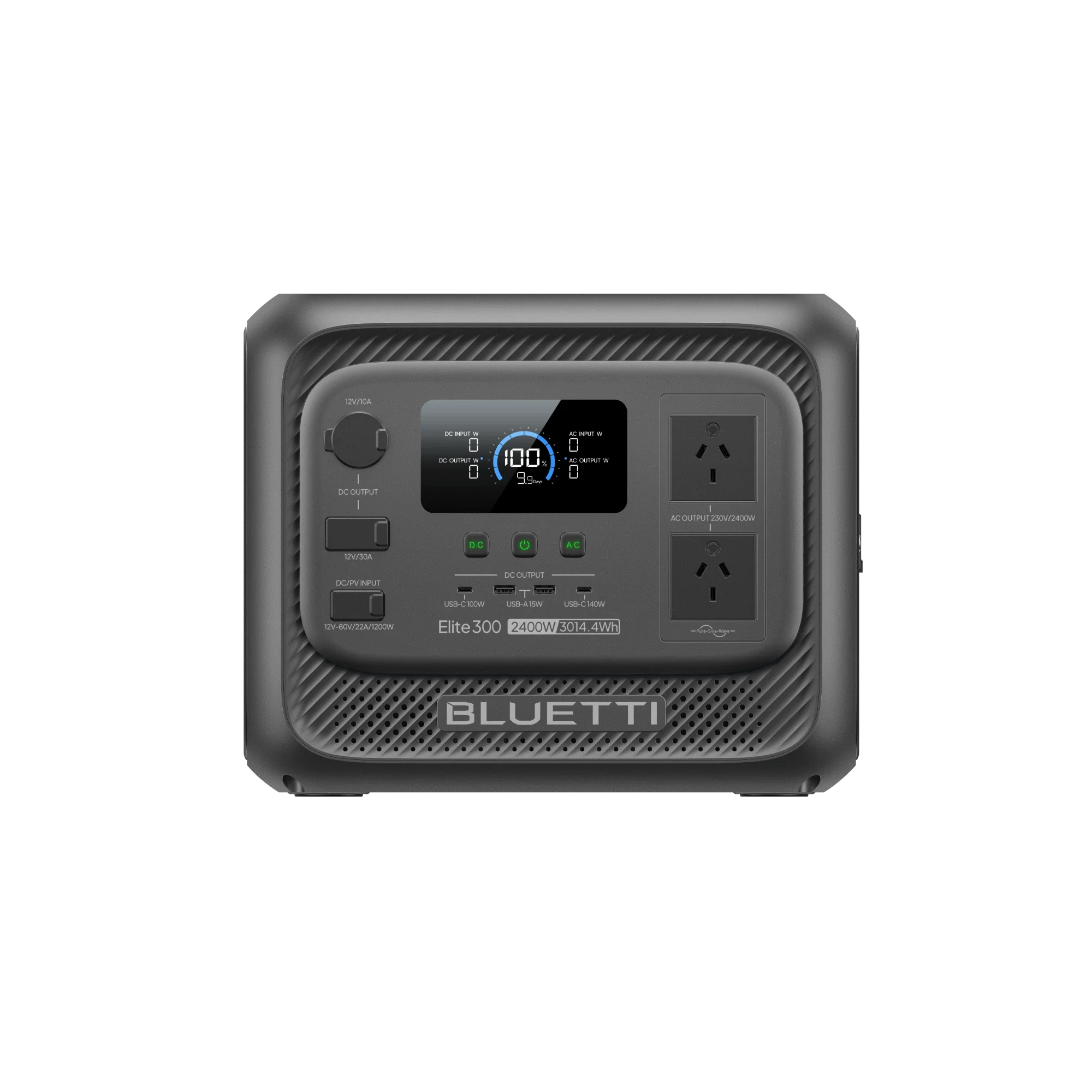
$1,099.00 · direct from BLUETTI
down from $1,199 · 8% below usual
Last checked 1 day ago. Prices move — check before you buy.
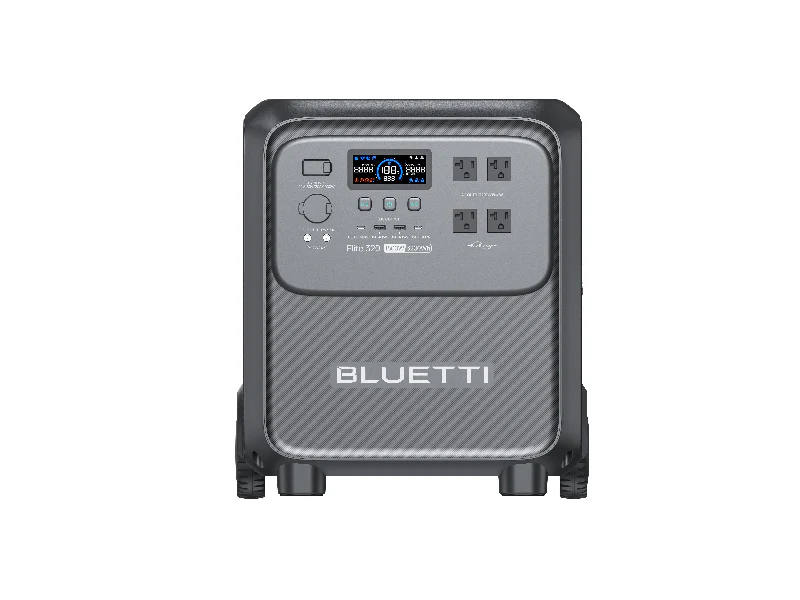
$936.25 · direct from BLUETTI
down from $1,100 · 15% below usual
Last checked 1 day ago. Prices move — check before you buy.
Spec deltas
Take the Elite 300. Both of these are sealed 3kWh-class BLUETTI Elites with the same five-year warranty, the same 140W USB-C, and the same 10ms UPS switchover, so the decision lands entirely on what's different — and what's different is that $1,199 buys 6,000 charge cycles here and $1,100 buys 3,000 there.
The Elite 320's case is that it's cheaper and bigger. Both are true, and neither survives contact with a load. Its 3,200Wh against the 300's 3,014Wh works out to 158Wh more usable energy once the inverter takes its cut, and there is no scenario on this page where 158Wh decides anything. Five of the six come out 'both'. The sixth comes out 'neither'.
What actually separates them is the inverter and the years. The 300 runs 2,400W continuous and jumps to 4,800W to get a motor spinning; the 320 runs 1,800W and peaks at 2,700W. The 320 earns exactly one win over all of that, and it's a good one: it rolls.
What the Numbers Reveal
Each conclusion stated first — the numbers behind it on one line, the full analysis below.
Neither unit expands — both are sealed with no expansion port — so the 186Wh isn't a head start toward a bigger system either. It's just the larger number printed on the larger box. The 320's single measurable advantage over the 300 is the one advantage that never changes an answer.
Elite 320 holds 3,200Wh; Elite 300 holds 3,014Wh — a 186Wh gap on the nameplateAfter inverter derating that becomes 2,720Wh usable against 2,562Wh, 158Wh apartAcross all six load profiles the two never split: five resolve to 'both' and Van Life Daily's 4,685Wh resolves to 'neither'
Why it mattersIf you're leaning toward the 320 because it's the bigger battery, you're paying for a difference no realistic load will ever surface.
rated cycles
Both carry the same five-year warranty, and that's where it gets uncomfortable for the 320: warranty is what the manufacturer will stand behind, cycle count is what the cells will actually do. A daily cycler shopping for a replacement 320 in year eight is doing it while the 300 is still at half-life, and the $99 gets repaid the first time a second unit enters the picture.
Elite 300: 6,000 rated cycles for $1,199. Elite 320: 3,000 rated cycles for $1,100Total lifetime output works out to 18,086 kWh for the 300 and 9,600 kWh for the 320At daily cycling that's 16.4 years of service against 8.2
Why it mattersAnyone cycling one of these every day — off-grid cabin, daily solar buffer, full-time RV — should not be considering the 320 at any price.
continuous output
A compressor or a pump pulls far more current in the half-second it spins up than it does running, so the spec that decides whether a fridge starts is surge, not capacity. The 300 has 2,100W more of it, and 600W more continuous headroom for whatever you plug in alongside.
Elite 300: 2,400W continuous, 4,800W surge — double its rating in reserveElite 320: 1,800W continuous, 2,700W surge — half again its ratingAll five passing scenarios come out 'both', so energy capacity is not what separates these units
Why it mattersIf a well pump, a compressor fridge, a microwave, or a shop tool is anywhere on your list, the 300 is the only one of these two you should be looking at.
weight
So the real question isn't which unit is more portable, it's which direction you move it. Rolling from a utility room to the kitchen mid-outage, the 320 is the better tool and it isn't close. Lifting it over a tailgate, down basement stairs, or across a campsite, the 17 pounds decide it and the wheels are dead weight.
Elite 320: about 75 lbs, on oversized shock-absorbing wheels with a retractable telescoping handleB2Elite 300: just under 58 lbs, in a chassis certified the world's smallest 3kWh station by volume as of January 2026A2The 300 is only about 2 kg heavier than the Elite 200 V2 and still a one-person objectA3
Why it mattersGround-floor home backup: the wheels are worth more than the pounds. Anything that involves lifting: take the 300.
The specific dimensions that decide these two units — everything else is a tie.
Lifetime Value
Selected because: Identical five-year warranties, and 6,000 rated cycles against 3,000 — the widest gap between these two units.
cost / lifetime kWh
Seven cents a lifetime kilowatt-hour against eleven. That runs backwards from the sticker and it's the whole ownership argument: the box that costs more delivers energy more cheaply, because 6,000 cycles across 3,014Wh comes out to 18,086 kWh of lifetime output while 3,000 cycles across 3,200Wh comes out to 9,600.
Cycled daily, the 300 has 16.4 years in it and the 320 has 8.2. Cycle one weekly instead and the picture changes honestly in the 320's favour: 57.7 years of rated life is more than anyone is going to use, the longevity argument retires itself, and the choice moves entirely onto the inverter. Know which kind of owner you are before you let this section decide anything.
What the Specs Don't Tell You
Selected because: Surge, weight and cycle life are the three cards that fire here, and all three separate these units where the capacity spec doesn't.
rated cycles
Three cards fire and two of them point the same way. Surge is the sharp one: the Elite 300 carries double its continuous rating in reserve, the Elite 320 carries half again. Rated wattage tells you what a unit can hold. Surge tells you what it can start, and a motor asks for its worst number in the first half-second of its life.
The weight card fires against the 320 and it deserves a fair reading rather than a scold — 75 lbs on oversized wheels crosses a floor more easily than 58 lbs in your arms. Put a staircase or a tailgate in the path and the 17 pounds take it straight back. The cycle-life card is the one to sit with, because it's the difference between buying this class of unit once and buying it twice.
Portability & Form Factor
Selected because: 58 lbs you carry against 75 lbs you roll — the one category the Elite 320 wins outright.
weight
58 lbs is a lift you can do alone on a bad day. 75 lbs is the number where you start looking for a second person or a ramp, and the Elite 320 answers that with hardware rather than dieting: oversized shock-absorbing wheels and a retractable telescoping handle, sized for moving around a house rather than into a vehicleB2.
The 300 takes the other route, which is to not be heavy. Reviewers put it at just under 58 lbs inside a chassis certified as the world's smallest 3kWh station by volumeA2, only about 2 kg up on the Elite 200 V2A3 — a 3kWh unit that handles like a 2kWh one. Wheels are the better answer on flat ground and the worse one everywhere else, so buy for the surface you actually own.
Your Life, Your Pick
Selected because: Five of six load profiles come out 'both' and the sixth comes out 'neither', which is itself the finding.
Five 'both' and one 'neither' isn't a hung jury, it's the measurement telling you loads aren't the variable. Camping, a blackout, a CPAP night, a workday, a tailgate — both units clear all of it, and on the heaviest of the five the 320's margin over the 300 is five percentage points of a tank neither one empties.
The sixth is the useful one. Van Life Daily wants 4,685Wh a day, which is 183% of the Elite 300's usable energy and 172% of the Elite 320's, and both units are sealed with no expansion port. There's no version of either purchase that grows into that number later. If that's your profile, the honest answer is that this comparison isn't yours.
Strengths & trade-offs
BLUETTI Elite 300
Strengths
- +Lighter by 17 lb
- +Higher AC output
- +Faster solar charging
- +Rated for 6,000 charge cycles — much longer battery lifespan
Trade-offs
- –No major technical downsides compared to rival.
BLUETTI Elite 320
Strengths
- +Costs $99 less
- +Larger battery capacity
Trade-offs
- –Significantly heavier (+17 lbs), making it harder to move.
- –Weaker inverter (-600W) limits appliance compatibility.
- –Shorter-lived battery — rated for 3,000 charge cycles vs the Elite 300's 6,000, so it wears out sooner.
Will It Power Your Gear?
Scenario math and per-appliance runtimes, modeled from the spec record.
Scenario verdicts
We ran the math on six real-world scenarios. Here's which unit survives your actual life.
SCN-01 · 2 nights · needs 2,100Wh
Weekend Camping
Two nights off-grid with essential comfort
Either unit
Both, at 82% and 77% of usable energy for a 2,100Wh weekend. That's most of the tank either way, so the tiebreak is the walk from the car: 58 lbs against 75.
Battery budget usedlower = more headroom
LOAD Phone Charger 15W×6h · LED Lights 40W×8h · Box Fan 75W×14h · CPAP Machine 40W×16h
SCN-02 · 8 hours · needs 1,645Wh
8-Hour Blackout
Keep the essentials running through a night without power
Either unit
Both clear 1,645Wh with better than a third of the tank spare, at 64% and 60%. What isn't a tie is the moment the compressor kicks on — the Elite 300 holds 4,800W of surge in reserve against the Elite 320's 2,700W.
Battery budget usedlower = more headroom
LOAD Fridge 150W×8h · Router + Modem 20W×8h · LED Lights (4 bulbs) 40W×6h · Phone Charger 15W×3h
SCN-03 · 8 hours · needs 320Wh
CPAP Overnight
Sleep therapy without interruption — the #1 medical use case
Either unit
Both, using 12% of usable capacity. A CPAP asks 320Wh a night against 2,562Wh and 2,720Wh available, and both units switch over in 10ms so neither will interrupt a breath. If breathing equipment is the only reason you're shopping, you're several capacity classes above the job.
Battery budget usedlower = more headroom
LOAD CPAP Machine 40W×8h
SCN-04 · 8 hours · needs 910Wh
Remote Workday
Full work day off-grid without power anxiety
Either unit
Both power your workstation all day without strain, and their USB-C output is a wash — pick on weight, ports, or price.
Battery budget usedlower = more headroom
LOAD Laptop 60W×8h · External Monitor 30W×8h · Router + Modem 20W×8h · Phone Charger 15W×2h
SCN-05 · 4 hours · needs 670Wh
Tailgate Party
Game day power for the crew
Either unit
Both, comfortably: 670Wh is roughly a quarter of either tank. The separator is what you run at once, where the Elite 300's 2,400W continuous gives you 600W more simultaneous draw than the Elite 320's 1,800W.
Battery budget usedlower = more headroom
LOAD Blender 400W×0.5h · LED TV (55") 80W×4h · Bluetooth Speaker 15W×4h · Phone Charger (×3) 45W×2h
SCN-06 · 24 hours · needs 4,685Wh
Van Life Daily
A full day of mobile living — the ultimate endurance test
Neither unit
Neither, and not narrowly. A 4,685Wh day is close to double what either unit holds after inverter losses, and both are sealed with no expansion port, so there's no growing into it later. This draw wants a bigger class of unit, or two of these.
Battery budget usedlower = more headroom
LOAD Mini-Fridge 150W×24h · Laptop 60W×4h · Phone Charger 15W×3h · LED Lights 40W×5h · Fan 75W×8h
The Load Test
RUNTIME = (Wh × 0.85) ÷ LOAD
None of the scenarios above exactly yours? Build it. Toggle what you'd plug in; both units are tested against the combined draw.
Essentials
Comfort & Convenience
High-Draw Appliances
Test duration
8h
Continuous draw
205W
Projected runtime
For this load: Elite 320 runs 13.3h vs 12.5h.
$1,099.99 list · direct from BLUETTI
Modeled from the spec record — same math as the tables below. Methodology
Runtime by appliance
Real-world runtime estimates for common appliances, modeled at 85% inverter efficiency.¹
Essentials
The basics you need runningscale 0–181.3hComfort & Convenience
Makes off-grid life actually enjoyablescale 0–36.3hHigh-Draw Appliances
These reveal the real limitsscale 0–2.7h¹ Runtime = (capacity × 0.85) ÷ appliance watts. Within each group, all bars share one time scale (the group's longest runtime), so lengths are comparable across appliances; identical runtimes collapse into a single blue/orange bar. Actual runtime varies with battery age, temperature, and simultaneous loads — see methodology.
Conclusion
August 9, 2026
Verdict: the BLUETTI Elite 300
Buy the Elite 300 at $1,199. The Elite 320's $1,100 is a real saving and its 3,200Wh is a real 186Wh more battery, but neither changes an outcome anywhere on this page: both units clear five of six load profiles and both fail Van Life Daily. What does change is how long you own it and what you can start with it. The 300 is rated for 6,000 charge cycles against the 320's 3,000, which is 16.4 years of daily cycling against 8.2, and its inverter holds 2,400W continuous with 4,800W of surge against 1,800W and 2,700W. The one honest reason to take the 320 instead is the thing the 300 can't answer with specs: at 75 lbs it rides on oversized shock-absorbing wheels with a retractable telescoping handleB2, and if your unit never leaves the ground floor, rolling beats lifting.
Today the Elite 300 is $1,099, $100 under its typical $1,199 and the Elite 320 is $936.25, $163.74 under its typical $1,099.99. The verdict weighs typical prices, not today's. Prices checked 1 day ago.
Editor-assigned confidence, based on cited owner research and spec analysis.
List prices as of August 9, 2026. The links below open BLUETTI's current price.
$1,099.00 · direct from BLUETTI
down from $1,199 · 8% below usual
Last checked 1 day ago. Prices move — check before you buy.
or check the Elite 320 price$936.25 list
Written by Gunner Gustafson, Whole-Home Backup Tester · Station Arena Test Desk · Updated August 9, 2026
Measured Data
Benchmark scores and the full spec record, side by side.
Benchmark scores
Not rated for both units (minimum threshold unmet): Apartment Balcony.
Full specifications
ᵈ Derived: price ÷ rated capacity. See the data behind our comparisons →
Comparison ToolAdd more power stations, side by sideOpen Tool →How these numbers are produced
Numeric verification
Every figure on this page traces to our spec database or arithmetic on it — no estimated numbers.
Owner claims
Statements about owner experience are cited to published reviews — see Sources & Research Notes below.
Runtime model
Runtime = (rated capacity × 0.85 inverter efficiency) ÷ device wattage. Solar recharge estimates assume panels deliver 70% of rated output. Cold weather, battery age, and stacked loads reduce real-world results.
Power Score
Computed from 14 published spec dimensions, weighted per use-case bench. Higher is better; a unit must meet a bench's minimum threshold to be rated.
See the full weight table and data sourcing on our methodology page →Class ranking (the star rating)
Each unit's star score is a category ranking, not customer reviews — no buyer opinions feed it. We score every station on size-independent quality (value, output, portability, endurance, ports, warranty, and more), then percentile-rank it against the other units in its capacity class, so a class-leading compact unit and a class-leading whole-home unit can both earn 5★. Here, Elite 300 rates 4.6/5 (76th percentile of 26 Large-class units), and Elite 320 rates 4.0/5 (44th percentile of 26 Large-class units).
How the class ranking is computed →Test Notes & Caveats
Hidden gotchas and advantages we spotted that you won't find on the product page.
75 lbs, But It Rolls
The Elite 320 weighs 75 lbs against the Elite 300's 58, and it answers for that with oversized wheels and a telescoping handle. On a flat, continuous floor that's the better arrangement and we'd say so to anyone. On a staircase, over a tailgate, or across a campsite, the 17 pounds are the entire story and no wheel helps.
Double Its Rating Against Half Again
The Elite 300 jumps from 2,400W continuous to 4,800W on surge. The Elite 320 stretches 1,800W to 2,700W. Rated wattage tells you what a unit can hold; surge tells you what it can start, and motors ask for their worst number in the first half-second.
Warranty: No Difference
Both units carry the same 5-year warranty, so coverage isn't a tiebreaker here. Both figures are maximums rather than guarantees — they depend on buying direct from BLUETTI or registering the unit, since reseller purchases carry a shorter term.
6,000 Cycles Against 3,000
Same five-year warranty on both, double the rated cell life on one. Run either unit daily and the Elite 300 has 16.4 years in it against the Elite 320's 8.2. Run it weekly and both outlast the question entirely. This card only decides the purchase for daily cyclers, which is precisely why you should know which one you are before you read it.
Full record above — the Test Desk pick is the Elite 300.
Check Elite 300 price →or check the Elite 320 priceOwnership Analysis
What happens after you buy — true cost of ownership, brand trust, and growth potential.
Lifetime value
Service lifeyears at one full cycle per day
Lifetime energy delivered
Cost per delivered kWh
│ warranty ends · Reaching the cycle rating means ~80% capacity remains — degraded, not dead.
Analyst note
The Elite 320 is cheaper to buy, but the Elite 300 is cheaper to own. At $0.07/kWh over its lifetime vs $0.11/kWh, the Elite 300's higher cycle life and capacity make each dollar go further over the years.
Growth path
Elite 300
FIXED CAPACITYFixed at 3,014Wh — a sealed, complete system rather than a starting point. There's no expansion port, so that figure is the ceiling: check it against your longest unplugged stretch before you buy.
Accepts up to 1,200W of solar. Enough for a serious multi-panel array.
Adequate ports for most setups, but heavy users may want a power strip.
Elite 320
FIXED CAPACITYFixed at 3,200Wh — a sealed, complete system rather than a starting point. There's no expansion port, so that figure is the ceiling: check it against your longest unplugged stretch before you buy.
Accepts up to 1,000W of solar. Enough for a serious multi-panel array.
Adequate ports for most setups, but heavy users may want a power strip.
Realistic full solar rechargeat 70% of rated panel output — see methodology
Analyst note
Neither expands, and that's no knock on either — each is a complete unit at a fixed size. Buy the capacity that covers your needs now (the Elite 320 gives you the larger ceiling); you can't add to either later.
What Owners Report
Patterns from published owner reports and long-term reviews — every claim cited to its source below.
BLUETTI Elite 300
Coverage of the Elite 300 is launch-and-review material rather than years of ownership, so read it as first impressions with decent instruments behind themA1A2A4. What's consistent across it is the size story: reviewers put the unit at just under 58 lbs in a chassis certified the world's smallest 3kWh portable power station by volume as of January 2026A2, only about 2 kg heavier than the Elite 200 V2 and still something one person moves without ceremonyA3.
The longevity claim is what carries this page, and it isn't a marketing figure floating on its own — reviewers tie the 6,000-cycle rating to the same LFP cell tier BLUETTI ships in the Elite 100 V2, Elite 200 V2 and Apex 300A1. Multiple 2026 owner reviews report it performing across home backup, RV and off-grid duty with no recurring complaint surfacing yetA4. 'Yet' is doing real work in that sentence. Nobody has owned one long enough to tell you how it ages.
“3,014Wh of premium LiFePO4 rated for 6,000+ cycles to 80% — over 16 years of daily use — the same cell tier used in the Elite 100 V2, Elite 200 V2, and Apex 300.”
Sources
backuppowerhub.com · trustedreviews.com · rv.com · thetechnologyman.com · exspenditure.com · reviewed.com · camerajabber.com
BLUETTI Elite 320
The Elite 320 arrived at CES 2026 as a suitcase-style rolling backup unit, and what exists is launch coverage rather than long-term ownership: 3,200Wh, 1,800W continuous, 10ms UPS, four AC outlets and two USB-C ports at 140W and 100WB1B3. Reviewers consistently single out the mobility hardware — about 75 lbs riding on oversized shock-absorbing wheels with a retractable telescoping handle, explicitly sized for moving it around a houseB2.
One claim to hold at arm's length. Reviewers describe the battery as lasting well over a decadeB3, which is true on weekly use and not on daily. The spec is 3,000 cycles, and 3,000 daily cycles is 8.2 years. That's a fine number for a unit you pull out during storms. It's a poor one for a unit you cycle every night, and the coverage doesn't make the distinction.
“A 3,200Wh LiFePO4 battery delivering 1,800W continuous (2,700W Power Lifting, 3,600W peak), with 10ms UPS protection — a suitcase-style rolling home-backup station introduced at CES 2026.”
Sources
prnewswire.com · rv.com · notebookcheck.net · ussolarsupplier.com · finance.yahoo.co
Sources & Research Notes
Every owner claim in this report is traceable to a published source. The bracketed references above resolve here.
Recurring owner themes
- 6,000-cycle LFP longevity, a class-leading compact size for 3kWh, and strong real-world performance are the standout praise. [Elite 300 · 3 entries]
- Large 3,200Wh LFP capacity, wheeled mobility, 10ms UPS, and affordable home-backup positioning are the standout points. [Elite 320 · 3 entries]
- A1
“3,014Wh of premium LiFePO4 rated for 6,000+ cycles to 80% — over 16 years of daily use — the same cell tier used in the Elite 100 V2, Elite 200 V2, and Apex 300.”
backuppowerhub.com / trustedreviews.com — Elite 300 review · 2026 · [positive]
- A2
“Certified as the world's smallest 3kWh portable power station by volume (as of January 2026), fitting a chassis closer to a standard 2kWh unit, at just under 58 lbs.”
backuppowerhub.com / rv.com — Elite 300 review · 2026 · [positive]
- A3
“Only about 2 kg heavier than the Elite 200 V2 and not dramatically larger, so it's still manageable to move around for a 3kWh unit.”
thetechnologyman.com / exspenditure.com — Elite 300 review · 2026 · [positive]
- A4
“Multiple 2026 owner reviews report strong real-world performance across home backup, RV, and off-grid use.”
reviewed.com / camerajabber.com — Elite 300 owner reviews · 2026 · [positive]
- B1
“A 3,200Wh LiFePO4 battery delivering 1,800W continuous (2,700W Power Lifting, 3,600W peak), with 10ms UPS protection — a suitcase-style rolling home-backup station introduced at CES 2026.”
prnewswire.com / rv.com — Elite 320 review · 2026 · [positive]
- B2
“Weighs about 75 lbs with oversized shock-absorbing wheels and a retractable telescoping handle for easy transport around the home.”
rv.com / notebookcheck.net — Elite 320 review · 2026 · [positive]
- B3
“The big 3,200Wh LFP battery lasts over a decade and provides over 66 hours of refrigeration — up to two days of essential household power — via four AC outlets, dual USB-A, and two USB-C (140W and 100W).”
rv.com / ussolarsupplier.com — Elite 320 review · 2026 · [positive]
Research compiled August 9, 2026.
Who Should Buy Which
Buy the Elite 300 if you…
- →You cycle it. Solar buffer, off-grid cabin, full-time RV — 6,000 cycles is 16.4 years of daily use, and that is the entire reason to pay $1,199.
- →It leaves the house. Truck bed, campsite, second property, basement stairs: 58 lbs is one person's job and 75 lbs is a negotiation.
- →You start motors. A well pump, a compressor fridge, a shop vac — 4,800W of surge is the margin that keeps a startup spike from tripping the unit, and 2,400W continuous is what lets something else stay plugged in beside it.
- →You intend to buy once. Same five-year warranty on both, but only one of them is still at half-life when that warranty is a distant memory.
Buy the Elite 320 if you…
- →The unit lives on one floor and rolls to wherever the outage is. Wheels and a telescoping handle beat 17 fewer pounds every single time the path is flatB2.
- →You'll use it a handful of times a year, not a handful of times a week. At weekly cycling the 320 has 57.7 years of rated life in it, which retires the cycle-count argument completely.
- →Everything you plug in stays under 1,800W continuous and nothing in the pile has a compressor in it.
- →$1,100 is what your budget will bear, and 2,720Wh of usable energy for that is a lot of unit.
If neither fits
The Van Life Daily buyer, and it isn't close: 4,685Wh a day is close to double what either unit holds after inverter losses, and both are sealed with no expansion port, so there's no upgrade path hiding inside this purchase. Go up a capacity class or plan on running a pair. The other person who should cheerfully close this tab is anyone shopping purely to run a CPAP — that's a 320Wh night against 2,562Wh available on the smaller of these two, so you're several capacity classes above the job and paying for all of them.
The Bottom Line
Take the Elite 300 at $1,199. The ownership math runs opposite to the sticker — the more expensive unit is the cheaper one per kilowatt-hour delivered, because 6,000 cycles don't come back around on a battery rated for half that many, and no amount of saving $99 at checkout closes a gap you'd have to buy a second unit to fill.
The Elite 320 keeps one honest win and we'd point you at it without flinching: if this thing lives on one floor and rolls to wherever the outage is, the wheels are worth more than the pounds and $1,100 is money well spentB2. Everyone else — anyone lifting it, cycling it daily, or asking it to start a motor — should spend the extra ninety-nine dollars and stop thinking about it.
Frequently Asked Questions
Answers drawn from the spec record and cited owner research.
Is the BLUETTI Elite 320 just a bigger Elite 300?
No. It holds 186Wh more (3,200Wh against 3,014Wh) and that is the only spec where it leads. It runs 1,800W continuous to the Elite 300's 2,400W, surges to 2,700W against 4,800W, weighs 75 lbs against 58, and is rated for 3,000 charge cycles against 6,000. Same brand, same five-year warranty, and one of them is built to last twice as long.
Which lasts longer, the Elite 300 or the Elite 320?
The Elite 300, by exactly double. It's rated for 6,000 charge cycles to the Elite 320's 3,000, which works out to 18,086 kWh of lifetime energy against 9,600. Cycled daily that's 16.4 years against 8.2. Cycled weekly, both are well past the point where anyone needs to care.
Can either one run a refrigerator through a blackout?
Yes, both. The 8-hour blackout profile draws 1,645Wh, which is 64% of the Elite 300's usable energy and 60% of the Elite 320's, and both carry 10ms UPS switchover so the fridge never registers the grid dropping out. The difference is the startup spike: the 300's 4,800W surge leaves far more headroom for a compressor kicking on than the 320's 2,700W.
Is the Elite 320's extra capacity worth it?
Not in any scenario on this page. After inverter losses the real gap is 158Wh — 2,720Wh usable against 2,562Wh — and every load profile resolves the same way for both units, or fails for both. The one place capacity would decide something is full-time van life at 4,685Wh a day, and neither unit gets close to that.
Should I buy the Elite 320 just for the wheels?
If the unit never leaves a flat floor, yes, and that's the one clean argument for it. It rides on oversized shock-absorbing wheels with a retractable telescoping handle, which genuinely beats carrying 58 lbs across a house. But wheels do nothing on stairs or at the back of a truck, and that is exactly where the Elite 300's 17-pound advantage becomes the only spec that matters.
Where to buy
BLUETTI Elite 300Pick
$1,099.00
$1,099.00 · direct from BLUETTI
down from $1,199 · 8% below usual
Last checked 1 day ago. Prices move — check before you buy.
BLUETTI Elite 320
$936.25
$936.25 · direct from BLUETTI
down from $1,100 · 15% below usual
Last checked 1 day ago. Prices move — check before you buy.
Prices may vary by retailer and are subject to change.