Head-to-head test
Anker SOLIX S2000 vs BLUETTI Elite 320
You're choosing between a box rated for more than three times as many charges and a box that holds enough on one charge to finish the weekend you bought it for.
Full profiles: Anker SOLIX S2000 → · BLUETTI Elite 320 →

Written by Gunner GustafsonUpdated
Whole-Home Backup Tester, Station Arena Test Desk
Spec deltas
The SOLIX S2000 doesn't finish a camping weekend. Against the 2,100Wh the weekend profile draws, its 1,708Wh of usable energy lands 392Wh short, covering about 81% of the trip, while the Elite 320 clears the same load with 620Wh still in reserve. That single row carries most of the argument on this page, because it's the difference between a unit that does the job and a unit that does four fifths of it.
The Anker's answer is a number more than three times as big: 10,000 rated cycles against the Elite 320's 3,000, which works out to roughly 20,096 kWh of lifetime energy against 9,600. It's a genuine advantage and it's why the S2000 costs three cents per lifetime kilowatt-hour to the BLUETTI's eleven. It's also, for most of the people reading this, a number that never gets collected.
Take the Elite 320. It's 3,200Wh to the Anker's 2,010, it accepts 1,000W of solar against 400W, and it travels on wheels with a telescoping handle rather than being liftedB2. What that costs you is $400, the difference between a 35.7 lb lift and a 75 lb one, and 300W off the top of the surge ceiling. The composite score has these two nearly level, and that's the honest read: two good units aimed at different weekends.
What the Numbers Reveal
Each conclusion stated first — the numbers behind it on one line, the full analysis below.
rated cycles
The buyer who would actually collect on 10,000 cycles is the one emptying the pack every day, and that buyer is the Van Life Daily profile neither of these covers: 4,685Wh a day against 1,708Wh and 2,720Wh usable. The S2000's biggest number on paper is worth the least to the person choosing between these two, because whoever would cash it in has already been priced out of both.
SOLIX S2000: 10,000 rated cycles at 2,010Wh each, about 20,096 kWh over the rated lifeElite 320: 3,000 rated cycles at 3,200Wh each, about 9,600 kWh over the rated lifeAt twice-weekly use those ratings come out at 96 years and 29 years; at daily use, 27.4 years and 8.2Van Life Daily needs 4,685Wh a day, against 1,708Wh usable on the S2000 and 2,720Wh on the Elite 320
Why it mattersIf you cycle a pack daily, neither of these is your unit and you should shop bigger. If you don't, stop weighing 10,000 against 3,000 and decide on capacity and weight instead.
continuous output
What decides whether a motor starts is the absolute ceiling, not the ratio. Anything whose inrush lands between 2,700W and 3,000W starts on the cheaper unit and trips the dearer one. It's a 300W window and most household loads never reach it, but a well pump, a shop compressor or a table saw can.
SOLIX S2000: 1,500W rated, 3,000W published peak, a 2x ratioElite 320: 1,800W rated, 2,700W published peak, a 1.5x ratioMotors briefly pull two to three times their rated wattage at the instant they spin up
Why it mattersIf there's a motor in your plan, look up its startup draw before you buy the bigger box. The Elite 320 is the better unit here on nearly everything except the half second when that motor kicks.
solar input
The S2000's headline recharge time is an AC numberA5, and the wall socket is the one thing an outage removes. In the blackout it's bought for it works with 400W of intake from a shallower starting point, against a box that takes 1,000W from a deeper one. Rated solar input is a ceiling real panels rarely hold, but the ratio between them survives the derate. The gap between these two widens on day two rather than closing.
After the 8-hour blackout profile the S2000 sits at 96% used with 63Wh left; the Elite 320 at 60% with 1,075WhSolar input is 400W on the S2000 and 1,000W on the Elite 320At those rated inputs, refilling 2,010Wh takes about 5 hours and refilling 3,200Wh about 3.2One hands-on test recharged the S2000 to full from a 20-amp household circuit in about 1.7 hoursA5
Why it mattersIf your outages end when the sun comes up, either unit does the job and the cheaper one wins. If they ever run into a second day, the Elite 320 isn't just bigger, it's compounding.
On a flat floor most of those 39 lbs vanish, because one of them rolls and the other has to be hugged. On a staircase, over a tailgate, or across a gravel site the gap is all there and then some, since wheels are dead weight the moment the ground stops being smooth.
35.7 lbs for the S2000 against 74.96 lbs for the Elite 320, a difference of about 39 lbsTwo hands-on reviews independently flagged the S2000's missing one-hand carry handle as awkward for transportA7A8The Elite 320 travels on oversized wheels with a retractable telescoping handleB2
Why it mattersWeight decides this matchup only if your route has steps in it. Basement or second floor, take the S2000; garage to living room on a hard floor, 75 lbs is a number on a page rather than a problem.
The specific dimensions that decide these two units — everything else is a tie.
Your Life, Your Pick
Selected because: The SOLIX S2000 comes up 392Wh short of the 2,100Wh camping weekend that the Elite 320 finishes with 620Wh to spare, and that one row moves more here than any spec on the table.
Four of the six rows go to the Elite 320, and they don't all mean the same thing. Remote Workday and Tailgate Party are rows both units pass comfortably, where winning only means finishing with more left over: 798Wh of slack on the Anker at the end of a workday is plenty of slack. The row that decides something is Weekend Camping, where the S2000 stops at 81% of the load and the Elite 320 finishes with 620Wh unused.
The blackout row rewards a second read. Both units survive the night, which is what the pass means and all it means, but the S2000 does it at 96% used. A unit that ends your outage at 4% hasn't handed you margin, it's handed you a countdown. Van Life Daily is honest about both of them: 4,685Wh a day is 36% covered by the Anker and 58% by the BLUETTI, so if that's your load, this is the wrong page and neither box is the answer.
Lifetime Value
Selected because: 10,000 rated cycles against 3,000 is the Anker's biggest number, and this is where we work out who actually collects on it.
cost / lifetime kWh
Three cents per lifetime kilowatt-hour against eleven is the widest ratio on this page and the S2000's strongest argument by a distance. It's also an argument you only cash by spending the cycles. At twice-weekly use the ratings work out to 96 years and 29 years, and no pack sees either number, because cells age on the calendar whether you cycle them or not.
The purchase price tells a different story from the lifetime one. At 35 cents a watt-hour against 34, you're paying almost exactly proportionally for the extra capacity, and there's no bargain hiding on either side of $400. The divergence is entirely downstream, in cycles most buyers in this size class will never reach. Buy the capacity you need now and treat the cycle rating as insurance you probably won't claim.
Portability & Form Factor
Selected because: 35.7 lbs against 75 lbs is the difference between a lift and a tow, and it's the one gap you feel on every single trip.
weight
The Elite 320 is more than twice the weight, 74.96 lbs against 35.7, and for a lot of buyers that ends the discussion. It shouldn't, quite. It rolls on oversized wheels with a retractable telescoping handleB2, while the lighter Anker has no real one-hand carry handle, which two separate hands-on reviews called out independentlyA7A8. Flat ground erases most of the 39 lb difference.
What flat ground can't erase is stairs. Wheels do nothing on a staircase and less than nothing on gravel, so the real question isn't what the unit weighs, it's what sits between your car and the spot it has to live. A basement landing turns 75 lbs into a two-person job. A garage floor turns it into a non-event.
What the Specs Don't Tell You
Selected because: These two rank opposite ways on surge and continuous output, and only one of them publishes a noise figure at all.
rated cycles
The surge card is the one worth your attention, because the two inverter numbers point at different winners. The Elite 320 sustains 300W more and peaks 300W lower. Continuous output is what carries a load once it's running; peak is what gets a motor turning in the first place. The bigger box wins the first and loses the second, which is not the shape most people expect when they pay more.
The noise card is a card about the absence of one. The S2000 publishes 30dB, a manufacturer's floor rather than a measurement under load, and the Elite 320 publishes nothing. That isn't evidence the BLUETTI is louder and we won't score it as though it were. It does mean that if this unit is going to spend its nights in a bedroom, one of the two can be held to a figure and one of them can't.
Brand Trust
Selected because: Both carry 5-year terms, so the brand question here is who answers the email when something goes wrong.
Both carry 5-year terms, so the warranty column is a wash and the brand question becomes what happens when you have to use it. BLUETTI's support is the least predictable in the category: email-first, on a China timezone, with outcomes that swing from efficient to weeks of circular troubleshooting depending on who picks up the ticket. Buying direct from BLUETTI rather than through a reseller improves both the odds and the term, since reseller purchases carry the shorter one.
Anker's reputation is the stronger of the two and is moving the wrong way. The historic no-argument replacements have given way to AI-driven first-line responses, and hazmat shipping makes returning anything this heavy genuinely awkward. Neither of these facts should change your pick. Both are a reason to register the unit the day it arrives and keep the receipt from whoever sold it to you.
Strengths & trade-offs
Anker SOLIX S2000
Strengths
- +Costs $400 less
- +Lighter by 39.3 lb
- +Rated for 10,000 charge cycles — much longer battery lifespan
Trade-offs
- –No major technical downsides compared to rival.
BLUETTI Elite 320
Strengths
- +Larger battery capacity
- +Higher AC output
- +Faster solar charging
Trade-offs
- –Substantially more expensive (+$400) than the SOLIX S2000.
- –Significantly heavier (+39.3 lbs), making it harder to move.
- –Shorter-lived battery — rated for 3,000 charge cycles vs the SOLIX S2000's 10,000, so it wears out sooner.
Will It Power Your Gear?
Scenario math and per-appliance runtimes, modeled from the spec record.
Scenario verdicts
We ran the math on six real-world scenarios. Here's which unit survives your actual life.
SCN-01 · 2 nights · needs 2,100Wh
Weekend Camping
Two nights off-grid with essential comfort
Elite 320
A camping weekend asks for 2,100Wh and the SOLIX S2000 has 1,708Wh to give. It gets you most of the way and then stops, 392Wh short with about 81% of the trip behind it. The Elite 320 clears the same load with 620Wh still in reserve. This is the row that pays for the price gap, and it's the only scenario here where one of the two simply doesn't do the job.
Battery budget usedlower = more headroom
LOAD Phone Charger 15W×6h · LED Lights 40W×8h · Box Fan 75W×14h · CPAP Machine 40W×16h
SCN-02 · 8 hours · needs 1,645Wh
8-Hour Blackout
Keep the essentials running through a night without power
Elite 320
Both units get you through the night, which is where the checkmarks stop being the interesting part. The S2000 finishes at 96% used with 63Wh left, about 4% of a second night. The Elite 320 finishes at 60% with 1,075Wh, roughly 65% of another one. If your outages end when the sun comes up, that difference costs you nothing at all. If they ever don't, it's the entire difference between these two.
Battery budget usedlower = more headroom
LOAD Fridge 150W×8h · Router + Modem 20W×8h · LED Lights (4 bulbs) 40W×6h · Phone Charger 15W×3h
SCN-03 · 8 hours · needs 320Wh
CPAP Overnight
Sleep therapy without interruption — the #1 medical use case
Either unit
A CPAP is about 40W for eight hours, so this is 320Wh, and both units treat it as a rounding error: 19% of the Anker, 12% of the BLUETTI. Capacity settles nothing, which leaves the fan. The SOLIX S2000 publishes a 30dB figure, a manufacturer's floor rather than a measurement under load, and the Elite 320 publishes nothing. An arm's length from your pillow, that asymmetry is the tiebreak, and it goes to the Anker by default rather than by proof.
Battery budget usedlower = more headroom
LOAD CPAP Machine 40W×8h
SCN-04 · 8 hours · needs 910Wh
Remote Workday
Full work day off-grid without power anxiety
Elite 320
The Elite 320 clears the workday at 33% used, banking 1,810Wh — late work, extra calls, or a second laptop charge without arithmetic. The SOLIX S2000 at 53% also finishes, with 798Wh of slack for the unplanned.
Battery budget usedlower = more headroom
LOAD Laptop 60W×8h · External Monitor 30W×8h · Router + Modem 20W×8h · Phone Charger 15W×2h
SCN-05 · 4 hours · needs 670Wh
Tailgate Party
Game day power for the crew
Elite 320
Both handle game day; the Elite 320 keeps more in reserve (25% used vs 39%). Tailgating is a light load, though, so the number you'll feel is weight: 35.7 lbs for the SOLIX S2000 against 75 lbs for the Elite 320, from the trunk to the setup spot.
Battery budget usedlower = more headroom
LOAD Blender 400W×0.5h · LED TV (55") 80W×4h · Bluetooth Speaker 15W×4h · Phone Charger (×3) 45W×2h
SCN-06 · 24 hours · needs 4,685Wh
Van Life Daily
A full day of mobile living — the ultimate endurance test
Neither unit
Neither unit covers this one and it isn't close. Full-time van power runs 4,685Wh a day; the SOLIX S2000 covers 1,708Wh of that and the Elite 320 2,720Wh, leaving them 2,977Wh and 1,965Wh short. Read it as partial cover: the fridge, the lights and the laptop, not the whole list. Neither one expands either, so there's no buying your way out of it later.
Battery budget usedlower = more headroom
LOAD Mini-Fridge 150W×24h · Laptop 60W×4h · Phone Charger 15W×3h · LED Lights 40W×5h · Fan 75W×8h
The Load Test
RUNTIME = (Wh × 0.85) ÷ LOAD
None of the scenarios above exactly yours? Build it. Toggle what you'd plug in; both units are tested against the combined draw.
Essentials
Comfort & Convenience
High-Draw Appliances
Test duration
8h
Continuous draw
205W
Projected runtime
For this load: Elite 320 runs 13.3h vs 8.3h.
$1,099.99 list · direct from BLUETTI
Planning for more than this? Describe your whole setup and get it sized →
Modeled from the spec record — same math as the tables below. Methodology
Runtime by appliance
Real-world runtime estimates for common appliances, modeled at 85% inverter efficiency.¹
Essentials
The basics you need runningscale 0–181.3hComfort & Convenience
Makes off-grid life actually enjoyablescale 0–36.3hHigh-Draw Appliances
These reveal the real limitsscale 0–2.7h¹ Runtime = (capacity × 0.85) ÷ appliance watts. Within each group, all bars share one time scale (the group's longest runtime), so lengths are comparable across appliances; identical runtimes collapse into a single blue/orange bar. Actual runtime varies with battery age, temperature, and simultaneous loads — see methodology.
Conclusion
September 19, 2026
Verdict: the BLUETTI Elite 320
Take the Elite 320 and its 3,200Wh. It's the only one of the two that finishes the 2,100Wh camping weekend, it ends the 8-hour blackout profile with 1,075Wh in hand against the S2000's 63Wh, and it refills that reserve on 1,000W of solar where the Anker takes 400W. Those are the nights people actually buy these boxes for, and all three point the same way. Price the costs honestly: $400 more, 75 lbs against 35.7, and a 2,700W surge ceiling sitting 300W below the Anker's, which is the one spec where the cheaper unit wins outright. The S2000's 10,000-cycle rating is the better number on paper and the harder one to collect, because it only pays at daily use and neither unit covers a daily off-grid load. If your longest stretch off the grid is a single evening and the thing has to go up stairs, buy the S2000 and don't look back.
Today the Elite 320 is $936.25, $163.74 under its typical $1,099.99. The verdict weighs typical prices, not today's. Prices checked 16 days ago.
Editor-assigned confidence, based on cited owner research and spec analysis.
List prices as of September 19, 2026. The links below open Anker's and BLUETTI's current prices.
$936.25 · direct from BLUETTI
down from $1,100 · 15% below usual
Last checked 16 days ago. Prices move — check before you buy.
Written by Gunner Gustafson, Whole-Home Backup Tester · Station Arena Test Desk · Updated September 19, 2026
Black Friday · 38 days out
Price to beat:Elite 320 $936
The lowest we have recorded. A Black Friday price above it is a sale this unit has already had.
Measured Data
Benchmark scores and the full spec record, side by side.
Benchmark scores
Not rated for both units (minimum threshold unmet): RV Living, CPAP, Food Truck, Apartment Balcony, Camping.
Full specifications
ᵈ Derived: price ÷ rated capacity. See the data behind our comparisons →
Comparison ToolAdd more power stations, side by sideOpen Tool →How these numbers are produced
Numeric verification
Every figure on this page traces to our spec database or arithmetic on it — no estimated numbers.
Owner claims
Statements about owner experience are cited to published reviews — see Sources & Research Notes below.
Runtime model
Runtime = (rated capacity × 0.85 inverter efficiency) ÷ device wattage. Solar recharge estimates assume panels deliver 70% of rated output. Cold weather, battery age, and stacked loads reduce real-world results.
Power Score
Computed from 14 published spec dimensions, weighted per use-case bench. Higher is better; a unit must meet a bench's minimum threshold to be rated.
See the full weight table and data sourcing on our methodology page →Class ranking (the star rating)
Each unit's star score is a category ranking, not customer reviews — no buyer opinions feed it. We score every station on size-independent quality (value, output, portability, endurance, ports, warranty, and more), then percentile-rank it against the other units in its capacity class, so a class-leading compact unit and a class-leading whole-home unit can both earn 5★. Here, SOLIX S2000 rates 5.0/5 (99th percentile of 26 Large-class units), and Elite 320 rates 4.0/5 (44th percentile of 26 Large-class units).
How the class ranking is computed →Test Notes & Caveats
Hidden gotchas and advantages we spotted that you won't find on the product page.
Elite 320: 75 lbs, But It Rolls
Seventy-five pounds is past a casual lift, and the usual advice here is to check the product photos for wheels. This one has them: oversized wheels and a retractable telescoping handle, which turns the job from carrying into towing. On a garage floor or down a hallway, the 39 lb gap between this and the 35.7 lb SOLIX S2000 mostly disappears. On a staircase it comes back with interest, because wheels do nothing on stairs and the Anker is the one a single person can pick up and move. The question isn't what it weighs. It's what sits between your car and the spot it has to live.
Elite 320: Power Lifting to 2,700W
The Elite 320 has BLUETTI's Power Lifting mode, which runs a resistive appliance rated up to 2,700W from its 1,800W inverter. It does that by delivering less power than the appliance asks for, not more than the inverter has: the heater still works, it just heats more slowly. Two things follow. BLUETTI scopes the mode to purely resistive loads — a heater, a kettle, an incandescent lamp — so it does nothing for a fridge compressor, a pump or a power tool; for motor loads the figure to read is the Elite 320's separate 3,600W surge peak, not this one. And it is not a reason to size down, because running a load that big from 3,200Wh is a short session either way. Genuinely useful if a heater or a kettle is why you're buying; beside the point otherwise. The SOLIX S2000 publishes no equivalent.
Warranty: No Difference
Both units carry the same 5-year warranty, so coverage isn't a tiebreaker here. The Elite 320's figure is a maximum rather than a guarantee — it depends on buying direct from BLUETTI or registering the unit, since reseller purchases carry a shorter term. Worth saying because the per-dollar framing can suggest otherwise: the SOLIX S2000 works out at 7.1 years of cover per $1,000 spent against the Elite 320's 4.5, but that spread is the price gap, not the terms.
Battery Lifespan in Real Years
The SOLIX S2000 is rated for 10,000 cycles vs 3,000. In real life: at daily use, that's 27.4 vs 8.2 years. At weekend use (twice a week), it's 96 vs 29 years. One caution reading years across different sizes: a cycle is 2,010Wh on the SOLIX S2000 and 3,200Wh on the Elite 320, so count lifetime energy — roughly 20,096 kWh against 9,600 kWh over the rated life. After hitting the cycle limit, the battery doesn't die — it drops to ~80% of original capacity, which is still very usable.
One Published Number, One Blank
The SOLIX S2000 lists 30dB and the Elite 320 lists nothing, and it would be dishonest to score that as though it were evidence the BLUETTI is louder. What it means is narrower and still useful: one of these can be held to a figure and one can't, and the figure itself is a manufacturer's floor rather than something measured under load, so it isn't a promise either. If the unit is going to live in a bedroom, next to a CPAP, or in a one-room apartment, plan around a number you half trust rather than around no number at all.
Full record above — the Test Desk pick is the Elite 320.
Check Elite 320 price →or check the SOLIX S2000 priceOwnership Analysis
What happens after you buy — true cost of ownership, brand trust, and growth potential.
Lifetime value
Service lifeyears at one full cycle per day
Lifetime energy delivered
Cost per delivered kWh
│ warranty ends · Reaching the cycle rating means ~80% capacity remains — degraded, not dead.
Analyst note
The SOLIX S2000 wins on both sticker price and long-term value. At $0.03/kWh over its lifetime, it's meaningfully cheaper to own. Clear value winner.
Brand trust
Anker
Ecosystem
7-8 SOLIX portable power stations across C-series (compact) and F-series (flagship), plus the X1 home energy system
Support
US-based, and historically the reason people bought Anker in the first place: replacements with no argument. That's slipping on the SOLIX line specifically, with AI-driven first-line responses and genuinely awkward return logistics, since a unit this heavy ships as hazmat. Still a safer bet than most of the category. No longer the sure thing it was.
Community
Moderate — active Reddit (r/Anker, r/AnkerSOLIXCommunity) and growing. Benefits from Anker's massive consumer electronics brand awareness.
App experience
Rated 4.5/5 iOS (~1,100 ratings) · 4.3/5 Android
Unique strength
Anker's cost per watt-hour in this size class is among the best in the catalogue, and the cycle rating behind the S2000 is the longest on this page by a factor of more than three.
Worth knowing
Firmware updates have removed features without notice before. Worth knowing if you're buying for one specific function rather than the whole box.
BLUETTI
Ecosystem
One of the broadest lineups — 15-20+ models from budget (AC2A) to flagship portable (Apex 300, 2764.8Wh). Includes specialized products: vehicle solar hubs, sodium-ion cold-weather units, and balcony storage systems.
Support
The least predictable support in the category. Email-first on a China timezone, with outcomes that swing from efficient to weeks of circular troubleshooting depending on who picks up the ticket, and a habit of offering discounts on new units in place of repairs. Buying direct rather than through a reseller improves both the odds and the warranty term, and on a unit at this price that is the single most useful sentence on this page.
Community
Active and growing — Reddit r/bluetti has a dedicated community. Second-largest after EcoFlow in engagement.
App experience
Rated 4.5/5 iOS and Android — tied for best app experience in the category. V3.0 UI redesign was well-received.
Unique strength
The broadest lineup anyone offers, from budget units to flagship portables, including sodium-ion cold-weather models nobody else makes. Some of the lowest cost per watt-hour available too, and the Elite 320's 34 cents a watt-hour sits in that tradition.
Worth knowing
Cycle ratings vary inside the Elite range rather than tracking it, so don't carry a sibling model's number over to this one. The Elite 320's own rating is 3,000. Older discontinued BLUETTI units have also gone unrepairable for want of a spare parts policy.
Analyst note
Same 5-year term on paper, different odds of needing that term to be easy. Anker's support is declining from an excellent baseline; BLUETTI's is inconsistent from a lower one, and it is the number one risk on a BLUETTI purchase rather than a footnote. If you take the Elite 320, buy it from BLUETTI directly and register it the day it lands. The app question goes the other way and barely matters, since both score 4.5 on iOS.
Growth path
SOLIX S2000
FIXED CAPACITYFixed at 2,010Wh — a sealed, complete system rather than a starting point. There's no expansion port, so that figure is the ceiling: check it against your longest unplugged stretch before you buy.
Accepts up to 400W of solar. Suitable for a 1-2 panel setup.
Adequate ports for most setups, but heavy users may want a power strip.
Elite 320
FIXED CAPACITYFixed at 3,200Wh — a sealed, complete system rather than a starting point. There's no expansion port, so that figure is the ceiling: check it against your longest unplugged stretch before you buy.
Accepts up to 1,000W of solar. Enough for a serious multi-panel array.
Adequate ports for most setups, but heavy users may want a power strip.
Realistic full solar rechargeat 70% of rated panel output — see methodology
Analyst note
Neither expands, and that's no knock on either — each is a complete unit at a fixed size. Buy the capacity that covers your needs now (the Elite 320 gives you the larger ceiling); you can't add to either later.
What Owners Report
Patterns from published owner reports and long-term reviews — every claim cited to its source below.
Anker SOLIX S2000
The S2000 launched in June 2026, so there is no long-term field record yet: no forum threads, no six-months-later reports, and what exists is two independent hands-on tests rather than owners living with oneA0. Within that limit the two agree with each other, which counts for something. Both found the fans stay off at idle and only spin up under heavy load or the fastest charging modeA1A2, and both separately measured standby draw in single-digit watts, about 6W with AC ports enabled and 2W with everything offA3A4. One left it charged and idle for ten hours and watched it drop a single percentA3.
The complaints are small and consistent. Two different outlets flagged the same thing: at 35.7 lbs the unit is light enough to carry and doesn't have a handle that makes carrying it pleasantA7A8. One tester noticed a warm-electronics smell in a closed home office during the first hours of sustained load, which faded after a day with no other symptomA6. On the things that matter in an outage, both watched connected gear ride through a simulated grid drop without a flickerA9A10, one measured a full wall recharge at about 1.7 hoursA5, and one ran a fridge plus kitchen gadgets past 60 hours on a chargeA12, which is a far lighter load than the blackout profile on this page but a useful floor.
“Fans only spin up under real load or fast charging, and at idle the unit is silent.”
Sources
ess-news.com · geardiary.com
BLUETTI Elite 320
The Elite 320's record is thinner still, and thin in a different way: what exists is launch and preview coverage rather than testingB0B4. It arrived at CES 2026 as a rolling home-backup station, and the details that keep recurring are structural rather than experiential: 3,200Wh of LFP, 1,800W continuous, a UPS spec no worse than 10ms, four AC outlets, dual USB-A and two USB-C at 140W and 100WB1B3. The oversized wheels and retractable telescoping handle are the most-cited physical feature, and on a 75 lb unit that is genuinely the headlineB2.
Treat the runtime figures here as claims rather than results. One writeup quotes over 66 hours of refrigeration, up to two days of essential household powerB3, with no visible method behind it, and it shouldn't be set against the Anker's 60-hour fridge runA12 as though the two had been measured on the same fridge. Nobody has yet published what this unit's fan does overnight, which is precisely the gap the noise card on this page can't fill for you.
“A 3,200Wh LiFePO4 battery delivering 1,800W continuous (2,700W Power Lifting, 3,600W peak), with 10ms UPS protection — a suitcase-style rolling home-backup station introduced at CES 2026.”
Sources
prnewswire.com · rv.com · notebookcheck.net · ussolarsupplier.com · finance.yahoo.co
Sources & Research Notes
Every owner claim in this report is traceable to a published source. The bracketed references above resolve here.
Recurring owner themes
- Two independent hands-on reviews both found near-silent idle operation, with fans spinning up only under heavy load or the fastest charging mode. [SOLIX S2000 · 2 entries]
- OptiSave's low-idle-draw claim held up under independent testing, with both reviewers separately measuring single-digit-watt standby draw. [SOLIX S2000 · 2 entries]
- Both reviewers praised fast, reliable UPS switchover that connected electronics didn't notice. [SOLIX S2000 · 2 entries]
- Despite otherwise solid build quality, reviewers from two different outlets independently flagged the single/absent carry handle as awkward for one-person transport. [SOLIX S2000 · 2 entries]
- Large 3,200Wh LFP capacity, wheeled mobility, 10ms UPS, and affordable home-backup positioning are the standout points. [Elite 320 · 3 entries]
- A1
“Fans only spin up under real load or fast charging, and at idle the unit is silent.”
ess-news.com — Anker Solix S2000 review: 2 kWh power station built for the long haul · 2026-05 · [positive]
- A2
“The fans only spin up when pulling a heavy load or using the fastest charging mode — otherwise it stays very quiet.”
geardiary.com — Anker SOLIX S2000 Review · 2026-07 · [positive]
- A3
“Charged fully, disconnected from wall power with AC output enabled and no loads attached, then monitored for 10 hours: state of charge dropped only to 99%, implying about 2W average draw — matching Anker's spec.”
ess-news.com — Anker Solix S2000 review: 2 kWh power station built for the long haul · 2026-05 · [positive]
- A4
“With AC ports on but unused, consumption is about 6W; with everything disabled it drops to just 2W.”
geardiary.com — Anker SOLIX S2000 Review · 2026-07 · [positive]
- A5
“Real-world recharge from a standard 20-amp household circuit hit 80% in roughly 1.2 hours and full capacity in about 1.7 hours, matching the manufacturer's claims.”
ess-news.com — Anker Solix S2000 review: 2 kWh power station built for the long haul · 2026-05 · [positive]
- A6
“Under sustained AC load in a small, closed home office there was a slight warm-electronics smell within a few feet of the unit during the first several hours of operation; it faded after one day with no safety concern.”
ess-news.com — Anker Solix S2000 review: 2 kWh power station built for the long haul · 2026-05 · [mixed]
- A7
“At 35.7 lbs the weight is manageable but noticeable — a second handle would be welcome for carrying it up stairs.”
ess-news.com — Anker Solix S2000 review: 2 kWh power station built for the long haul · 2026-05 · [mixed]
- A8
“Lacks a dedicated handle for carrying with one hand, making transport less convenient despite the relatively compact 35.7 lb weight.”
geardiary.com — Anker SOLIX S2000 Review · 2026-07 · [negative]
- A9
“In a simulated outage, connected office equipment rode through the switchover without interruption.”
ess-news.com — Anker Solix S2000 review: 2 kWh power station built for the long haul · 2026-05 · [positive]
- A10
“A 10ms switchover time means a computer or internet router won't even flicker if the grid goes down.”
geardiary.com — Anker SOLIX S2000 Review · 2026-07 · [positive]
- A12
“Easily powered a fridge and various kitchen gadgets for over 60 hours without needing a recharge.”
geardiary.com — Anker SOLIX S2000 Review · 2026-07 · [positive]
- B1
“A 3,200Wh LiFePO4 battery delivering 1,800W continuous (2,700W Power Lifting, 3,600W peak), with 10ms UPS protection — a suitcase-style rolling home-backup station introduced at CES 2026.”
prnewswire.com / rv.com — Elite 320 review · 2026 · [positive]
- B2
“Weighs about 75 lbs with oversized shock-absorbing wheels and a retractable telescoping handle for easy transport around the home.”
rv.com / notebookcheck.net — Elite 320 review · 2026 · [positive]
- B3
“The big 3,200Wh LFP battery lasts over a decade and provides over 66 hours of refrigeration — up to two days of essential household power — via four AC outlets, dual USB-A, and two USB-C (140W and 100W).”
rv.com / ussolarsupplier.com — Elite 320 review · 2026 · [positive]
- B4
“Positioned as affordable, essential home backup at a $1,199.99 MSRP.”
prnewswire.com / finance.yahoo.com — Elite 320 launch · 2026 · [positive]
Research compiled September 19, 2026.
Who Should Buy Which
Buy the SOLIX S2000 if you…
- →The person whose power station lives in a closet and comes out for a single evening's outage two or three times a year. 1,708Wh usable covers the 1,645Wh blackout profile, and 35.7 lbs means you can actually get it to the room that needs it without help.
- →Anyone running a CPAP. The night costs about 320Wh, which is 19% of this unit, and the S2000 is the only one of the two with a published noise figure at all, backed by two tests that found its fans idle silentlyA1A2.
- →The person with a motor in the plan: a well pump, a shop compressor, a table saw. The 3,000W ceiling clears 300W more inrush than the Elite 320's 2,700W, and startup is decided at the ceiling.
- →Anyone whose route from the car includes stairs, a tailgate, or a trail. Wheels stop helping the moment the ground stops being flat, and this is the one a single person picks up.
Buy the Elite 320 if you…
- →The whole-weekend camper. 2,100Wh is where the Anker stops 392Wh short and the Elite 320 finishes with 620Wh spare, and that's the reason this unit exists.
- →Anyone whose outages have ever run past the first evening. 1,075Wh left against 63Wh is the difference between a second night and a story about a second night.
- →The solar-first buyer. 1,000W of input against 400W means you refill a bigger battery in fewer hours of sun, which is the spec that matters once the grid has been gone for a day.
- →The person whose unit lives on a hard floor and moves from garage to living room. It rolls on wheels with a telescoping handleB2, so its 75 lbs costs you far less than the number suggests.
If neither fits
Full-time van and off-grid daily buyers should close this tab. That load runs 4,685Wh a day and these cover 1,708Wh and 2,720Wh of it, leaving them 2,977Wh and 1,965Wh short, and neither one expands, so there's no version of this where you buy your way out of it later. You want a modular system with stackable batteries or a properly wired 12V house bank with its own alternator charging, not a portable box of either size.
The Bottom Line
Take the Elite 320. It finishes the weekend the S2000 stops 392Wh short of, it ends the 8-hour blackout with 1,075Wh in reserve against 63Wh, and it takes 1,000W of solar to put that reserve back where the Anker takes 400W. Three facts, all pointing the same direction, and they happen to be the three that describe the nights people buy these boxes for.
The Anker's counter is 10,000 cycles against 3,000, a real number that belongs to somebody else: the daily-cycle owner neither of these units can serve. What the S2000 hands you here and now is $400 back, less than half the weight at 35.7 lbs against 74.96, 300W more surge ceiling, and a fan two testers have actually sat next toA1A2. If your longest unplugged stretch is one evening and the route to the outlet has stairs in it, that's the better buy and you shouldn't feel like you settled. For everyone else, the bigger box is the one that finishes.
Frequently Asked Questions
Answers drawn from the spec record and cited owner research.
Is the BLUETTI Elite 320 worth the extra money over the Anker SOLIX S2000?
If you need a whole weekend or a second night of outage out of one charge, yes. The Elite 320 carries 3,200Wh to the S2000's 2,010, which is the difference between finishing the 2,100Wh camping weekend with 620Wh spare and stopping 392Wh short of it. If your longest stretch is a single evening, the S2000 covers it at 96% used and you keep $400.
Can the Anker SOLIX S2000 run a full weekend of camping?
Not the weekend this site models. That profile draws 2,100Wh and the S2000 has 1,708Wh usable after the flat 85% derate applied to every unit here, so it lands 392Wh short and covers about 81% of the trip. Shorten the trip or lean on the 400W of solar it accepts and it's fine. The Elite 320 finishes the same weekend with 620Wh untouched.
Which of these is better for a CPAP?
The Anker, on the one spec that matters when you're asleep next to it. A CPAP pulls about 40W, so a night costs roughly 320Wh, which both units absorb without noticing: 19% of the S2000, 12% of the Elite 320. What separates them is that the S2000 publishes a 30dB figure and two hands-on tests found its fans stay off at idle and light loads, while the Elite 320 publishes no noise figure at all. An arm's length from your pillow, a fan somebody has described beats a fan nobody has.
The Elite 320 has the bigger inverter. Does it start more appliances?
No, and this is the one place the cheaper unit wins outright. The Elite 320 runs 1,800W continuously against the Anker's 1,500W, but it peaks at 2,700W where the Anker peaks at 3,000W. Motor startup is decided by that peak ceiling, so anything with an inrush between 2,700W and 3,000W starts on the S2000 and trips the Elite 320. Check the startup draw of your heaviest motor before assuming the bigger box handles more.
Does the Anker's 10,000-cycle rating make it cheaper in the long run?
On paper, by a lot: about 20,096 kWh of lifetime energy against 9,600, which is three cents per lifetime kilowatt-hour against eleven. You only collect that by spending the cycles, though. At twice-weekly use the ratings work out to 96 years and 29 years and no pack reaches either, because calendar age ends them first. The rating pays a daily-cycle owner, and neither of these units is large enough to serve one.
Where to buy
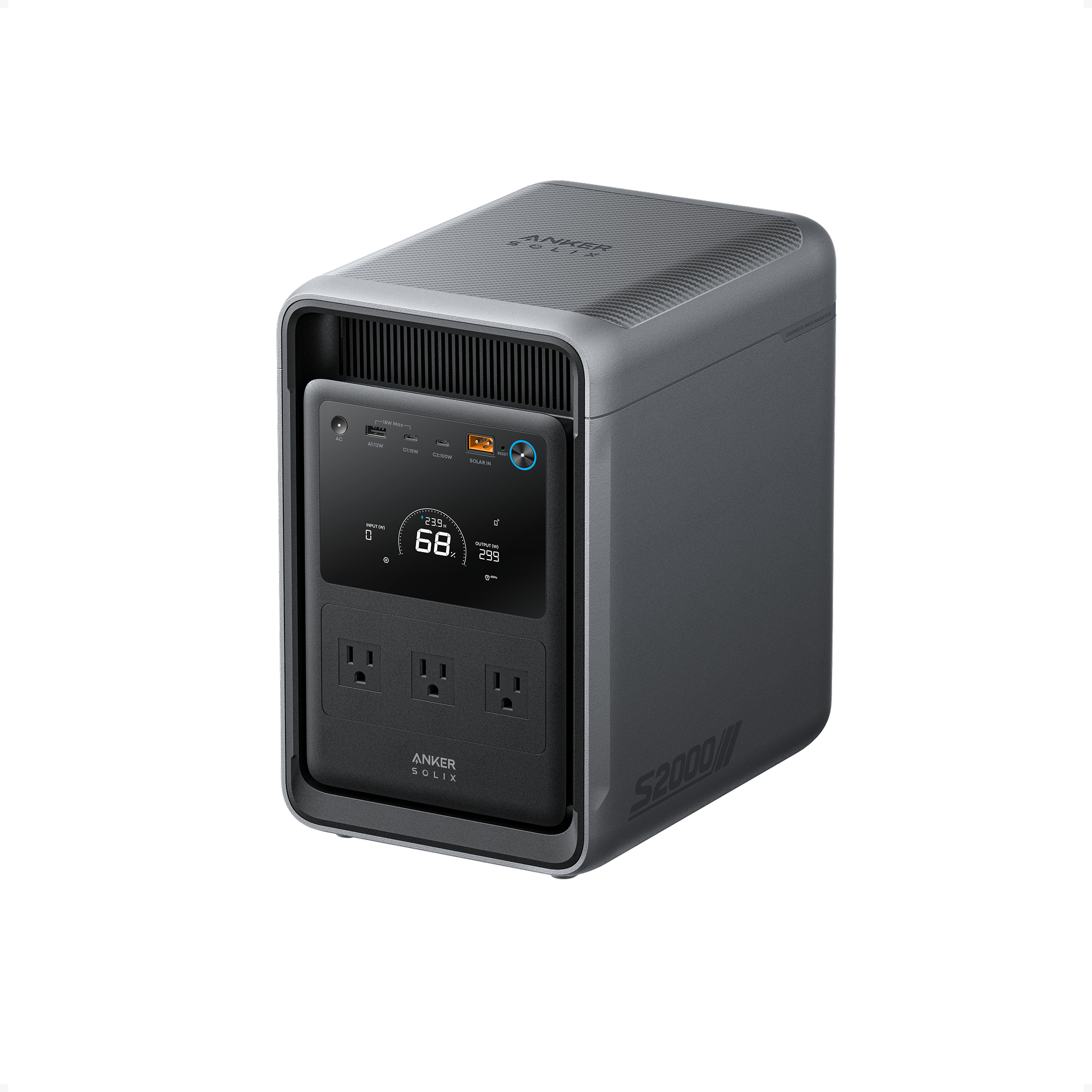
Anker SOLIX S2000
Sold on Amazon · today’s price is on the listing
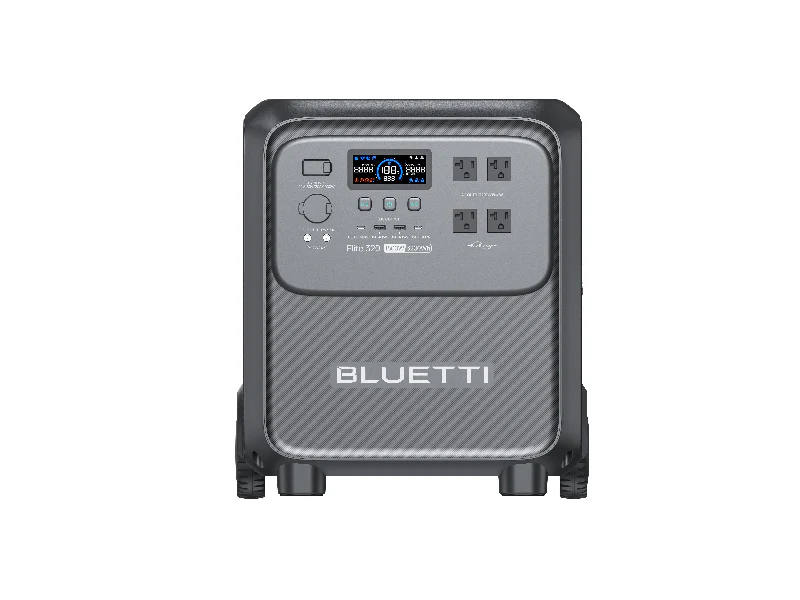
BLUETTI Elite 320Pick
$936.25
$936.25 · direct from BLUETTI
down from $1,100 · 15% below usual
Last checked 16 days ago. Prices move — check before you buy.
Prices may vary by retailer and are subject to change.