Goal Zero Yeti 1500X vs Goal Zero Yeti 200X
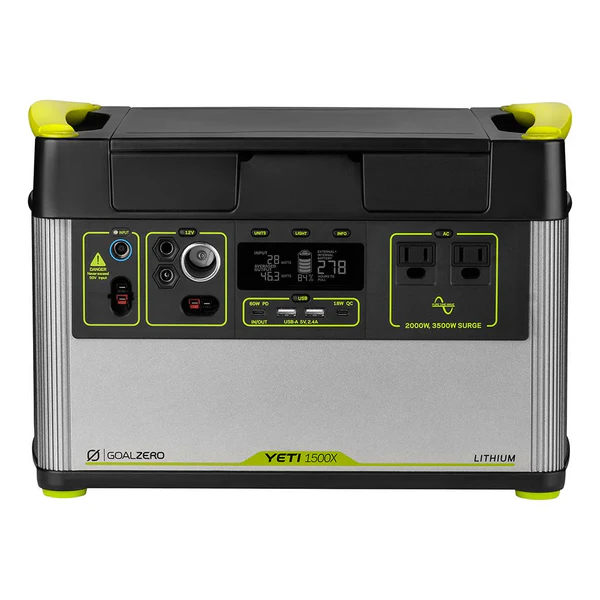
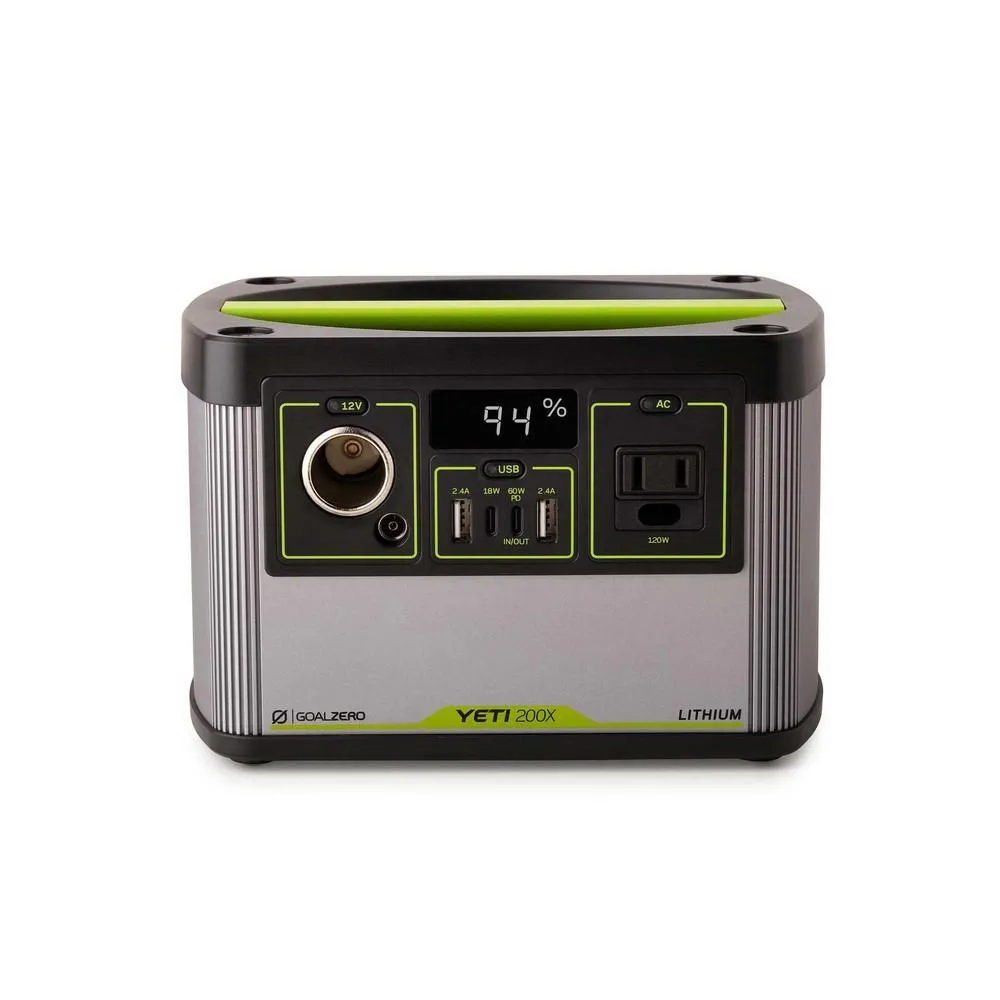
Two sizes from Goal Zero's YETI lineup: Yeti 200X at 187Wh, Yeti 1500X at 1,516Wh. The $905 gap between them buys a fundamentally different tool. One you carry. One you place and leave. The Yeti 1500X has a slight edge, but the margin is close enough that your use case should break the tie.
What the spec gap means in practice: the Yeti 1500X's 2,000W inverter can run a window AC unit, a full-size fridge, or power tools. The Yeti 200X's 120W inverter will flat-out refuse to start those appliances. On stamina, the Yeti 1500X keeps a fridge alive for roughly 9 hours vs the Yeti 200X's 1 hours. The cost? Portability. At 45.6 lbs, the Yeti 1500X is heavy enough to make you think twice about moving it. The Yeti 200X at 5 lbs is something one person can actually carry.
Pick the Yeti 1500X if your primary use is cpap overnight or remote workday. Go with the Yeti 200X if you need the heavier-duty specs for demanding loads. Most buyers overlook this: the Yeti 1500X costs ~$1.48/kWh over its full lifespan, which adds up significantly over years of regular use. Keep scrolling for the full breakdown. The scenario verdicts below hold a few surprises.
Power Station Arena is reader-supported. We may earn a commission when you buy through our links — at no cost to you. Learn more.
The Breakdown
What each unit does well, where it falls short, and the trade-offs that matter.
Yeti 1500X Analysis
The 2,000W inverter handles most daily devices like laptops, blenders, and TVs, but will struggle with heating elements that require over 1500W.
Strengths
- Larger Battery Capacity
- Higher AC Output Power
- Faster Solar Charging
Trade-offs & Considerations
- Substantially more expensive (+$904.9) than the Yeti 200X.
- Significantly heavier (+40.6 lbs), making it harder to move.
Yeti 200X Analysis
At 120W, this unit is strictly for personal electronics (phones, laptops) and small CPAP machines. Do not expect to run kitchen appliances. At only 5 lbs, it is exceptionally portable. You can easily carry it one-handed to a campsite or tailgating party.
Strengths
- Save $904.9 vs Competitor
- 40.6 lbs Lighter
Trade-offs & Considerations
- Weaker inverter (-1,880W) limits appliance compatibility.
- Lacks smartphone app control for remote monitoring.
- Battery capacity cannot be expanded if your needs grow.
What the Specs Don't Tell You
Hidden gotchas and advantages we spotted that you won't find on the product page.
Yeti 200X: No App Control
NoteWithout app control, you have to physically walk to the Yeti 200X to check battery level, adjust settings, or monitor power draw. The Yeti 1500X lets you do all that from your phone, including getting low-battery alerts.
Yeti 200X: No Expansion Path
Watch outThe Yeti 200X is a closed system. The 187Wh you buy today is the ceiling. If your power needs grow (more gear, longer trips, partial home backup), you'd need to buy a completely new unit. The Yeti 1500X can add expansion batteries.
Warranty Value Comparison
NoteThe Yeti 200X gives you 9.1 years of warranty per $1,000 spent, vs the Yeti 1500X's 1.8 years. That's 5.1× more coverage per dollar. An underrated factor if you're keeping this unit for years.
Your Life, Your Pick
We ran the math on six real-world scenarios. Here's which unit survives your actual life.
Weekend Camping
2 nights
Two nights off-grid with essential comfort
Neither unit can fully handle this scenario (needs 2,100Wh). You'd need a higher-capacity station or to cut back on usage.
8-Hour Blackout
8 hours
Keep the essentials running through a night without power
Neither unit can fully handle this scenario (needs 1,645Wh). You'd need a higher-capacity station or to cut back on usage.
CPAP Overnight
8 hours
Sleep therapy without interruption — the #1 medical use case
The Yeti 200X runs out of juice. It only has 159Wh usable, but this scenario needs 320Wh. The Yeti 1500X covers it and still has 65h of phone charging left over.
Remote Workday
8 hours
Full work day off-grid without power anxiety
The Yeti 200X runs out of juice. It only has 159Wh usable, but this scenario needs 910Wh. The Yeti 1500X covers it and still has 25h of phone charging left over.
Tailgate Party
4 hours
Game day power for the crew
The Yeti 200X's 120W output can't handle the 400W peak demand. The Yeti 1500X handles this scenario with 619Wh to spare.
Van Life Daily
24 hours
A full day of mobile living — the ultimate endurance test
Neither unit can fully handle this scenario (needs 4,685Wh). You'd need a higher-capacity station or to cut back on usage.
Will It Power Your Gear?
Real-world runtime estimates for common appliances. Based on 85% inverter efficiency — actual results vary with temperature and load cycling.
Essentials
The basics you need running| Appliance | Yeti 1500X | Yeti 200X |
|---|---|---|
😴 CPAP Machine 40W draw | ★32.2h4 full nights | 4h0 full nights |
📱 Phone Charger 15W draw | ★85.9h | 10.6h |
📡 Router + Modem 20W draw | ★64.4h | 7.9h |
💡 LED Lights (4 bulbs) 40W draw | ★32.2h | 4h |
💻 Laptop (Working) 60W draw | ★21.5h | 2.6h |
Comfort & Convenience
Makes off-grid life actually enjoyable| Appliance | Yeti 1500X | Yeti 200X |
|---|---|---|
🌀 Box Fan 75W draw | ★17.2h | 2.1h |
📺 LED TV (55") 80W draw | ★16.1h | 2h |
🧊 Mini-Fridge 150W draw | ★8.6h | ✗ Can't Run |
🛏️ Electric Blanket 200W draw | ★6.4h0 full nights | ✗ Can't Run |
High-Draw Appliances
These reveal the real limits| Appliance | Yeti 1500X | Yeti 200X |
|---|---|---|
☕ Coffee Maker 1000W draw | ★1.3h | ✗ Can't Run |
🍽️ Microwave 1200W draw | ★1.1h | ✗ Can't Run |
🔥 Space Heater 1500W draw | ★0.9h | ✗ Can't Run |
Runtime = (capacity × 0.85) ÷ appliance watts. Actual runtime varies with battery age, temperature, and simultaneous loads.
Expert Verdict
Yeti 1500X Edges Ahead on Power Score
These two units are closely matched on individual specs, but our Power Score analysis gives the Yeti 1500X the edge with a composite score of 2,735 vs 975.
Based on 18+ spec comparisons and real-world performance data
Power Score Breakdown
How each unit performs across our segmented benchmarks
| Benchmark | Yeti 1500X | Yeti 200X |
|---|---|---|
| Overall Power Score | ★2,735Appliance Class | 975Device Hub |
| RV LivingEnergy Density & Output | 2,692 | — |
| Home BackupCapacity & Resilience | 2,569 | — |
| CPAPSleep Therapy Reliability | 2,173 | — |
| Solar GeneratorSolar Input & Efficiency | 2,484 | — |
| TailgatingOutlets & Portability | 2,684 | — |
| Food TruckSustained Heavy Output | 2,745 | — |
| Apartment BalconyCompact Solar Living | ★2,440 | 1,268 |
| CampingLightweight & Versatile | 2,466 | — |
Power Score is our proprietary benchmark calculated from 14 spec dimensions. Higher = better. "—" means the product doesn't meet the minimum threshold for that bench.
Full Specification Breakdown
| Feature | Yeti 1500X | Yeti 200X |
|---|---|---|
| Price | $1,124.89 | ★$219.95 |
| Capacity (Wh) | ★1516 | 187 |
| Output (W) | ★2000 | 120 |
| Surge Peak | ★3500W | 200W |
| AC Outlets | ★2 | 1 |
| USB-C Charging Outputs | 60W | 60W |
| Solar Input (W) | ★600 | 120 |
| Weight (lbs) | 45.64 | ★5 |
| UPS | Yes | Yes |
| Charging Cycles | 500 | 500 |
| Warranty (Years) | 2 | 2 |
| Battery Expansion Feasibility | Yes | No |
| App Control | Yes | No |
| $/Watt Hour | ★$0.74 | $1.18 |
| Noise Level (db) | N/A | N/A |
| Solar Input Type | Standard (14-50V) | Standard (14-50V) |
| USB-A Ports | 2 | 2 |
| USB-C Ports | 2 | 2 |
| Cost per Wh (calculated) | ★$0.74/Wh | $1.18/Wh |
Beyond the Specs: Owning It
What happens after you click “Buy” — reliability, brand trust, growth potential, and true cost of ownership.
Lifetime Value
Yeti 1500X
Battery lifespan: 1.4yr daily · 4.8yr weekends · 9.6yr weekly
Yeti 200X
Battery lifespan: 1.4yr daily · 4.8yr weekends · 9.6yr weekly
The Yeti 200X is cheaper to buy, but the Yeti 1500X is cheaper to own. At $1.48/kWh over its lifetime vs $2.35/kWh, the Yeti 1500X's higher cycle life and capacity make each dollar go further over the years.
Growth Path
Yeti 1500X
✓ ExpandableSupports expansion batteries from Goal Zero. You can increase capacity without replacing the base unit. A significant long-term advantage.
Accepts up to 600W of solar. Suitable for a 1-2 panel setup.
Adequate ports for most setups, but heavy users may want a power strip.
Expansion batteries are Goal Zero-specific. You're investing in the Goal Zero ecosystem.
Yeti 200X
🔒 Closed SystemClosed system. What you buy is what you get. If your needs outgrow 187Wh, you'll need to purchase an entirely new unit.
Accepts up to 120W of solar. Limited to a single portable panel.
Limited ports. You'll likely need a power strip or splitter.
If your power needs might grow (more camping gear, longer trips, partial home backup), the Yeti 1500X's expansion path saves you from buying a whole new unit in 2 years. That flexibility has real dollar value.
The Bottom Line
The full picture comes down to this. The Yeti 1500X edges ahead on our overall analysis, but the margin is narrow enough that your specific use case should drive the decision. Review the scenario verdicts above — if the Yeti 200X wins in the scenarios that match your life, it's the right choice regardless of aggregate scores.
If neither the Yeti 1500X nor the Yeti 200X feels like the right fit, your power needs probably sit outside what these two target. Use our comparison tool above to explore alternatives that better match your specific wattage and runtime requirements. Prices on portable power stations fluctuate frequently. Both Goal Zero discount regularly, so check the current price before committing. Prime Day and Black Friday pricing typically drops 20-30%.
Frequently Asked Questions
Yeti 1500X vs Yeti 200X — answered by our testing team.
Q.Is the Yeti 1500X worth $904.9 more than the Yeti 200X?
The short answer: yes, if you'll actually use the extra capability. The Yeti 1500X costs $904.9 more, but that premium buys you 1,329Wh more battery capacity (that's 8 extra hours of running a mini-fridge); 1,880W higher AC output (opening the door to more demanding appliances); 480W faster solar charging for quicker off-grid recovery. On a cost-per-watt-hour basis, you're paying $0.74/Wh vs $1.18/Wh. Factor in cycle life and the math flips: the Yeti 1500X costs $1.48/kWh over its lifetime vs $2.35/kWh. The "expensive" unit is actually cheaper to own. For regular use, we'd pay the premium.
Q.How does the 1,329Wh capacity difference actually affect daily use?
The Yeti 1500X's 1,516Wh battery keeps a mini-fridge running for roughly 9 hours vs the Yeti 200X's 1 hours. What specs don't mention: runtime drops 20-30% in cold weather (below 32°F/0°C) as battery chemistry slows down. The Yeti 1500X's extra capacity provides a critical cold-weather buffer. For occasional phone and laptop charging, both are overkill. This gap only matters for sustained, multi-appliance use.
Q.Can I actually carry the Yeti 1500X, or is the Yeti 200X the only portable option?
The Yeti 200X at 5 lbs is genuinely grab-and-go. Toss it in a backpack, carry it one-handed to a picnic, take it on a boat. The Yeti 1500X at 45.6 lbs is a different story. It's like carrying a large suitcase full of books. If you're setting up and breaking down camp frequently, this weight difference will exhaust you by day two.
Q.How fast can each unit recharge from solar panels in real conditions?
On paper, the Yeti 1500X accepts 600W vs the Yeti 200X's 120W of solar input. What the spec sheet won't tell you: solar panels typically deliver only 60-80% of their rated output due to panel angle, cloud cover, and temperature. In realistic conditions, expect full recharge in about 3.6 hours for the Yeti 1500X and 2.2 hours for the Yeti 200X. That gap widens on cloudy days, when the Yeti 1500X's higher input ceiling captures more of whatever sunlight is available. One more thing: summer gives you ~7 productive solar hours per day. Winter drops to ~4. If solar is your primary recharge method, the Yeti 1500X's advantage is substantial.
Q.What happens if I outgrow the Yeti 200X's 187Wh capacity?
With the Yeti 200X, you'd need to buy an entirely new power station. It's a closed system with no expansion port. The Yeti 1500X supports Goal Zero-compatible expansion batteries that can double or triple your total capacity without replacing the base unit. Say you start with weekend camping and six months later you want to run a mini-fridge full-time in a van. The Yeti 1500X scales with you. The Yeti 200X forces a repurchase. Worth considering even if you don't need more capacity today. Power needs tend to grow.
Q.Bottom line: should I buy the Yeti 1500X or the Yeti 200X?
We'd pay the premium for the Yeti 1500X. Yes, it costs more. The capability jump is real: you're stepping into a tier that handles appliances the base model can't start. The Yeti 200X is still solid if budget is the priority, but the Yeti 1500X will leave you less likely to wish you'd "gone bigger" six months from now. That regret costs more than the price difference.
Still Deciding?
These expert guides cover the best picks for your use case — with calculators, comparison tables, and recommendations.
Budget Picks Under $500
Best value per watt-hour for casual use
Read GuideBest for RV
Off-grid power stations with solar input & expansion
Read GuideSolar Generators
Charge from your balcony panels — no outlet needed
Read GuideFull Comparison Tool
Compare Yeti 1500X vs Yeti 200X side-by-side with every spec
Open ToolReady to Decide?
View current pricing from authorized retailers.
Prices may vary by retailer and are subject to change.