BLUETTI Pioneer 150 AC240 vs Goal Zero Yeti 6000X

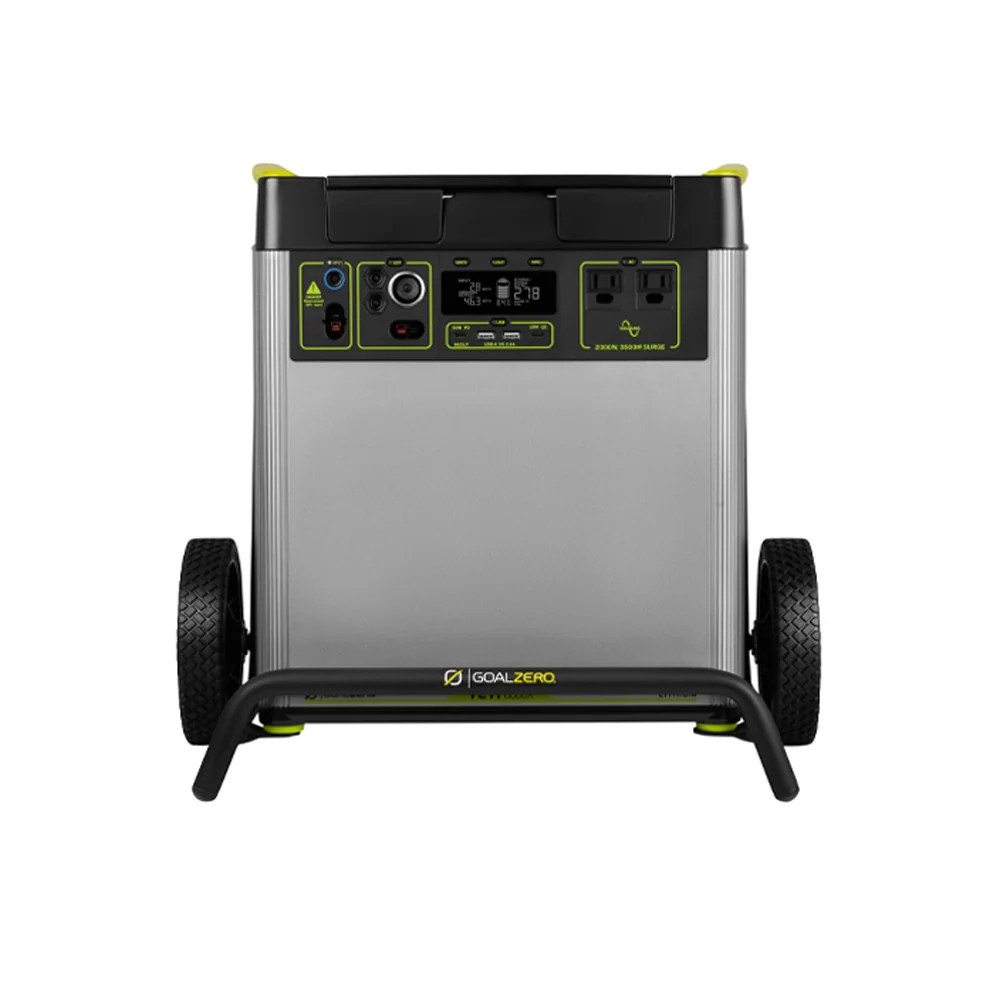
The BLUETTI Pioneer 150 AC240 (1,536Wh) and Goal Zero Yeti 6000X (6,071Wh) sit in different weight classes. The real question: do your power needs justify the larger unit, or would you be overpaying for capacity that sits unused? We'd buy the Pioneer 150 AC240.
The Yeti 6000X's 6,071Wh keeps a fridge going for 34 hours. The Pioneer 150 AC240's 1,536Wh manages 9 hours. The bigger unit rides out a full weekend outage. The smaller one needs a recharge by Saturday night. But if your actual use case is camping, tailgating, or keeping devices charged, the Pioneer 150 AC240 does the job at 72 lbs and $1,499 — no overkill, no regret.
Pick the Pioneer 150 AC240 if you want maximum capability and room to grow. Go with the Yeti 6000X if you primarily need it for weekend camping or 8-hour blackout. Most buyers overlook this: the Pioneer 150 AC240 costs ~$0.28/kWh over its full lifespan, which adds up significantly over years of regular use. Keep scrolling for the full breakdown. The scenario verdicts below hold a few surprises.
Power Station Arena is reader-supported. We may earn a commission when you buy through our links — at no cost to you. Learn more.
The Breakdown
What each unit does well, where it falls short, and the trade-offs that matter.
Pioneer 150 AC240 Analysis
With a massive 2,400W output (and 3,600W surge), the Pioneer 150 AC240 can run high-wattage appliances like space heaters, hair dryers, and electric grills without tripping. Weighing in at 72 lbs, this is not a unit you want to carry far. It's best suited as a stationary backup or RV companion.
Strengths
- Save $2,501 vs Competitor
- 34 lbs Lighter
- Higher AC Output Power
- Longer Warranty Coverage
- Faster Solar Charging
Trade-offs & Considerations
- No major technical downsides compared to rival.
Yeti 6000X Analysis
The 2,000W inverter handles most daily devices like laptops, blenders, and TVs, but will struggle with heating elements that require over 1500W. Weighing in at 106 lbs, this is not a unit you want to carry far. It's best suited as a stationary backup or RV companion.
Strengths
- Larger Battery Capacity
Trade-offs & Considerations
- Substantially more expensive (+$2,501) than the Pioneer 150 AC240.
- Significantly heavier (+34 lbs), making it harder to move.
- Very heavy unit that may be difficult for one person to lift.
What the Specs Don't Tell You
Hidden gotchas and advantages we spotted that you won't find on the product page.
Weight Reality Check
Watch outNeither unit is grab-and-go. The Pioneer 150 AC240 (72 lbs) is manageable solo but heavier than a large checked suitcase. The Yeti 6000X (106 lbs) is firmly a two-person lift. It goes where you put it and stays there. That's a 34 lb difference.
Pioneer 150 AC240: 50dB Under Load
Note50dB is about as loud as moderate rainfall. If you're running a CPAP or sleeping near this unit, the fan noise may be noticeable. Most people find anything above 45dB disruptive for sleep.
UPS Speed: standby (<20ms) vs basic standby
NoteThe Pioneer 150 AC240 switches to battery in 15ms (standby (<20ms)), while the Yeti 6000X takes 25ms (basic standby). Most electronics handle this fine, but sensitive server equipment may hiccup. This matters if you're using it as a home UPS for always-on equipment.
Warranty Value Comparison
NoteThe Pioneer 150 AC240 gives you 4 years of warranty per $1,000 spent, vs the Yeti 6000X's 0.5 years. That's 8× more coverage per dollar. An underrated factor if you're keeping this unit for years.
Battery Lifespan in Real Years
NoteThe Pioneer 150 AC240 is rated for 3,500 cycles vs 500. In real life: at daily use, that's 9.6 vs 1.4 years. At weekend use (twice a week), it's 34 vs 5 years. After hitting the cycle limit, the battery doesn't die. It drops to ~80% original capacity, which is still very usable.
Yeti 6000X: Noise Level Not Disclosed
Watch outThe Pioneer 150 AC240 publishes its noise level (50dB), but the Yeti 6000X doesn't. Brands that don't disclose noise specs often have louder units. If noise matters to you (CPAP users, apartment dwellers), this is worth investigating before buying.
Your Life, Your Pick
We ran the math on six real-world scenarios. Here's which unit survives your actual life.
Weekend Camping
2 nights
Two nights off-grid with essential comfort
The Pioneer 150 AC240 runs out of juice. It only has 1,306Wh usable, but this scenario needs 2,100Wh. The Yeti 6000X covers it and still has 204h of phone charging left over.
8-Hour Blackout
8 hours
Keep the essentials running through a night without power
The Pioneer 150 AC240 runs out of juice. It only has 1,306Wh usable, but this scenario needs 1,645Wh. The Yeti 6000X covers it and still has 234h of phone charging left over.
CPAP Overnight
8 hours
Sleep therapy without interruption — the #1 medical use case
Both are massively overpowered for CPAP. You're using 25% or less. Save $2,501 and buy the cheaper unit; the extra capacity is wasted on a 40W medical device. Instead, invest in a second battery for multi-night camping trips.
Remote Workday
8 hours
Full work day off-grid without power anxiety
The Yeti 6000X gives you a comfortable buffer at 18%. Enough to work late, join extra video calls, or charge a second device without worry. The Pioneer 150 AC240 at 70% works but leaves less room for the unexpected. For daily remote work, that peace of mind matters.
Tailgate Party
4 hours
Game day power for the crew
Both handle it, but neither is stressed. Tailgating is a light load. The Yeti 6000X's extra margin is nice but not decisive here. Consider weight instead: you're carrying this to a parking lot, and 34 lbs makes a real difference when loading up.
Van Life Daily
24 hours
A full day of mobile living — the ultimate endurance test
The Pioneer 150 AC240 runs out of juice. It only has 1,306Wh usable, but this scenario needs 4,685Wh. The Yeti 6000X covers it and still has 32h of phone charging left over.
Will It Power Your Gear?
Real-world runtime estimates for common appliances. Based on 85% inverter efficiency — actual results vary with temperature and load cycling.
Essentials
The basics you need running| Appliance | Pioneer 150 AC240 | Yeti 6000X |
|---|---|---|
😴 CPAP Machine 40W draw | 32.6h4 full nights | ★129h16 full nights |
📱 Phone Charger 15W draw | 87h | ★344h |
📡 Router + Modem 20W draw | 65.3h | ★258h |
💡 LED Lights (4 bulbs) 40W draw | 32.6h | ★129h |
💻 Laptop (Working) 60W draw | 21.8h | ★86h |
Comfort & Convenience
Makes off-grid life actually enjoyable| Appliance | Pioneer 150 AC240 | Yeti 6000X |
|---|---|---|
🌀 Box Fan 75W draw | 17.4h | ★68.8h |
📺 LED TV (55") 80W draw | 16.3h | ★64.5h |
🧊 Mini-Fridge 150W draw | 8.7h | ★34.4h |
🛏️ Electric Blanket 200W draw | 6.5h0 full nights | ★25.8h3 full nights |
High-Draw Appliances
These reveal the real limits| Appliance | Pioneer 150 AC240 | Yeti 6000X |
|---|---|---|
☕ Coffee Maker 1000W draw | 1.3h | ★5.2h |
🍽️ Microwave 1200W draw | 1.1h | ★4.3h |
🔥 Space Heater 1500W draw | 0.9h | ★3.4h |
Runtime = (capacity × 0.85) ÷ appliance watts. Actual runtime varies with battery age, temperature, and simultaneous loads.
Expert Verdict
Pioneer 150 AC240 Wins on Value & Performance
The Pioneer 150 AC240 outperforms the Yeti 6000X in key areas. It offers higher output (+400W). Crucially, it costs $2,501 less, making it the smarter financial choice.
Based on 18+ spec comparisons and real-world performance data
Power Score Breakdown
How each unit performs across our segmented benchmarks
| Benchmark | Pioneer 150 AC240 | Yeti 6000X |
|---|---|---|
| Overall Power Score | 3,259Appliance Class | ★4,982Appliance Class |
| UPSResponse & Reliability | 2,950 | — |
| RV LivingEnergy Density & Output | 3,304 | ★4,913 |
| Home BackupCapacity & Resilience | 3,318 | ★4,910 |
| CPAPSleep Therapy Reliability | 2,590 | ★3,581 |
| Solar GeneratorSolar Input & Efficiency | 3,228 | ★4,107 |
| TailgatingOutlets & Portability | 2,775 | — |
| Food TruckSustained Heavy Output | 3,370 | ★4,536 |
Power Score is our proprietary benchmark calculated from 14 spec dimensions. Higher = better. "—" means the product doesn't meet the minimum threshold for that bench.
Full Specification Breakdown
| Feature | Pioneer 150 AC240 | Yeti 6000X |
|---|---|---|
| Price | ★$1,499.00 | $3,999.95 |
| Capacity (Wh) | 1536 | ★6071 |
| Output (W) | ★2400 | 2000 |
| Surge Peak | ★3600W | 3500W |
| AC Outlets | ★4 | 2 |
| USB-C Charging Outputs | ★100W | 60W |
| Solar Input (W) | ★1200 | 600 |
| Weight (lbs) | ★72 | 106 |
| UPS | Yes (<15ms) | Yes |
| Charging Cycles | ★3500+ | 500 |
| Warranty (Years) | ★6 | 2 |
| Battery Expansion Feasibility | Yes | Yes |
| App Control | Yes | Yes |
| $/Watt Hour | $.98 | ★$0.66 |
| Noise Level (db) | <50 | N/A |
| Solar Input Type | Standard | Standard (14-50V) |
| USB-A Ports | 2 | 2 |
| USB-C Ports | 2 | 2 |
| Cost per Wh (calculated) | $0.98/Wh | ★$0.66/Wh |
Beyond the Specs: Owning It
What happens after you click “Buy” — reliability, brand trust, growth potential, and true cost of ownership.
Lifetime Value
Pioneer 150 AC240
Battery lifespan: 9.6yr daily · 33.7yr weekends · 67.3yr weekly
Yeti 6000X
Battery lifespan: 1.4yr daily · 4.8yr weekends · 9.6yr weekly
The Pioneer 150 AC240 wins on both sticker price and long-term value. At $0.28/kWh over its lifetime, it's meaningfully cheaper to own. Clear value winner.
Brand Trust
BLUETTI
Ecosystem
Varies — check manufacturer website for full product lineup
Support
Limited data available — check recent reviews and community forums
Community
Smaller community — fewer independent reviews and user reports
App Experience
Rated Not rated
Unique Strength
Check manufacturer website for differentiators
Worth Knowing
Less established brand — fewer long-term reliability reports available
Goal Zero
Ecosystem
Focused — 5-6 active portable power station models across Yeti and Yeti Pro series, plus Alta coolers, Nomad/Ranger solar panels, and vehicle integration kits
Support
US-based company (Salt Lake City, owned by NRG Energy). Historically considered premium support, but 2025-2026 reports describe long wait times, unresponsive email communication, and tickets going unaddressed for weeks. The "premium support justifies premium pricing" argument is weakening.
Community
Small but loyal — strong following in overlanding and preparedness communities. Official community forums were recently shuttered, frustrating long-time users.
App Experience
Rated 4.4/5 iOS (~1,200 ratings) but recent reviews skew negative — recurring connectivity issues, crashes, and stability problems.
Unique Strength
Pioneer of the portable power market — strongest brand heritage. US-based company with ruggedized, weather-resistant designs (IPX4). Integrated "Yeti-Ready" ecosystem with coolers, lights, and vehicle kits.
Worth Knowing
Widely acknowledged as the most expensive brand (lowest Wh per dollar). Support quality has declined from its "premium" standard. Perceived as competitively stagnant vs. faster-innovating Chinese competitors. Reliability reports on newer models are concerning.
Goal Zero positions itself as a premium brand with stronger support infrastructure, while BLUETTI competes on value. The question is whether the Goal Zero ecosystem and support premium is worth it for your use case.
Growth Path
Pioneer 150 AC240
✓ ExpandableSupports expansion batteries from BLUETTI. You can increase capacity without replacing the base unit. A significant long-term advantage.
Accepts up to 1,200W of solar. Enough for a serious multi-panel array.
Adequate ports for most setups, but heavy users may want a power strip.
Expansion batteries are BLUETTI-specific. You're investing in the BLUETTI ecosystem.
Yeti 6000X
✓ ExpandableSupports expansion batteries from Goal Zero. You can increase capacity without replacing the base unit. A significant long-term advantage.
Accepts up to 600W of solar. Suitable for a 1-2 panel setup.
Adequate ports for most setups, but heavy users may want a power strip.
Expansion batteries are Goal Zero-specific. You're investing in the Goal Zero ecosystem.
Both units support expansion, but the Pioneer 150 AC240's higher solar ceiling (1,200W vs 600W) gives it a stronger off-grid growth path. More solar input means you can add panels as your setup grows.
The Bottom Line
The full picture comes down to this. The Pioneer 150 AC240 edges ahead on our overall analysis, but the margin is narrow enough that your specific use case should drive the decision. Review the scenario verdicts above — if the Yeti 6000X wins in the scenarios that match your life, it's the right choice regardless of aggregate scores.
If neither the Pioneer 150 AC240 nor the Yeti 6000X feels like the right fit, your power needs probably sit outside what these two target. Use our comparison tool above to explore alternatives that better match your specific wattage and runtime requirements. Prices on portable power stations fluctuate frequently. Both BLUETTI and Goal Zero discount regularly, so check the current price before committing. Prime Day and Black Friday pricing typically drops 20-30%.
Frequently Asked Questions
Pioneer 150 AC240 vs Yeti 6000X — answered by our testing team.
Q.Is the Yeti 6000X worth $2,501 more than the Pioneer 150 AC240?
A tough sell. The Yeti 6000X offers 4,535Wh more battery capacity (that's 26 extra hours of running a mini-fridge), but $2,501 is a steep premium for a single upgrade. At $0.98/Wh, the Pioneer 150 AC240 delivers better bang for your buck. Unless that advantage is non-negotiable, save the cash. Better yet, put it toward a solar panel that pays for itself in free charges.
Q.How does the 4,535Wh capacity difference actually affect daily use?
The Yeti 6000X's 6,071Wh battery keeps a mini-fridge running for roughly 34 hours vs the Pioneer 150 AC240's 9 hours. Where it really matters: during an 8-hour blackout running your fridge, router, lights, AND charging your phone simultaneously (about 1,645Wh total), the Yeti 6000X handles it while the Pioneer 150 AC240 runs dry. What specs don't mention: runtime drops 20-30% in cold weather (below 32°F/0°C) as battery chemistry slows down. The Yeti 6000X's extra capacity provides a critical cold-weather buffer. For occasional phone and laptop charging, both are overkill. This gap only matters for sustained, multi-appliance use.
Q.Can I actually carry the Yeti 6000X, or is the Pioneer 150 AC240 the only portable option?
Neither is "portable" in any hiking sense. The Pioneer 150 AC240 (72 lbs) and the Yeti 6000X (106 lbs) are both appliances you place and leave. The 34-lb difference matters when loading into a vehicle or moving between rooms, but that's about it. If true portability is your priority, look at units under 20 lbs in a different class entirely.
Q.How fast can each unit recharge from solar panels in real conditions?
On paper, the Pioneer 150 AC240 accepts 1,200W vs the Yeti 6000X's 600W of solar input. What the spec sheet won't tell you: solar panels typically deliver only 60-80% of their rated output due to panel angle, cloud cover, and temperature. In realistic conditions, expect full recharge in about 1.8 hours for the Pioneer 150 AC240 and 14.5 hours for the Yeti 6000X. That gap widens on cloudy days, when the Pioneer 150 AC240's higher input ceiling captures more of whatever sunlight is available. One more thing: summer gives you ~7 productive solar hours per day. Winter drops to ~4. If solar is your primary recharge method, the Pioneer 150 AC240's advantage is substantial.
Q."3,500 vs 500 cycles" — what does that actually mean for me?
In real years: the Pioneer 150 AC240 (3,500 cycles) lasts 9.6 years at daily use, 34 years at weekend use (twice a week), or 146 years at twice-monthly camping trips. The Yeti 6000X (500 cycles): 1.4 years daily, 5 years weekends, or 21 years twice-monthly. What most people miss: hitting the cycle limit doesn't kill your battery. Capacity drops to about 80%. Your 1,536Wh unit becomes a ~1,229Wh unit. Still very usable. For weekend users, both batteries will outlast the warranty by years.
Q.Is BLUETTI or Goal Zero more reliable for long-term ownership?
Both brands have strengths and trade-offs. BLUETTI: Check manufacturer warranty policy directly Goal Zero: 5 years on LFP models, 2 years on older NMC models. Battery must be charged within 7 days of purchase and every 6 months to maintain warranty (strict). Product reliability concerns have increased — repeat "Battery Fault" errors reported even on newer Yeti Pro 4000. One piece of advice from the power station community: regardless of brand, buy from Costco or Amazon. Their return policies provide a safety net that manufacturer warranties alone can't match, especially for a product you'll rely on in emergencies. Both brands use LFP (lithium iron phosphate) batteries in their current lineup, the most proven chemistry for longevity and safety.
Q.Bottom line: should I buy the Pioneer 150 AC240 or the Yeti 6000X?
We'd buy the Pioneer 150 AC240. Strong value at a lower price, and for most real-world use cases the spec gaps don't translate to meaningful capability gaps. The Yeti 6000X makes sense only if you specifically need its higher capacity for demanding sustained loads like full-home backup or commercial use.
Still Deciding?
These expert guides cover the best picks for your use case — with calculators, comparison tables, and recommendations.
Budget Picks Under $500
Best value per watt-hour for casual use
Read GuideEmergency Prep Guide
Blackout-tested picks with runtime calculator
Read GuideBest for RV
Off-grid power stations with solar input & expansion
Read GuideFull Comparison Tool
Compare Pioneer 150 AC240 vs Yeti 6000X side-by-side with every spec
Open ToolReady to Decide?
View current pricing from authorized retailers.
Prices may vary by retailer and are subject to change.